


GOLD
Giulio Bertelli Turns the Olympics Into a High-Tech Battleground In His Debut Film


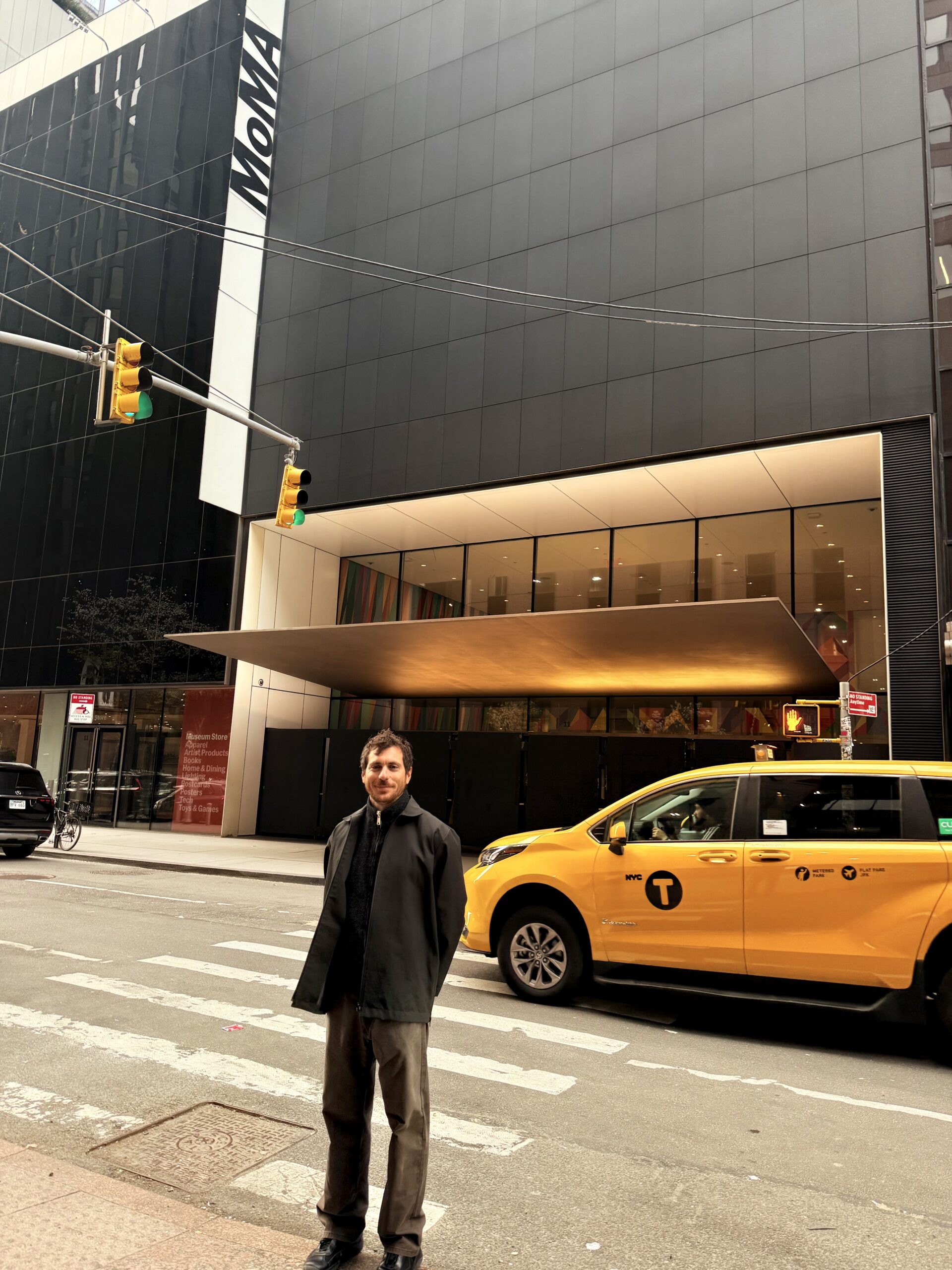
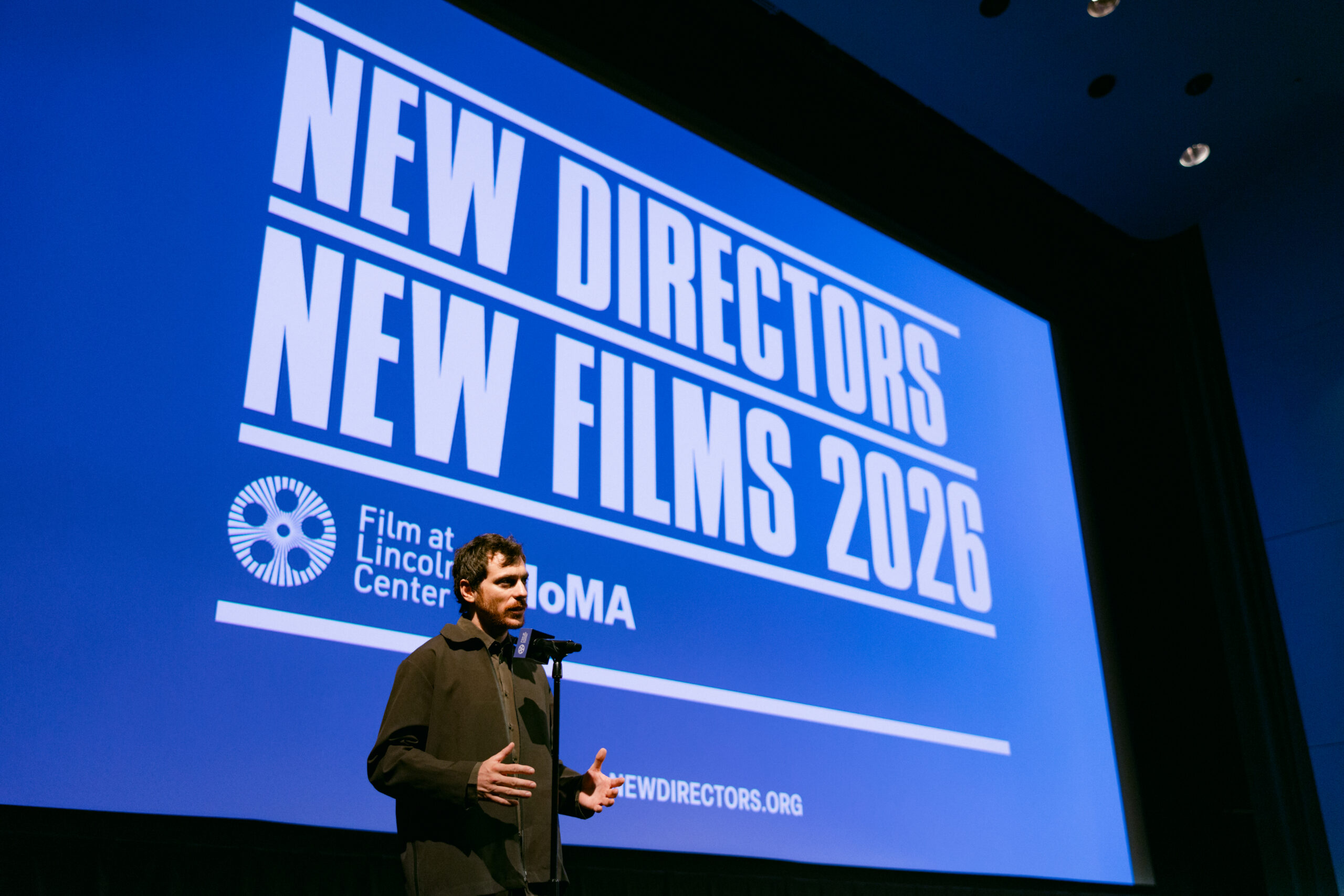
Giulio Bertelli’s Agon is a sports film as you’ve never seen it before, existing somewhere between realism and sci-fi, between the personal struggles of professional athletes and the cold, technological precision of their milieu. The film follows three young women—a fencer, a biathlon rifle shooter, and a judoka (played by real-life gold medalist Alice Bellandi)—as they compete in the Olympic Games. Through gorgeous, hypnotic filmmaking, Bertelli captures not the usual spectacle of Olympic triumph, but an almost remorseless battleground that feels closer to a war room. Still, human stories bleed through—in injuries, accidents, and unethical behavior. The 36-year-old first-time filmmaker was raised in Milan, studied architecture in London, and spent a decade on the professional sailing circuit before arriving at cinema. Though this is his debut feature, it doesn’t feel like one; there’s no telling how far he’s willing to go next. This month, Agon had its American premiere at the MoMA as part of the New Directors/New Films series, and is being released on Mubi this month. To mark the occasion, we spoke on the phone about gut instincts, detours in sailing, and the loneliness of competitive sport.
———
GIULIO BERTELLI: Hi, Thomas. Thanks for doing this. Your work has always been in the back of my mind, particularly when reimagining the Olympics and thinking about the relationship between the set pieces of film and theater.
THOMAS DEMAND: When I saw the film, I was struck by all the stages. Everything seems to be on a stage, and those stages seem quite artificial in a sense because you have the logo, the color scheme, the spotlight. And fencing, the sword fighting, is an unbelievably abstracted version of what it used to be. These levels of artificiality were really quite beautiful to see. But you start with the hyperrealism of a medical operation, which was pretty intense.
BERTELLI: I wanted to make a point on the abstraction of sports and warfare—our perception of watching it and what we recognize as real. I think it was really about creating a relationship of trust with the audience, as in “I believe in what I’m seeing,” with the operation, and then going into uncharted territory. Although, even some of the more absurd things that happen in the film are very much based on true events.
DEMAND: I’d like to go to the Olympic Games. Did you ever go? Did you attend the Winter Olympics in Cortina[, Italy] last month?
BERTELLI: I saw a bit of hockey in Milano. The Winter Olympics were in the very early stages of film development, when we were potentially going to focus on one sport–the biathlon. It’s a sport that really clarifies the idea behind Agon. It requires such a strong physical effort that is very clearly related to athleticism and sport. But at the same time the competitor has a rifle on their back, trying to shoot as accurately as possible. That transition from the military to sport is so overt.
DEMAND: The biathlon is such a weird hybrid sport, and nobody really understands the rules. It’s like if you made a film in Europe about baseball. Nobody would get it. And then fencing, it’s so medieval in a way. But the way they are suited up with wires and cables, it’s like science fiction. I think I was first interested in the Olympics through its graphic design. It’s so clear. The rings is one of the strongest logos in the world. It probably came before the idea of branding as a standalone thing. You have a scene where they are talking about the fight backstage in a conference room and they are basically standing on a three-dimensional graphic design. The first Olympic Games I remember was 1972 in Munich, and the graphic design was super strong. Then, there were all these mascots.
BERTELLI: You know, Agon started as an animation and then developed into a live-action film. Once that happened, we had to ask, “Okay, how do we do the Olympics?” All of the work involved developing the branding. And as you said, Munich for me was the benchmark in graphic design. The Olympic design got better every edition up until Munich, and then they started to go down. The pinnacle of its modernism is 1972 in Munich. In the film, we didn’t do a mascot. It was really daunting, tackling something so big. When I fully committed to make it as a film and not as an animation, I thought, “Am I really doing my first film with an endeavor about something so big?” The chances of it looking ridiculous, or making it look cheap with our very limited funding, really kind of terrorized me. We were making an independent film in Italy. I’m proud of what we came up with but, even now, some people think it’s a documentary. And it’s like, “We invented that.”

Photo courtesy of Brigitte Lacombe.
DEMAND: But there is a part of it that’s a documentary, no? Like, there’s a real athlete in the role of the judoka, but she’s acting as an actor. I found the film constantly oscillating between documentary and not documentary. The visual effects like slow-mo and how the sport is filmed is very documentary in style. We are so used to the Nike style of telling the story—we exercise as hard as possible, and then we win, and then we have this winning story. Telling the story like that would’ve been the cliché. But you use some of the tropes of sports filmmaking without walking away with a hero narrative. I found that very affective.
BERTELLI: Very early on into shooting the film, I realized as a first-time director what I was and wasn’t connecting to in terms of the material, and it wasn’t always what was in the script. I saw the movie I could do and not the one I couldn’t. So instead of fighting it, in a way, I leaned in to where the film as an entity was heading. It had its own precise identity, and I thought, “Okay, this film needs this identity. In the future, I will make a different film with a completely different identity.” I was very conscious and happy about the aesthetic of realism in the film, even as these are all fictional stories. I remember when we were shooting the scene where the fencer goes through a long interview, it’s very cinematic. We had a long tracking shot in a room that will never exist in the Olympics with all the carpet and wooden paneling. But when I was mixing it, all of a sudden it was feeling way too cinematic. So there was always the idea to break the surface of it. We did this through the audio. I took away the classic cinema style of clean audio with microphones. I was like, “Okay, let’s make it sound like we are part of the crew and we try to understand what they’re saying and the sound gets clearer and clearer as we get close to them.” So yes, I mean, it was very conscious always how to play with this. Is it real? Is it not? Does this exist? Is this something they do?
DEMAND: The fencer and the rifle shooter are actors. How did you cast a real judoka in that part?
BERTELLI: I knew I could cheat the fencing with a stunt double because of the mask. So I was like, “I’m going to get a top athlete for the stunt double and I’m casting an actress for the interview,” so really about the performance. Rifle shooting was similar, in a way. I wanted someone who was committed to learn a certain type of posture. But with judo, I knew from the beginning, I’m not going to make the movie until I find a former or professional judoka. The reality surpassed expectation because my idea was to scout judo gyms and we’ll find someone who’s good, but maybe not as good as to make the national team. Instead, in a very strange coincidence, I met Alice [Bellandi] and she was like, “I want to do it.” We were not even ready to shoot the film, to be honest. So it became a retrofit to work backwards from her Olympic campaign. We shot the film six months before she went to Paris and won a gold medal. We knew we only could shoot her during Christmas break. So we built the film around the moment where she was available in terms of schedule.
DEMAND: You have a history of professional sports, as well.
BERTELLI: I have a background as a professional athlete in offshore sailing, or sailing in the ocean which, to be honest, is also quite a strange sport because it’s a sport without an audience. Like, you’re there by yourself. It was only in a Q&A that someone made me realize this. That when you are in competition, there’s no one there. And maybe that background made it easier for me to talk to Alice. I didn’t talk to her as I did to an actor. It was very direct like, “Now you’re in fucking pain. Now this is what you’re thinking.” There was no filtering. With the actors, it was really about giving something that they could relate to and think about as a similarity to sports. So we had a big mix of non-professional actors and non-athletes.
DEMAND: You have a background in art. I wonder, is this your first work in cinema or did you do a short or an art film before?
BERTELLI: Basically, I wanted to be a filmmaker growing up. I went to the Architecture Association in London for university to study architecture, but I was all about design through filmmaking. After a couple of years, it clicked with me the type of films I really wanted to try to make and I started to write stories. But before then, maybe a bit naively, I wanted to do something very physical after university because I felt a bit uncomfortable in an urbanized type of context. There was a part of me that needed something else. I always had a love for the industry of sailing—not just the sailing part, but even the boatyard, the construction of ships, all of it. I started to do that, thinking I will work in a boatyard while writing and see how I can access the world of cinema. But realistically, that ended up taking a long time, turning into an elite professional career. Then, there was a moment in 2018, I was 28, where I was starting to think, “Okay, now I either start to develop a film while I’ll transition out of sailing, or…”
DEMAND: Would you say that sailing gave you a kind of artistic training that impacted the way you directed the film?
BERTELLI: Sometimes I think if I’d never had that whole other career, maybe I would be farther along in film. But I know that the ideas I had prior to my sailing career were missing something.
DEMAND: As an artist, I have the feeling that I could have become a really good professional photographer if I wanted that. And I did work in graphic design, but that wasn’t what I was looking for. So in the end, you become what you want to be. Is there an idea for a sequel to Agon?
BERTELLI: There’s an idea of a sequel, yes. A particular story about a winter sport set at the Olympics. I’m working on two other scripts and they’re completely different, not related to sport. They’re much more an adventure story, less theoretical. The theoretical is still there, it’s just in the background.
DEMAND: Is one of them science fiction?
BERTELLI: Yes. You know, I wanted to ask you, you worked in stop-motion for a video-based art piece. Did you also work with other film techniques?
DEMAND: Yes, I did a tunnel, which was recreating the tunnel where Lady Di had the accident. Except that there was no accident driving through it. It’s an endless loop. We did this with the same method used in Fargo, the early Cohen Brothers film. There is a little dolly driving around. We shot over Christmas, which is always good because nobody else wants to shoot then. You get the cheapest rate. But working with animators is really amazing because they are able to dissect what happens—like with gravity, what happens to a falling cup—in phases. It takes them a week to have a fluid movement that ends in three seconds. I think to bend time and to analyze and understand what happens when something falls in three dimensions, working on it and keeping it in mind for a week, is amazing. Their sense of patience is quite amazing. But in terms of films, my way of making things is very fragile, time-consuming, and it doesn’t last very long, so I couldn’t have an actor sitting on a chair to start with.
BERTELLI: He’ll crush your process.
DEMAND: He would crush it immediately.
BERTELLI: I need to come visit you in Berlin. We could talk for three hours.
DEMAND: I work by myself all day long. I have friends who work with a lot of people, so I have a big respect for somebody holding together a crew and ending up with a feature-length film. It’s quite an achievement.
BERTELLI: Thank you very much. Ciao, ciao.
DEMAND: Bye-bye.