


CLUB KID
“I Was a Pleasure Junkie”: A Prison Manifesto From the Late Michael Alig


All photos courtesy of Left Bank Books.
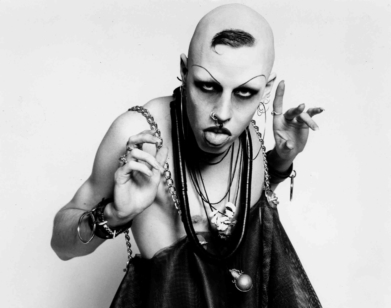
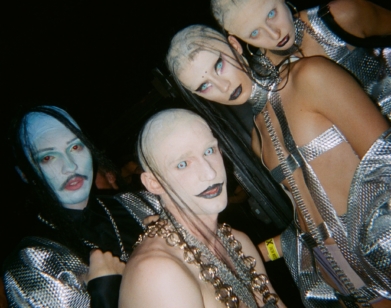
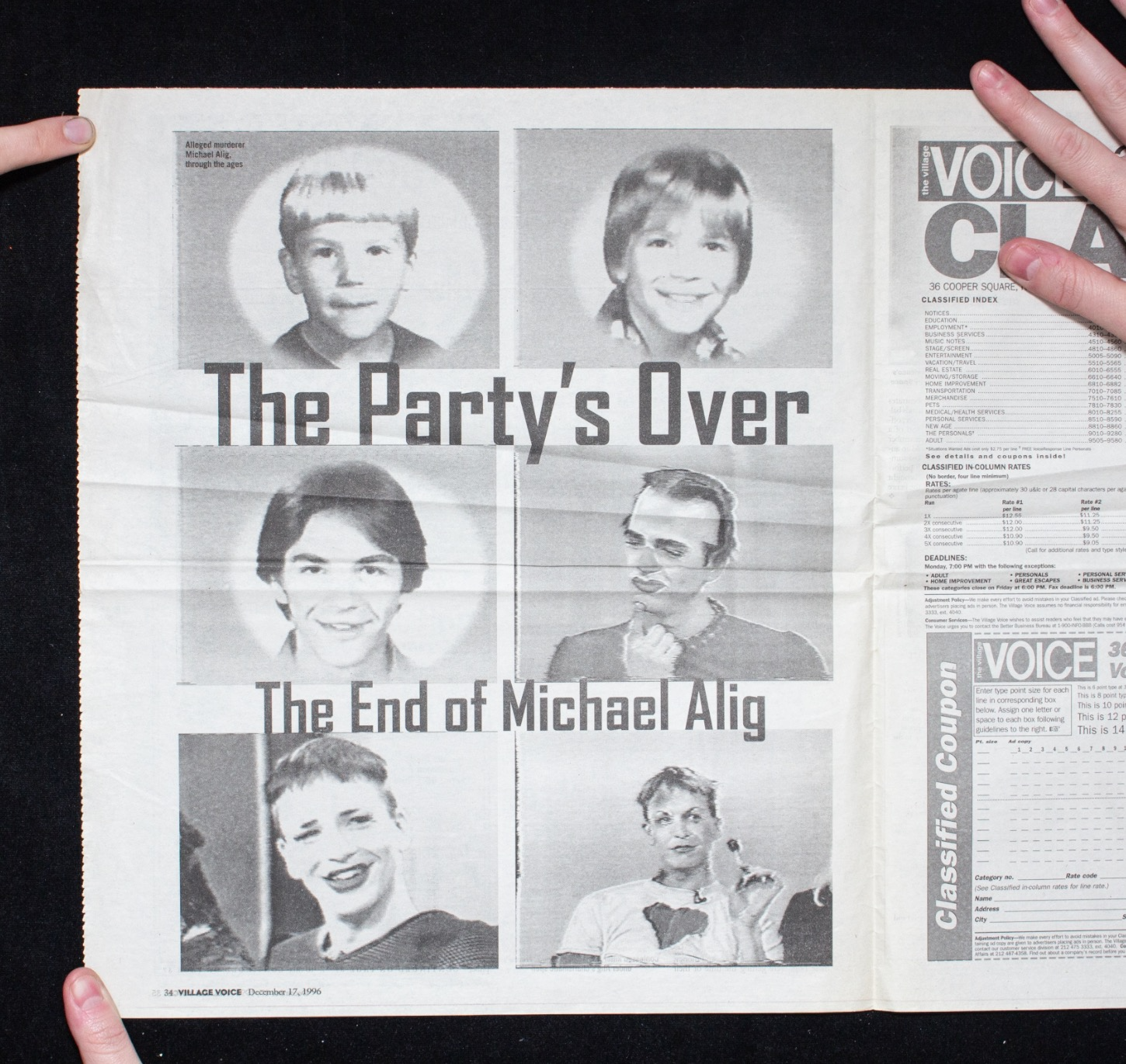
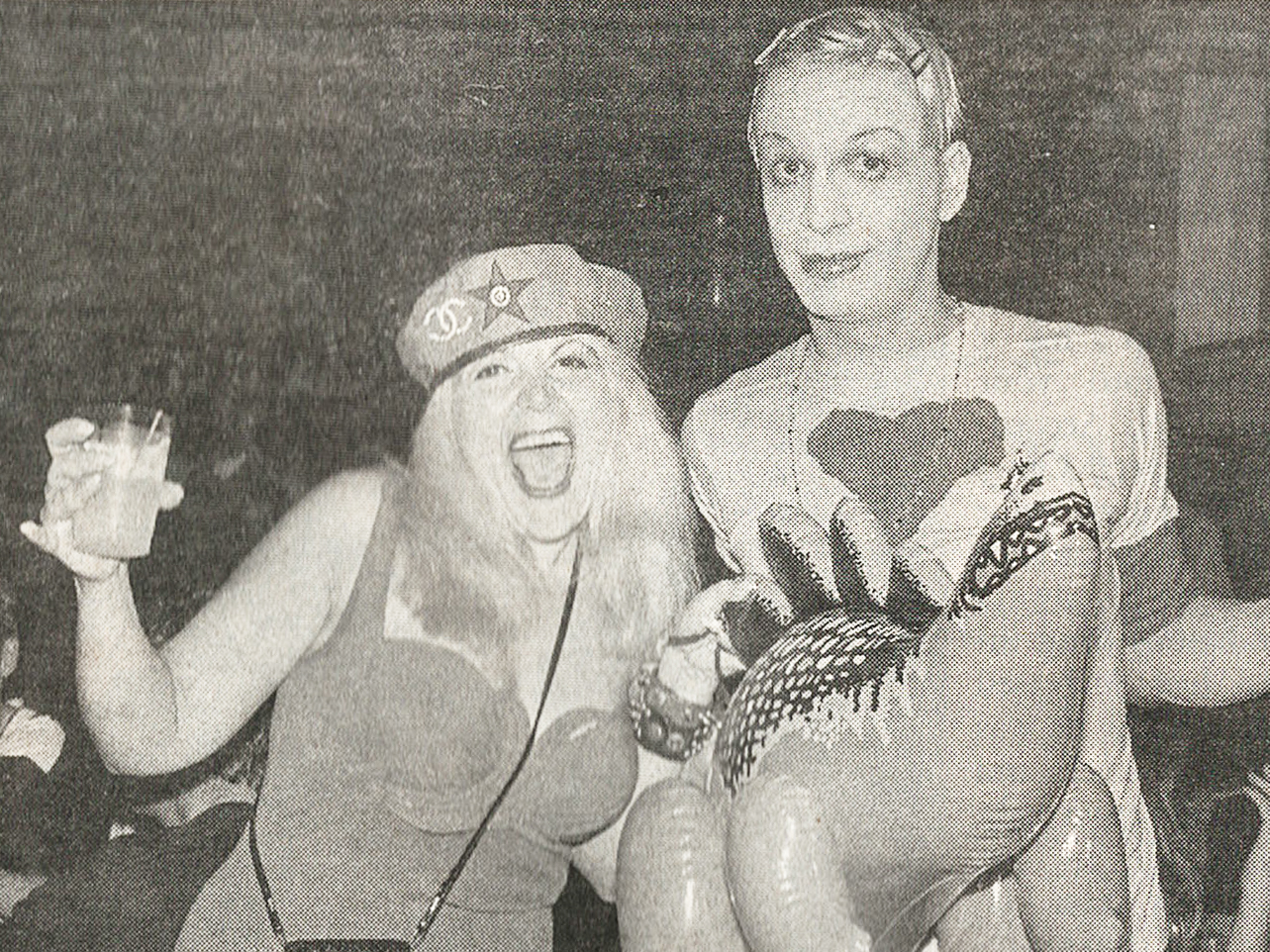
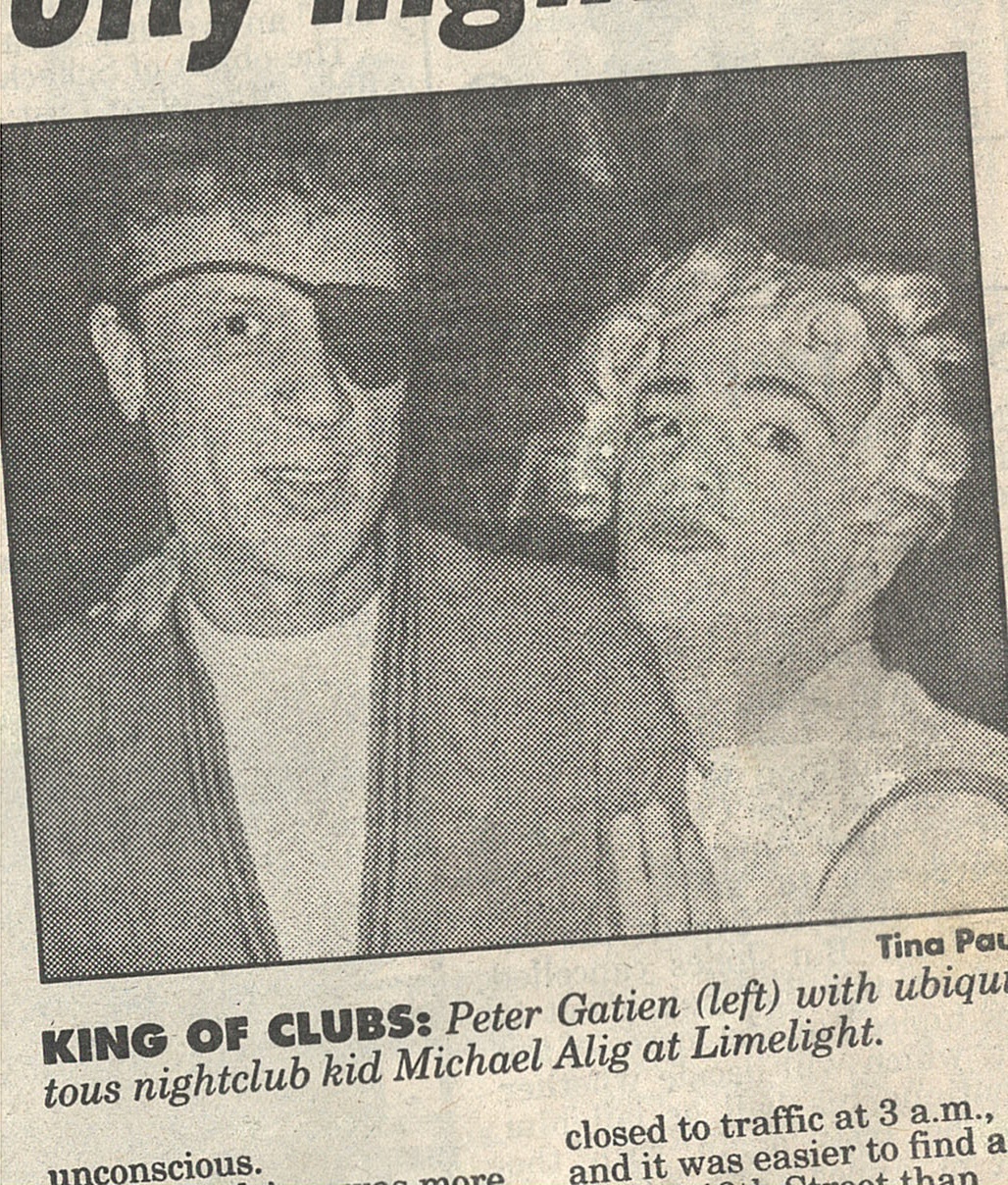
This month, Left Bank Books opened Limelight: A Secret History, a deep, debaucherous dive into the archives of Limelight owner Peter Gatien’s popular nightclub chain and the subcultures it spawned. Specifically, the Club Kids, a roving posse of artists, queens, and eccentrics. At the forefront was promoter Michael Alig, who became synonymous with the City’s seedy underbelly when he was convicted in 1996 of first-degree manslaughter in the killing of fellow club kid Angel Melendez. Three years later, while incarcerated, Alig reflected on the scene that shaped and eventually undid him in an essay originally published in the Montreal Mirror.
———
I’ve always lived too much in my own reality. It has actually only been through the most vigorous exertion of willpower that I’ve ever forced myself to be in any way outgoing. But somehow I managed to function fairly well for most of the thirty years I’ve been alive, until one day the drugs took over and imprisoned me within the confines of my mind.
After the first time I actually overdosed, I woke up in a small, dark, cramped room filled with boxes, clothes, and lots of junk, somebody’s storage room, or so I thought. But whose? It was such a tiny room, 9′ X 9′ at best. Where was I? Why was I alone? I felt a wet, sticky floor beneath my left arm. There was a bare lightbulb on over me which shed enough light for me to turn on my left side and notice that the wet, sticky substance was blood! Where was it coming from? Feeling up and down my body for cuts, I soon realized it was my arm. It was cut all over with little shards of glass sticking out. Then it hit me. I didn’t know who I was! This was some sensation, let me tell you! I mean, I felt “normal,” other than the fact that I didn’t know what my name was, where I worked, who my friends were, or where I was. I still knew what a lightbulb was, still knew blood when I saw it, but didn’t have any consciousness of time—past, present or future. I knew that yes, I must have friends and family, but who and where were they?
I got up. This was no “room” after all—it was a walk-in closet. Even though the light in the closet was on, the lights outside the closet were off, and so my world consisted of that small space that I then occupied.
Finally I got up the nerve to actually venture out of the closet, and into a vaguely familiar room. I fumbled for a light to switch. I must not be too bad off, I knew what a light switch was! I felt along the walls until I found one, then turned on the lights, only to discover an entire dinner plate filled with cocaine on the floor! It looked as if it had been kicked, or bumped, because almost half the cocaine was spilled on the floor, next to the plate. Why was I bleeding? A broken glass on the floor of the closet answered that question, but more importantly, why was I naked?
This bothered me. Had I been with somebody when this (whatever this was) happened? If so, who was it? Did I even know this person? Instantly, the frightening thought of a stranger being with me had come to my mind. Was I sexually assaulted? I didn’t exactly know where I was yet, but the room looked semi-familiar. I looked outside the window—it was twilight—the time that could either be dusk or dawn. But I didn’t even know the date, or even the year, for that matter. A nearby digital clock read 6:15. Great. AM? PM? Either way, it scared me. Did I miss an entire day? Days?
I walked into a bathroom. The bathtub was full of water, and there was a towel in the next room. Was I taking a bath?
Before I could even answer my own questions, I bent down, picked up the plate of cocaine, and did a huge line. Within the next minutes (or hours?) things slowly became clearer and clearer to me. Yes, I had been taking a bath. That much I did remember. Then, one by one, I remembered other things too. I had gotten home from the Limelight after hosting my weekly Wednesday party Disco 2000. I had taken a bath to wash off the evening’s fun, and was doing cocaine to bring me up from the Rohypnol I had taken upon leaving the club on the way to pick up more heroin. For the very first time ever, the overload of uppers and downers must have caused me to have a seizure, because I did remember feeling light headed after rising out of the tub. Eventually I remembered my name. It is Michael. Michael Alig. And I am known as the leader, or forefather, of the Club Kids.
Cutting-edge movements have been prodigal in every generation. The 20’s had its flappers, the 50’s had rock and rollers, hippies in the 60’s and early 70’s Disco. Initially, the driving force of each of these genre appear as a wanton group of insubordinates, seemingly corroding corruptive or harmful to society, and sometimes they can be. They are also, however, utterly necessary in a society such as ours, which has abandoned the older “drawing room” aesthetic to one which incorporates all strata of society. By introducing new ideas and ways of thinking, these movements push a society forward. Thus the culture in America and Europe don’t stagnate, and at the same time provide a new threshold of pleasure and, unfortunately at times, pain from its abuse.
Such movements are significant, and thus become cutting edge, when the idea and its artistic demonstration are powerfully orchestrated by usually a dedicated group of narcissistic “cultural revolutionaries.” These style rebels congregate in underground nightclubs in areas like the East Village, Paris, and Berlin, mustering up momentum and its duplication. These nightclubs, which are uninhibited forums of display and expression, serve as a sort of social litmus paper that fine tunes the essence and art of the movement.
Eventually, the ideals of the movement land on the desk of some Madison Avenue business or advertising executive, in preparation for its big Hollywood-style American (and thus world) debut. Suddenly, what began as some backwards, “anti-establishment” sort of idea has not only become accepted by the vast majority, but in many cases it actually morphs into the majority. By this time, that once underground ideal begins to bore the heroin addicts in the East Village that started it, and the whole thing happens all over again. Overall, however, all was not in vain—these flamboyant movers of fashion, style, and art have added a new piece to the evolving cultural puzzle of the United States and Europe.
Intrinsic to this type of movement is Euphoria. Euphoria from the aesthetic ambient—music, style, art, and sometimes drugs.
There may become a dependency to a non-ending supply of newer, wilder concepts and feelings, with a belief that a bottomless appetite will eventually be satisfied. However, this becomes the abyss called addiction, for those that continue to chase the pipe dream until they fall. Others, perhaps more somber ones who curb their search for this endless euphoria, may actually capture the social and economic profits of such movements by continuing on the so called “straight and narrow.”
A possible metaphor for such social manifestations is a pendulum that increases its span with each swing. The pendulum fluctuates from greater and greater extremes. On one end is the conservative, which responds to a radical new movement by only exacerbating the negative to justify its own righteous cause, and on the other the reactionary libertine, which by nature exceeds its past position by even more outrageous pleasures. In the 70’s, the pendulum was on the libertine side and with Disco, America had reached its zenith of decadence. Sex and drugs had gone mainstream and a general feeling of Sodom and Gomorrah reigned supreme. This was followed by the pandemic AIDS, and the nation immediately reacted by becoming anti-libertine, which resulted in the relatively tame 80’s with its corporate and blasé airs the breeding ground or primordial soup for the evolution of the new libertine and in many ways even more decadent subcultures—the Club Kids.
The Club Kids violated the New World order morality that Reagan and Bush wanted from the youth of America. Our behavior was reactionary to this sedate, boring world, and our movement had a fairly simply message: Be and love yourself despite your imperfections, and do it bigger and better than ever before. To the untrained eye it may have appeared superficial, but anybody who has been through it knows it’s not and that’s why it captivated the nightlife of NYC and most major cities worldwide for nearly a decade.
During the height of this movement I was operating four of the largest, most influential nightclubs in NYC. I was making more money than an investment banker, living in an expensive Manhattan apartment, and traveling the club circuit around the world. At these nightclubs I was responsible for the development of ideas into incredible and decadent realities, and it was no easy task. It required the coordination of out-of-control artists, egocentric drag queens, primadonna DJs, designers and quasi-celebrities to produce events that resulted in endless pleasure for hundreds of thousands of club patrons, and of course, advertisement for our patronage. Therefore, there couldn’t be a happy medium—only an extreme.
In fact, today I am still looking for that happy medium. Being, among other things, an extremist, the very nature of the word “medium” bored me. Medium was the garment size I ordered from whatever hip, young designer was on the scene at the time, and not the way I wanted to live my life. The inability to find that delicate balance is probably the cause of my present incarceration.

My world required the constant infusion of bizarre yet marketable concepts stemming from stretching limits and boundaries, and I began using drugs to accentuate that search. My pleasure and creativity were thus enhanced, and it was easy and risk-free, or so I thought. I’m not going to lie and say I wasn’t enjoying myself, because I was having the time of my life. As a realist, I’m also not going to say that every person who uses drugs is going to get AIDS, overdose or end up like me, in prison. But these are all possible long-term consequences. Using drugs must require some sort of rational, educated analysis, brought about by mass education and a realistic system of deterrence. (As a diagnosed manic-depressive, common sense should have warned me that recreational drug use was not an option for me.)
Either way, I was a pleasure junkie, trying to derive as much pleasure out of life as I could with as little work as possible. The urge to “feel good” I believe is universal. It’s an innate drive to feel more complete, more satisfied than the moment before, yet the more things we discover, the hungrier we seem to be for more still.
Little children have the right idea. Their entire lives revolve around simple pleasures like playing and eating. In fact, even when they cry they’re seeking the pleasure of the mother’s nurturing touch. Little children are allowed—even encouraged—to lead a life of pleasure.
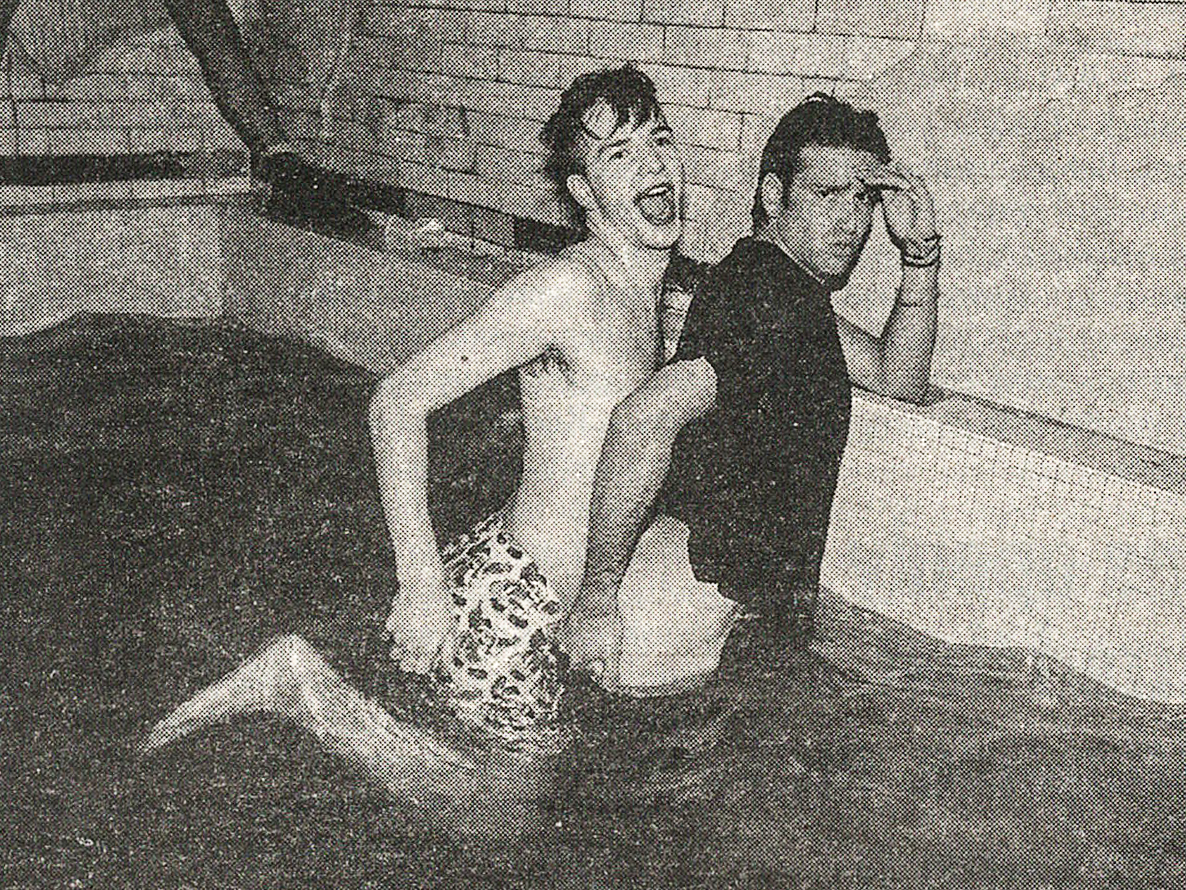
This is, perhaps, one of the main reasons for my refusal to *grow up.” It is why much of my adult life has been spent creating environments for myself and others, where adult responsibilities take a backseat to childlike wonder and surprise. With this mentality and my sense of adventure I was very successful at doing this—so successful that it became a reality, a real New York Subculture. It was a big job that carried with it lots of responsibilities, which I carried out diligently. The problem for me was with daily, mundane things like paying bills, shopping and cleaning. At times I would simply not pay my phone bill, and without a way to order food delivery, I wouldn’t eat. Sure, I realized that was both ridiculous and unnecessary, but somehow it was very difficult for me to find that happy medium where I could relish in the wonder and sense of fun that made life worth living, and still keep my phone on and my apartment clean. In hindsight, this should have been the first red flag of some sort of trouble.
People always ask me, “Didn’t you notice what was happening to you? How did you allow yourself to fall into such a state?” The answer to that is: No, I didn’t realize what was happening. And when my family, friends and even my boss tried to warn me, I still didn’t agree with them. As far as I was concerned, they simply didn’t understand that I was in complete control. I believe there were several factors in my evading reality. The first were the usual Freudian defenses of denial, rationalization and intellectualizing, for me to subconsciously block out any unpleasantness. Then there was the actual physical addiction to heroin. My level of drug addiction isn’t something that happened over night—it took years to develop. It happened so gradually that by the time I realized it my body needed the heroin for nourishment, and it was too late.
While some may misinterpret this next reason as a cop out, I still firmly believe that, on one level, another significant reason has to do with my homosexuality. In my experience, the homosexual lifestyle in major cities is all too out-of-control, and willed by a subconscious desire to self-destruct. I dealt with that by self-medicating myself with drugs. However “politically correct” it is to be gay, the reality is that it isn’t actually correct, not in the daily existence, be it at work in NYC or the average McDonalds in Ohio. Thus, there is this pain that is made easier to deal with by the formation of a gay subculture and also, in many cases, by the use of drugs, and the ability to “party your life away.” I am not trying to point a finger of blame, as ultimately I have nobody to blame but myself. I am only trying to understand why.
Just prior to my arrest I had sequentially overdosed four times with naloxone treatment in the emergency room, narrowly missing death. I didn’t learn from those experience (most junkies don’t) and continued using heroin in a bazaar act of flirting with death. Actually, at that point I would have welcomed death, as being “normal” again seemed so impossibly out of reach to me that life didn’t seem worth living. Unfortunately, for me all of this ended in the death of my friend Angel, and my resulting incarceration.
But in prison, with the forced end of a constant, affordable supply of drugs, I realized that I had no choice but to stop. Heroin is widely available in most jails, especially Riker’s Island where its use is common knowledge among inmates and officers alike, but its price, questionable quality and inconsistent supply make it a highly priced smuggled commodity that can become a life and death game. The only way to stop was to allow them to lock me up in a solitary cell for several months, to insure that I would not give in and use heroin. It was probably the most important decision of my life, because the alternative was death.
In retrospect I realize that I didn’t stop using H on the streets because of the protective shield drugs created and their ability to make life worth living through their unnatural euphoria. At the time, life was just one great time after another, and I believed life wouldn’t be worth living sober because a normal, mundane set of rewards and incentives wasn’t enough to keep me happy. It was either being the abominable “pleasure junkie” or just existing, and the latter I simply didn’t think possible.
Now, after over a year of sobriety I see that this was a wrong rationalization and actually the opposite has happened. Once again, I’m experiencing life clearly through my senses and the clean way in which they are processed in my mind, enjoying a renewed, child-like innocence. A smile or a laugh isn’t just a reaction to the most extreme situations anymore, but to my average daily experiences like eating a piece of sour candy, or seeing a fat boy in the prison yard with the crack of his butt exposed for everybody to see. I believe this is just the beginning. It will take some time for my brain to re-wire what’s important in my life, but the point is, I do see massive improvement in an area which I felt was hopeless. I am looking forward to a spiritual kind of rebirth that hopefully a few years, I pray, in prison will allow. Now, however, it will be the small, subtle life experiences that will be my reinforcement—parties in jail are dangerous.