


STUDIO VISIT
“Are You Afraid of Death?”: Sterling Ruby, in Conversation With Karla Welch


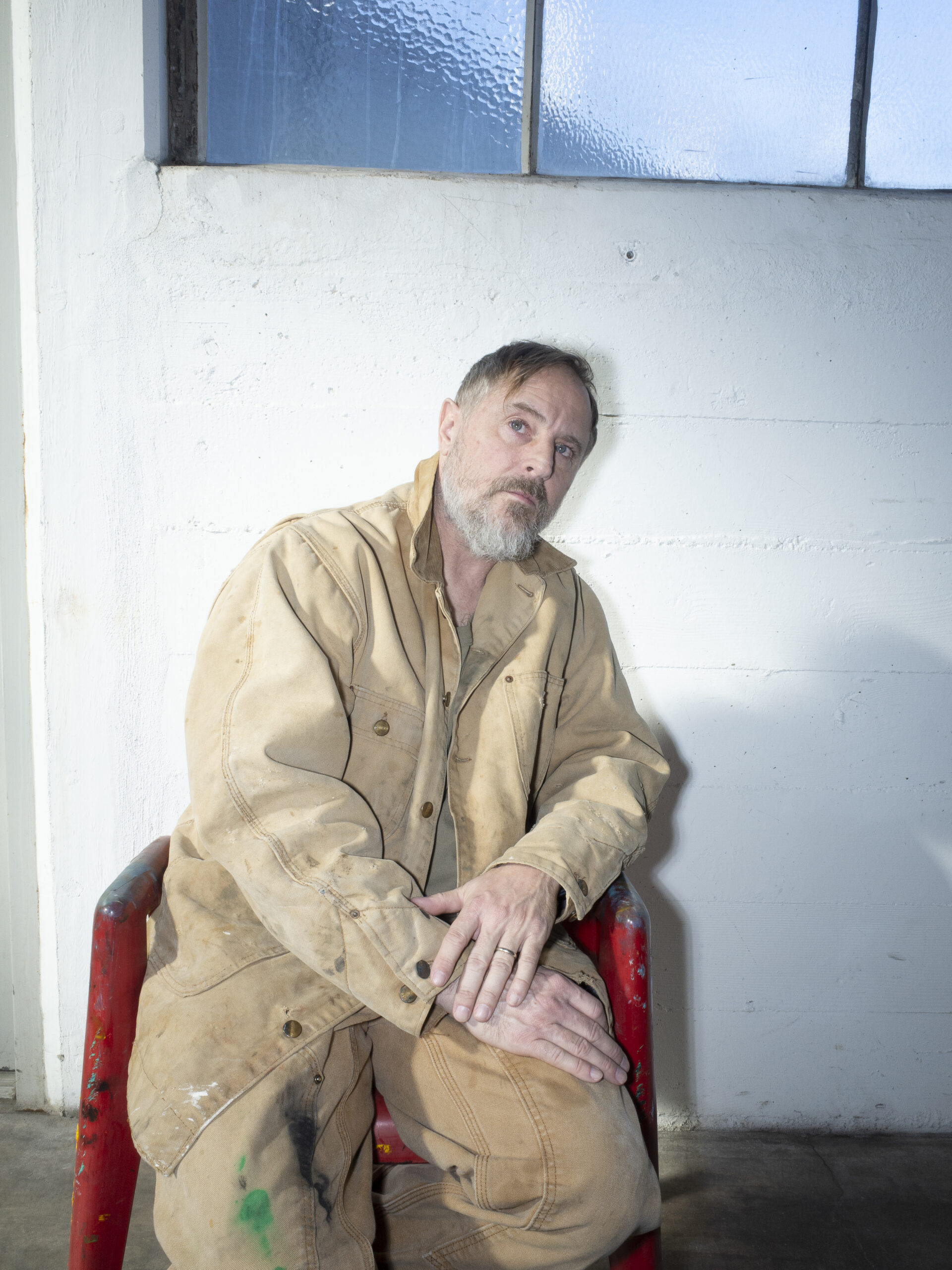
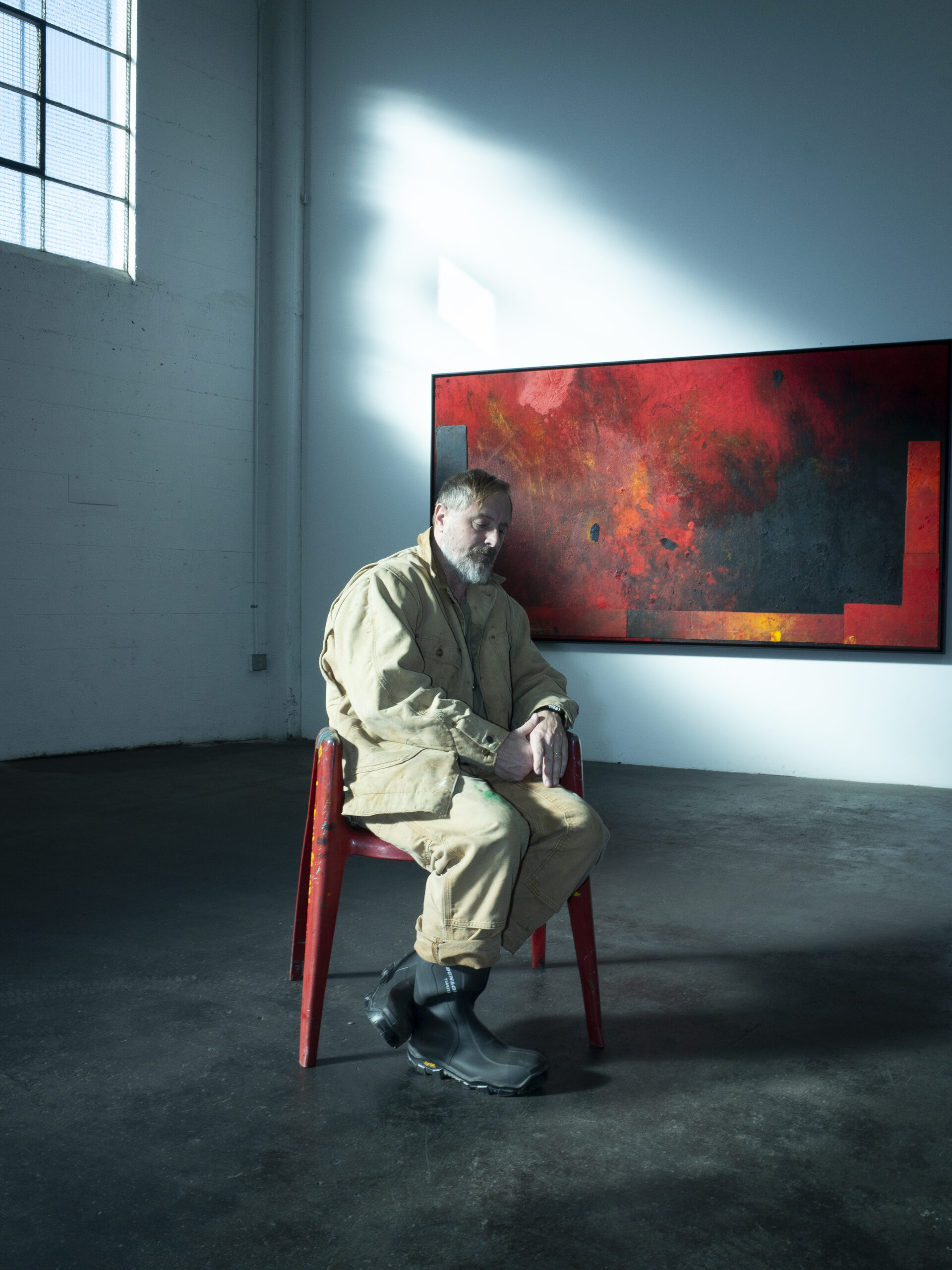
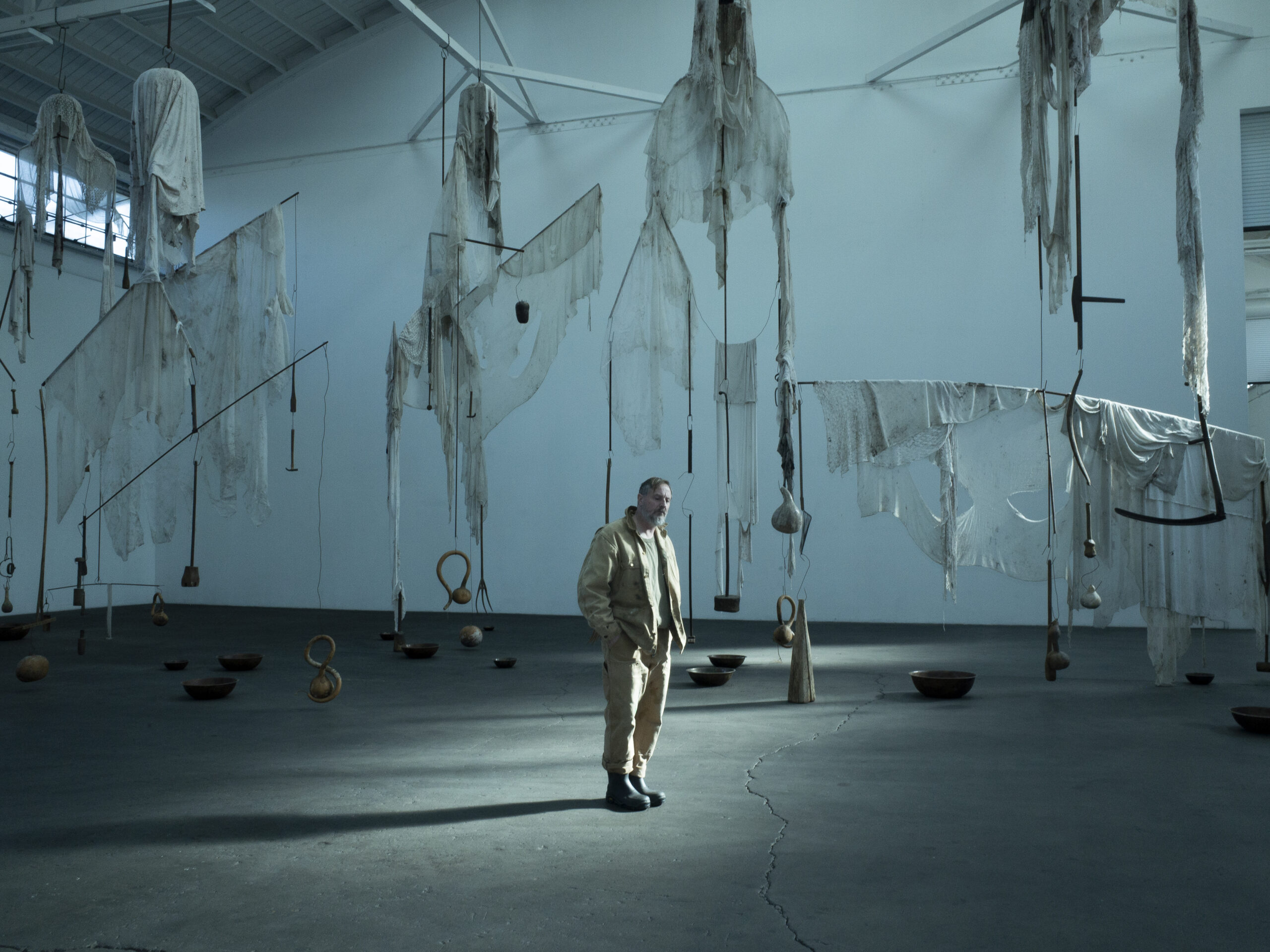
Sterling Ruby, photographed by Maya Spangler.
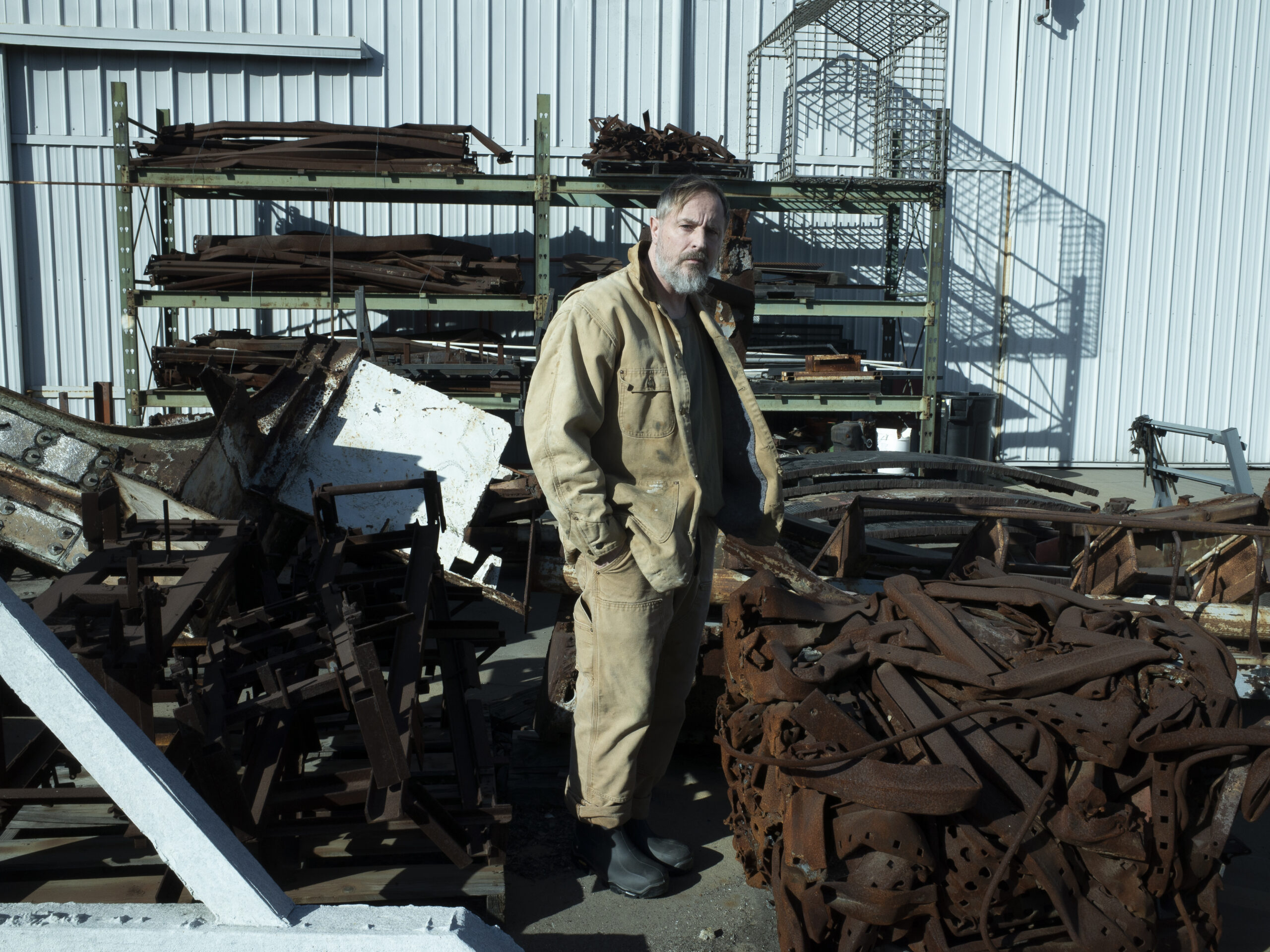
Now based in Los Angeles, the artist Sterling Ruby consistently turns to his city for inspiration, infusing his prolific, materially diverse body of work with electric hues and an industrial edge. The 54-year-old Dutch-American does things blotchy, bleached, and bright—from his paintings and drawings to his soft-sculpture, garments, and ceramics. Beginning this weekend, a new exhibition of his work, Atropa, opens at Sprüth Magers, featuring a number of watercolors, nature-focused graphite drawings, small-scale pen-and-ink studies, all governed by the notion that we are all going to die one day. But the celebrity stylist and creative director Karla Welch isn’t so afraid of death, which makes her the perfect audience for Ruby’s work. “I really don’t have any say in the matter,” she quipped when the two got on a Zoom call last week, “so I’ll take that Chardonnay with some ice.” Below, the old friends reunite for a wide-ranging conversation about trance states, plant life, forensic psychics, fashion economics and, of course, Formula 1.
———
STERLING RUBY: Hi, how are you doing?
KARLA WELCH: Good. How are you? Happy New Year.
RUBY: Happy New Year, yeah.
WELCH: I like how every “how are you doing?” is with the preface that we know we’re not doing great. But thank you for having me interview you. I’m sure others weren’t available and I was happy to.
RUBY: No!
WELCH: I’m teasing you. But I wrote down all my questions because I would never ChatGPT any of this. I apologize in advance if I have to look at my questions. But first, congratulations.
RUBY: Thank you.
WELCH: Well, it’s kind of amazing.
RUBY: What’s amazing?
WELCH: Your show, the pieces.
RUBY: Oh, thank you.
WELCH: The title’s a little intense.
RUBY: The Atropa? The nightshade Atropa belladonna?
WELCH: Well, the Fates. The idea of being the one who cuts the thread and the life.
RUBY: I’ve wanted to title a show this for a while. I love the witchy aspect of the nightshade. It’s been a long time now, but I have glaucoma.
WELCH: Oh, okay. Do you smoke weed for that?
RUBY: No.
WELCH: Okay. Well, good for you.
RUBY: I was first diagnosed when I was 18, so I’ve had it a long, long time. But every four to six months I go to my ophthalmologist and they do these tests.
WELCH: The pressure tests? My mom has glaucoma.
RUBY: Yeah. And atropine, this liquid, is a source from atropa, like a belladonna flower. So it’s essentially nightshade that they drip into your eye.
WELCH: You’re poisoning your eyes?
RUBY: It’s under control. They dilate your pupils, so your pupils are just huge, and they take these crystals and they actually touch your eye with them and they shine this extremely heavy light into them. So you get this prism that just shoots through your peripheral vision. And in terms of the Atropa and the mythology, this was the way that witches would have astral projection. This would put you into a trance state. It’s such a surreal experience, and it’s still every six months. I love doing it. It’s really, really fun.
WELCH: That is not where I thought that was going to go but that’s incredible. So when you leave, are you seeing little fractals? Are you seeing little glimmers? Do you walk around like a shiny little star?
RUBY: A little bit, yeah.
WELCH: I’ll be calling my mom immediately.
RUBY: Ask her about it.
WELCH: So you started these drawings 30 years ago?
RUBY: Well, I started drawing like this 30 years ago. I went to this school in Pennsylvania and we just drew. We drew the nude figures. We did a little bit of watercolor, a little bit of painting. Most of that would be landscape painting out in the field on an easel. The school was based on the Wyeth family tradition, the Brandywine School, so it was a lot of nice art materials—like heavy French Arches, dark graphite pencils, and a lot of erasers. I didn’t really draw like that for many, many years, maybe 15, 16 years. And then just a few years ago, I started going back into it and it felt kind of nostalgic.
WELCH: Oh, that’s nice. Well, when I first saw this work, I was like, “I wonder if it’s optimistic or pessimistic.” I couldn’t decide if you were feeling happy or a little bonkers when you’re doing this stuff, because it’s super graphic and a little wild.
RUBY: I think it should always be both. I mean, I’m sure that you feel this way too. When you see a collection or when you—
WELCH: But it’s not the same, Sterling. I zip up dresses for a living. [Laughs] There’s no sense of permanence to what I do.
RUBY: Well, it should always be a bit of both. I really don’t like it when [art] is just beyond didactic and you know everything about it. I think that there should be a sense of mystery, some sort of distortion or twist.
WELCH: Are you afraid of death?
RUBY: Maybe. Yeah, I’m sure I am. Are you?
WELCH: I can’t decide. I don’t want to die early. But sometimes I’m on a plane and I get up there and I’m like, “Well, I really don’t have any say in the matter, so I’ll take that Chardonnay with some ice.” It’s only really going to be a bummer for everybody who’s left—I think that’s the sad part. So I’m not really afraid of it, I’m just not in any mood to anticipate it happening anytime soon.
RUBY: Yeah. Have you had to explain death to your child yet?
WELCH: You know what? My husband did it so amazingly. His grandfather died and they were our best friends. Our son was maybe eight or nine, and they had just gotten super into Star Wars. So he’s like, “He’s part of the Force now.”
RUBY: My youngest daughter is so obsessed. My mother died a long time ago and my youngest daughter is just really upset that she never got to meet her. There’s altars all over the house to my mom. The world could use more monuments to mothers.
WELCH: Oh, I love that.
RUBY: So today’s my birthday.
WELCH: Oh, what? Happy birthday.
RUBY: Thank you.
WELCH: Jeez Louise!
RUBY: Well, I wouldn’t have brought this up unless it was a funny story. So my youngest daughter wakes me up really early and she’s like, “I have something for you set up by the fireplace.” I go down and it’s yet another altar to my mother. And she was like, “Your mother’s here.”
WELCH: Aw, that’s love. Well, many, many, many, many years from now, I hope she gets to meet her and have a little kiki.
RUBY: She finds it completely fascinating, but it’s also so present in our house.
WELCH: I had a crazy experience. I mean, this is going to be the most L.A. conversation ever. I spoke with this psychic in November, a forensic psychic up in Canada who actually solves a lot of crimes. She’s a psychic who can help guide your life, but she also communes with the past. She’s blonde and super attractive and talking a mile a minute and has “Live, Laugh, Love” behind her. So I’m like, “What the fuck is happening?” And Sterling, she just started talking about all my relatives. There was no way. She’s like, “Oh, there’s Irma. There’s Tony.” Tony’s my dad’s father who passed away when he was really young and I’ve never met him. She’s like, “There are so many Italians up here waving at you.” They were all there and I just burst into tears. She goes, “Yeah, you have to cry or you won’t go to the bathroom for a week after I’m done here.” It was wild. It was unbelievable.
RUBY: That’s amazing.
WELCH: It was kind of amazing. So when I pass, I want to be with my dogs and hang out with the living, if we’re so lucky.
RUBY: As a child, I was very scared of the idea of dying. Years and years went by and [I realized] it was just anxiety.
WELCH: What was your favorite thing to do as a teenager?
RUBY: My favorite thing was to get out of town. It didn’t matter what it was.
WELCH: You’ve told me that you made clothes as a teenager, and you know how much I loved the collection you made. I mean, you’ve made a couple, but I really wish I’d stolen some of the samples, all that stuff with the plaids. Would you ever do another collection?
RUBY: Yeah, I think we would. To go back to my mother, she was an incredible person. She was Dutch and really young when she came to the States. I went to this school that had two different curriculums that were considered “creative.” One was home economics, but you weren’t allowed to take it. The boys took drafting and woodworking, but my mother would petition every semester to let me take calligraphy too, and we would design our wedding invitations in calligraphy.
WELCH: How modern.
RUBY: I was going to this school, I was listening to a lot of music, and I wanted to look a certain way. I don’t know how you felt when you were growing up where you did in Canada, but for me it was very powerful to go to school looking a certain way that most of the students were really against. It was just a big F you. And then later on I realized, “Oh, this is so interesting, the idea of making clothes.” My grandmother, my aunts, they all made everything. So it felt very crafty, it felt very earthy. So yeah, I do love it. And I would love to make another collection.
WELCH: Obviously you’re incredibly prolific. You’re the top dog, you’re Sterling Ruby, you’re this fine artist. And then you move into a space like the fashion world where there are a lot of “top dogs” and a lot of different types of people to work with. How did you find that collaboration? Because the work you’ve done there is so interesting and really quite profound. That Calvin Klein collection was incredible, especially when it was craft, Bonnie Cashin etc.
RUBY: I was excited because it was such a big jump to take this American brand and try and bring it back to the forefront of high fashion. But I also think with the history of Calvin Klein and working with John Pawson and working with Donald Judd, it had a precedent that made a lot of sense. I mean, they were all my friends from Clémande [Burgevin Blachman] and Matthieu [Blazy] and Peiter [Mulier] and Raf [Simons]. For them, I think, it was really exciting because they were European. And I loved how excited they were. I still feel that way whenever I do a project that’s outside, whether it’s making a record or a piece of jewelry or working on a runway show. I like that it gives me a chance to do something else that isn’t just making a piece of art, and there’s a task or an exercise associated with that. But to a certain extent, Calvin Klein was the first chance I got to really understand how the industry operates.
WELCH: Being in Long Beach and seeing just the sheer amount of things that get made—that, to me, was the most depressing thing.
RUBY: It was cheaper to make 1,000 of something than 100. And immediately after the collection was dropped, you’d have a two-week window for it to be at full-price before it gets marked down.
WELCH: That’s a whole other conversation, and I agree with you completely. The whole system is a mess, which is sad. But I love this about you—you’re so generous that you can just step in and make things with people. And you felt it in the collection. Lately I’ve bought a bunch of pieces from that first collection and I love them, so I hope you make more clothes.
RUBY: Thank you. I hope so too. I would love for somebody to come and say, “I will help you do this,” but there’s always a real catch to that.
WELCH: There usually is. Where is our $20 million check?
RUBY: Maybe you and I should start our own company.
WELCH: Okay, great.
RUBY: Get a really good backer.
WELCH: I’m in.
RUBY: I’m in too.
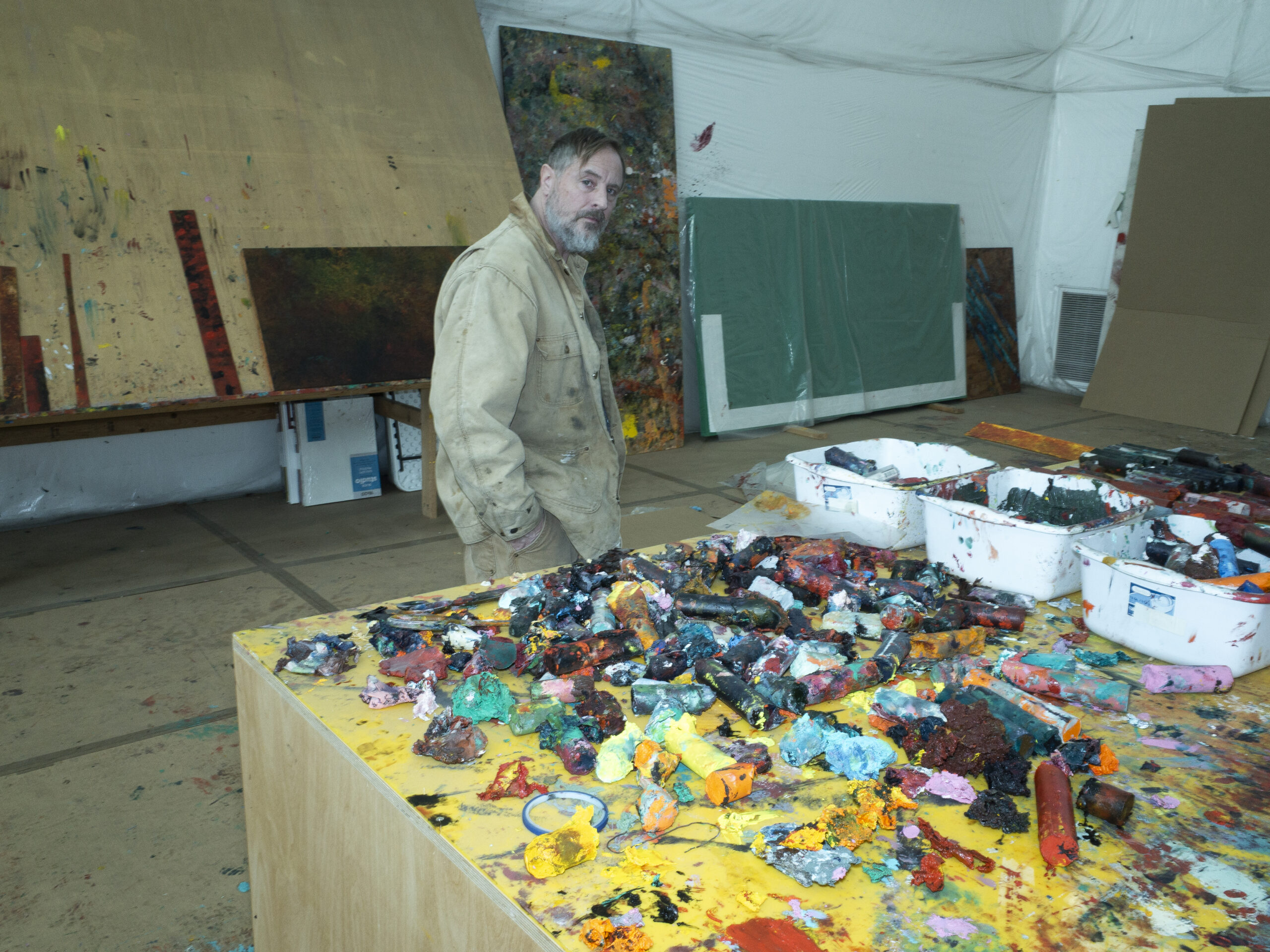
WELCH: I have some dumb and fun questions for you since we’ve been very, although I didn’t really ask you all my questions, I’m looking at my clipboard and all my handwritten stuff. So I’ll start with, what is your favorite pen or pencil to work with?
RUBY: Oh…
WELCH: I actually don’t think that’s a dumb question at all because I’m real specific about my Papermate here.
RUBY: This is a uni-ball Vision line pen. It’s waterproof. And for pencils, I’m a real stickler for the German, the Staedtler.
WELCH: Good answer. I know you’re a big collector of lots of stuff. What’s your most favorite thing you’ve ever collected? It can be a grouping or a single item.
RUBY: Well, it changes.
WELCH: Give me just one thing.
RUBY: I bought this group of silverware recently. It’s a Dansk Odin. It has a slight design skew to it that makes it a little bit more geometric. And the collection comes with these serving spoons.
WELCH: Oh, yeah.
RUBY: And this little incense holder. I’m pretty sure that’s from the Steinbach company, but it’s a weird oddity that I’ve never seen before.
WELCH: I love it. Do you know all those Japanese wood dolls?
RUBY: Yeah, they come in different sizes?
WELCH: Yeah, but I just got this one that looks like a pinecone, and there are two spaces for little faces—these two little happy people inside of the cone. I could look at that all day long and just feel so happy.
RUBY: Anything pinecone or acorn, I’m obsessed.
WELCH: Well, that leads me to the most perfect question of all. It could even be the last question. Who is going to win the F1 2026-27 season? And you can only give me one—
RUBY: George Russell.
WELCH: Oh my god.
RUBY: Shocker, right? But it’s going to happen.
WELCH: You should go put whatever you’re willing to lose in Vegas right now because there’s no way George Russell is going to win.
RUBY: He’ll win.
WELCH: Okay.
RUBY: Who do you think? Who are you rooting for?
WELCH: Max [Verstappen], but. I love rooting for almost everybody. Of course I would love to see Lewis [Hamilton] and Charles [Leclerc] do amazing, but I never have any hopes there. So I think Max Verstappen’s going to win. We should each place a hundred bucks.
RUBY: We’ll make a wager.
WELCH: I look forward to taking your money.
RUBY: We’ll see…
WELCH: Well, congratulations on the show because I love it so much.
RUBY: Thanks so much, Karla.