


PUNK
YHWH Nailgun Breakdown Their 11-Minute Album in 11 Minutes


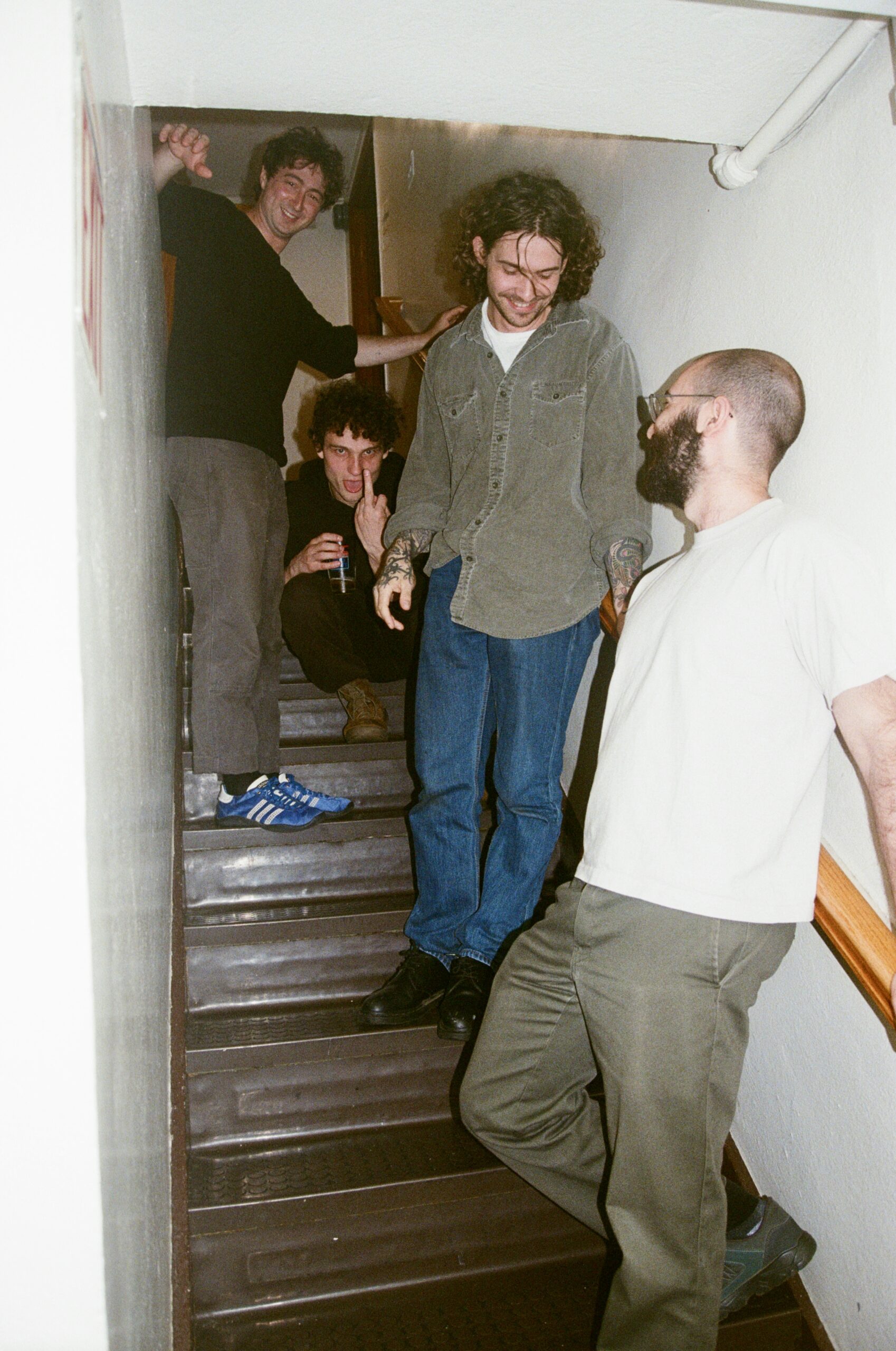
YHWH Nailgun don’t waste time. Their new record Magazine, out next week via 4AD, lasts just 11 minutes, roughly half the length of their debut. Though they insist the duration is not a constraint, just a shape. For a record this short, Magazine casts a long shadow. Those 11 minutes are stuffed full of religious dread, ecstatic noise, and enough end-times imagery to last a lifetime. When we met the band at Gottscheer Hall last month, we attempted to match the record and set a timer. In 11 minutes, we covered Cute Cat Cafe, shitty Bluetooth headphones, AI music rot, Diplo, transactional relationships, day jobs, and the best venues in New York City (we also went way over time).
THURSDAY 5PM, MAY 21, 2026, RIDGEWOOD
———
EMILY SANDSTROM: Favorite thing about Ridgewood?
SAM PICKARD: The influx of babies.
JACK TOBIAS: St. Matthias Church.
SAGUIV ROSENSTOCK: My friends live here.
ZACK BORZONE: It’s kind of quiet.
SANDSTROM: Least favorite thing about Ridgewood?
PICKARD: Fuck, dude. What do I not like?
TOBIAS: I have an answer.
PICKARD: Jack has an answer.
TOBIAS: I think for how quiet the neighborhood is, people come out here to be tourists. I feel like people are let down in a way.
PICKARD: You don’t let people down.
TOBIAS: Well, I guess that’s not the worst thing about Ridgewood. My least favorite thing is that it should be free, but instead it’s too expensive.
ROSENSTOCK: That’s a good answer. I saw that Cute Cat Cafe is just called Cat Cafe now.
SANDSTROM: Why did they take the Cute out?
ROSENSTOCK: I don’t know. They took it away.
SANDSTROM: Tell me how you ended up making an 11-minute album?
BORZONE: We just decided to. While we were working on it, we wanted to make it even tighter and smaller and put more in the little spaces.
SANDSTROM: So was it a ton of editing, like working backwards?
BORZONE: It was more us thinking about what short songs are, and what we want. Do you want to compact a lot of things into a small space so that they don’t all hit you at once? That’s a good feeling.
SANDSTROM: Did it feel like a constraint to work that way?
PICKARD: No, it was easy.
BORZONE: It’s just a different shape of music. Or a different shape for music to be in.
SANDSTROM: So is the next album going to be six minutes?
ROSENSTOCK: It should.
BORZONE: No, it’s going to be different.
ROSENSTOCK: We’re not going to worry about time for the next one.
SANDSTROM: How did people react when you did the 11-minute show?
TOBIAS: They liked it. One person missed the show and was upset about it because it was too short.
SANDSTROM: Does it help with streaming numbers to make a really short album, because people will loop it?
ROSENSTOCK: I think we don’t get paid for some of them because they’re under the limit.
SANDSTROM: Oh, interesting.
ROSENSTOCK: I have not thought about that to be honest.
PICKARD: You get zero cents instead of a third of a cent per stream.
SANDSTROM: There’s a limit?
PICKARD: There was.
SANDSTROM: Why is the album called Magazine?
BORZONE: It’s all there. There’s a song called “Magazine.”
SANDSTROM: Someone elaborate, please?
BORZONE: It’s called Magazine because of the many meetings and associations with that word.
SANDSTROM: Like physical print magazines?
BORZONE: No.
SANDSTROM: Like magazine rounds for a gun?
BORZONE: Yeah, like a magazine in a gun. Or like pictures in a book. The Z just feels really good.
SANDSTROM: So two of you met in Philly, and then you came up here and absorbed the other two?
BORZONE: We FaceTimed Jack and then we made a record with Saguiv.
PICKARD: We were all friends for a long time. We knew we wanted to make music with Jack, and then Saguiv recorded our first EP. Then we wanted to make music with Saguiv, and it stuck.
TOBIAS: Actually, they FaceTimed me in a final of college during COVID.
SANDSTROM: Did you leave your final to go?
TOBIAS: Yeah. I closed my computer and said, “I’m doing rock and roll now.”
SANDSTROM: One of you described the band as an oligarchy in an interview. What is your collaboration process actually like? Do you guys butt heads?
PICKARD: We don’t really butt heads. I feel like we are constantly sharpening each other’s ideas and bouncing off each other, but there’s never a standoff argument or any hard line.
ROSENSTOCK: You know about that story about YES, how they had a three-week-long fight about F sharp or F, and they couldn’t choose? We don’t do that at all.
SANDSTROM: I’ve never heard that story, but that’s awesome.
ROSENSTOCK: That’s pretty much the most annoying thing I can think of, grown adults doing that.
TOBIAS: We kind of joke about being one guy. Everything’s just sort of quick with us.
SANDSTROM: You guys kind of merged brains at some point?
TOBIAS: A little bit.
SANDSTROM: How do people mispronounce the band name?
TOBIAS: Someone said “Jehovah Jack Knife “one time.
BORZONE: Was that my brother?
TOBIAS: No, it was a coworker of mine.
SANDSTROM: What are you day jobs?
ROSENSTOCK: Record and mix music for people.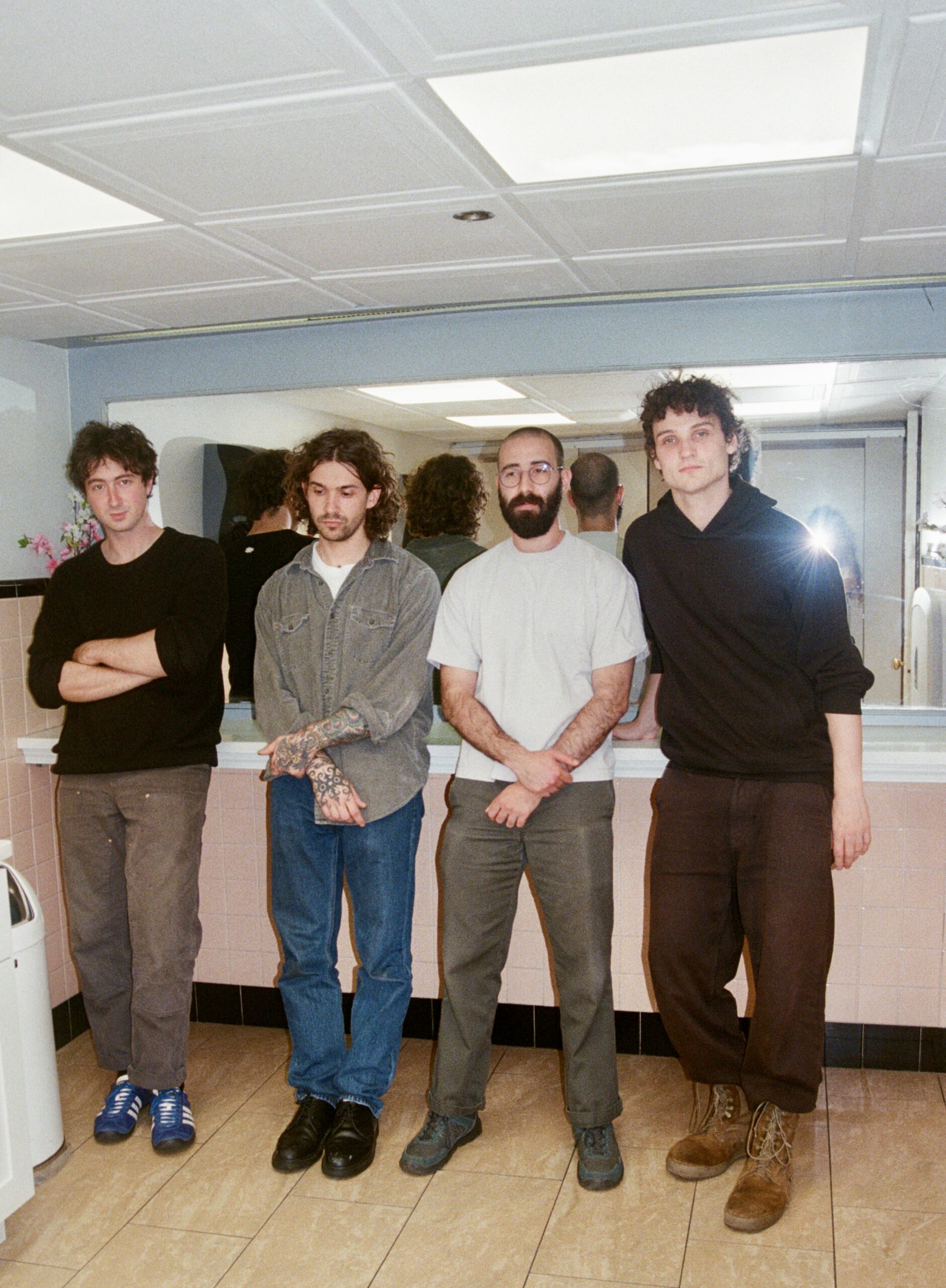
BORZONE: I work the door at Baby’s.
PICKARD: I tattoo full time.
TOBIAS: I do graphic art stuff.
SANDSTROM: What’s your favorite New York venue?
ROSENSTOCK: I really like Public Records because the sound is good.
PICKARD: Public Records is cool.
TOBIAS: TV Eye is awesome.
ROSENSTOCK: Warsaw. I like how it looks, but I don’t really like it. The staff is special though. I’m not really in the scene anymore. I guess I’d say Carnegie Hall.
PICKARD: I want to go again. Shit.
BORZONE: MSG.
PICKARD: MSG, sure.
SANDSTROM: What’s the last album you listened to in full?
PICKARD: This guy that I tattooed recommended to me this album by Miami Angels in America. It’s called A Public Ranking. It’s from 2012 and it’s kind of noisy synth stuff. Kind of cool though, because you can tell they really, really don’t know how to play their instruments, and they write melodies that don’t make any sense.
TOBIAS: I listened to How to Rescue Things by Bill Orcutt. It’s insane.
PICKARD: I told you about that one a while ago. That’s one with the 50s music in the background.
TOBIAS: Yeah, he shreds over that ethereal film score. Every song is so good.
PICKARD: Dude, that’s sick.
ROSENSTOCK: Mine is by a Colombian band called Los Gaiteros de San Jacinto. They have a record called Toño García: El Último Cacique. It’s very emotional and very simple in some ways. Honestly, the simplicity of it feels very profound.
BORZONE: I don’t have headphones right now, they broke. My fucking Bluetooth headphones always break. The Sennheiser Bluetooth fucking headphones. You think you’re buying something really nice because Sennheiser’s nice. But they break in six months every single fucking time, and the warranty doesn’t work.
TOBIAS: This is the second time.
BORZONE: I did that twice now, and then I got these other ones that are…I don’t even remember what the brand is. But anyway, I always listen to Now Wait for Last Year, by Caroline K. It’s a really, really good album.
SANDSTROM: What’s a music trend that you hate?
PICKARD: People letting themselves be boring. And boring in a self-satisfied way. It really bothers me. I think that comes in and out of vogue.
TOBIAS: AI in music. That sounds sort of boomer-y. I saw a video of Diplo or someone saying, “I don’t need to hire any singers anymore because I have AI.” That’s just against humanity.
SANDSTROM: You’re pro people.
TOBIAS: I’m pro people.
ROSENSTOCK: It’s favoring the trend over substance. Just because you’re aware of a trend and you can pull off the trend, doesn’t mean you can substitute actual music with just a vibe.
BORZONE: Just because something is pushed through by an algorithm doesn’t mean it’s worth talking about. Acting like this is what culture is, and that it needs to be discussed. It does not. It’s just chosen by some fucking guy. You know what I mean? I remember when Kanye [West] was doing all this weird shit, people were like, “This is what culture is, so we need to discuss it.” Academics are like, “We’ve got to discuss Kanye.” No, you fucking don’t. He’s just saying whatever comes to his mind. You don’t have to talk about that.
SANDSTROM: What’s something you hate about the music industry?
PICKARD: I don’t really like having conversations that make me feel like I’m subtracting something from myself.
TOBIAS: A lot of the conversations you end up having end up being about the vibe rather than the reality of the music or the band.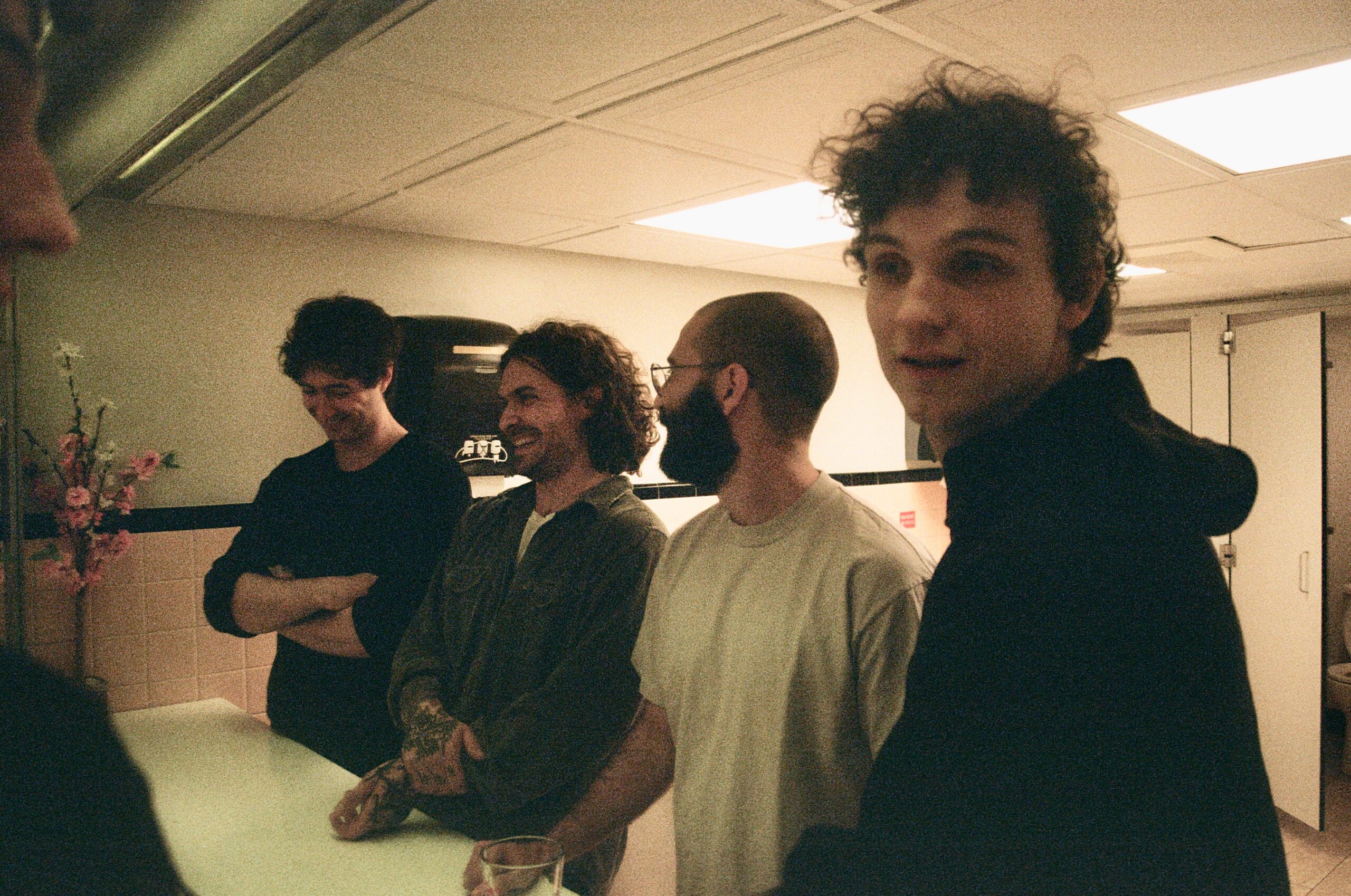
SANDSTROM: Like people trying to make a scene of anything?
TOBIAS: No, no. I’m all for scenes or whatever, but it’s often like something gets labeled as hip, and then it gets swarmed by all this stuff. A lot of the time it is good, but a lot of the time it’s not.
PICKARD: The problem with the music industry? Whole game’s fucked up.
ROSENSTOCK: Whole game is fucked up. It’s the same problem as any industry. It starts to become about the industry and not about the thing. What I don’t like is that friendship is a big part of business in the music industry and that’s ugly. I would much rather somebody be like, “Let’s talk business and then we can chill and stop.” But for some people, their whole life are these weird-ass business friendships.
BORZONE: Then it’s not genuine.
SANDSTROM: Are you guys genuine friends?
BORZONE: Yes.
PICKARD: We’re like brothers, yeah.
ROSENSTOCK: We’re friends. And I’m not friends with any promoter because they’re a fucking promoter. No way. Fuck that shit.
TOBIAS: No, we’re like best friends.
ROSENSTOCK: We’re friends with each other and that’s it.
SANDSTROM: How do you guys start a song?
ROSENSTOCK: Somebody starts playing and we talk about it.
TOBIAS: Usually Sam plays a beat and one of us will play something on top. Or if there’s an obvious hole to fill, things float on top of each other. With Zack doing lyrics, he’ll be in the room sort of controlling the storm for a sec, and then to make room for himself too. There’s not one way. We just get in a room and press play.
SANDSTROM: How do you guys know when a song is done?
ROSENSTOCK: You just know.
BORZONE: It’s like making a building or something. Or maybe a song is like a room. Some people make songs that are like many rooms, but our songs are usually one room. You make it and you’re like, “Yeah, I could live in this room for the rest of my life.” Because that’s what we have to do. You make a song, and it’s like, “Yeah, we’re going to have to play this thousands of times.” But I never get tired of any of our songs. I never get tired of playing any of them. I love all of them. Even the ones that everybody else is tired of, I still want to play them.
SANDSTROM: What’s the best part of playing live?
ROSENSTOCK: It’s always different. It’s always a strong, intense, powerful thing, but it always fits perfectly to whatever you’re feeling in that particular moment. It almost feels like a ready-made thing, a finished piece of art that you get to do again.
TOBIAS: It also feels like the culmination of what we do. Not to dismiss making or recording music, but playing it live is basically what we already do. It’s like how we write the music as a band. We play it.
SANDSTROM: Right.
BORZONE: It’s also fun laughing at each other when we play live. That’s the best part about it.
SANDSTROM: What about the traveling component?
PICKARD: It’s fucking awesome. It’s really easy sometimes to be like, “Holy shit. Last year we were gone so much.” It’s kind of easy to feel a little bit uprooted because we all have lives in addition to music, but it’s so sick to be able to just go all over the world.
TOBIAS: We’re blessed. It’s really difficult, but we’re all born to do this.