


ROMANCE
Emerald Fennell and Baz Luhrmann Are Horny For Making Movies


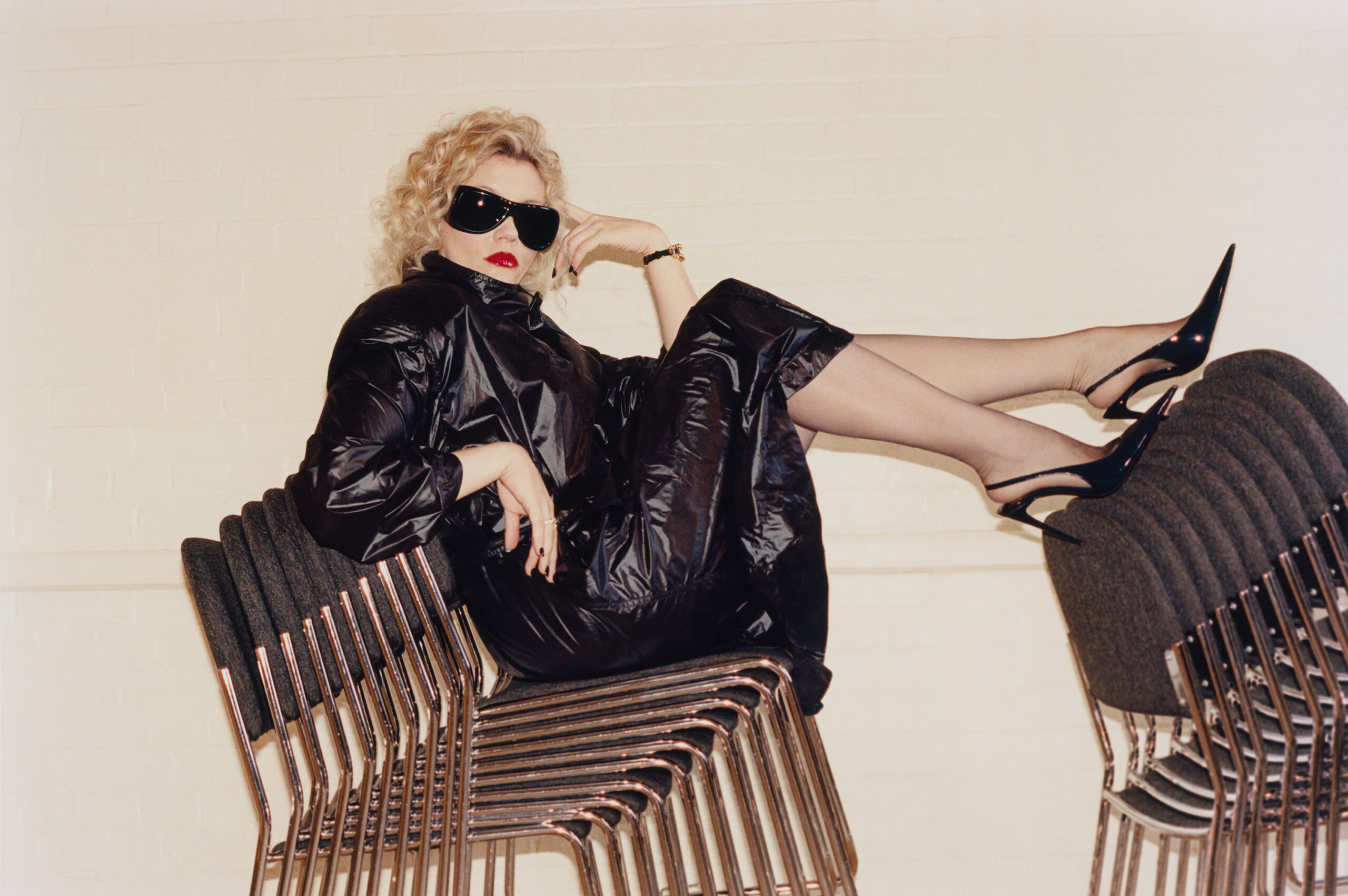
Coat, Sunglasses, Tights, and Shoes Saint Laurent by Anthony Vaccarello, Ring and Watch Cartier
Emerald Fennell, a self-proclaimed “psychotic details demon,” convinced two of Hollywood’s biggest stars to sign on to the horniest film of the year, one of her many talents. With Wuthering Heights, an adaptation of Emily Brontë’s 19th-century novel about an explosive romance between Catherine (Margot Robbie) and Heathcliff (Jacob Elordi), the actor-turned-director has cemented her status as a provocative auteur. Not only is Fennell’s singular blend of romanticism, horror, and wit penetrating the zeitgeist (who could forget the bathtub scene in Saltburn?), but it’s also daring audiences to return to the theaters, a feat fellow worldbuilder Baz Luhrmann can’t stop raving about.
———
MONDAY 8 AM JAN. 5 , 2026 LONDON
EMERALD FENNELL: I’m just looking at the images on the wall behind you. Is that for Joan of Arc [Luhrmann’s next film Jehanne d’Arc]?
BAZ LUHRMANN: Yeah. When I work, everything has to be around me. I have to build a world around the world.
FENNELL: I have a similar thing. I make myself a little murderous basement of images and live inside it for ages. I don’t know how to do it otherwise.
LUHRMANN: That’s very clear in this fantastic movie you’ve made. By the way, I loved the picture. But you don’t make a film that has its own cinematic language unless you’re a person who goes inside a world to make it.
FENNELL: Well, that’s the fun of it. I can absolutely disappear.
LUHRMANN: One thousand percent.
FENNELL: The murderous gallery of images and the textures and all that stuff is me trying to communicate visually what I see in my head.
LUHRMANN: For sure. I research for a long time, then I start to make a language, and work with CM [Catherine Martin, Luhrmann’s wife] on translating it into highly rendered stuff. But it’s not just that. It’s living the life, like when I did [The Great] Gatsby. That’s the most romantic part. But I always take a really long time to decide which story is right for now. Gatsby was right because we were going through an incredible financial meltdown. How do you go about deciding what’s the right story to tell now?
FENNELL: I have imaginary worlds I visit on a daily basis over years and years. What generally happens is that one pulls into focus ahead of the others. I didn’t know this one was coming at me so fast. I thought it would be something I’d do much later, but I needed it.
LUHRMANN: Yeah.
FENNELL: I always approach it from, “What do I want to watch?” The last few years have been so deeply troubling, and I felt like what cinema still has the opportunity to do is bring people together. That emotional connection is what I miss. How focused are you on the audience’s pleasure, or is it purely personal?
LUHRMANN: The only selfish decision for me—because we give our – selves completely to it for such a long time—is, “What is it that I need in my own personal journey that this story can help me deal with?” Everything else from that moment on is about making sure the audience comes along. Do they understand? How can we make them feel? It can be as expressive as you like, as long as the world you’re building is completely clear. Let’s take Charli [XCX] and the music for Wuthering Heights. I know her quite a bit and I love the music, but I see her blossoming as an actor. She’s a cultural impresario to some degree.
FENNELL: Totally.
LUHRMANN: Talk about that, because the music is just off-the-hook great.
FENNELL: Thank you. As you say, she’s a proper genius. I look for witches, and without sounding too wanky, you get a physical response from something, and you get an emotional response. When it came to the music, working with Anthony Willis, who is an amazing composer—
LUHRMANN: Great job, by the way, where it’s extrapolating between the primary tune Charli’s got and where it’s pure score—you can’t tell, which is his great gift, too.
FENNELL: That’s the hard work, building that reality. It’s tension and release. I find that’s the hardest work when it comes to music. But Charli, I got her number off Margot and texted her completely unsolicited and said, “Would you read the script?” I didn’t even know what I was asking. I was just like, “Look, if you respond to it, I’d love to talk to you about it.” I’m maniacally prescriptive about a lot of things. I’m a psychotic details demon, but—
LUHRMANN: I’m going to call you that from now on, a psychotic details demon.
FENNELL: [Laughs] Well, it’s things like spending a whole day looking at different consistencies of male ejaculate.
LUHRMANN: [Laughs] Absolutely.
FENNELL: You’ll be looking at the drop, and you’ll be looking at the clarity. [Laughs]
LUHRMANN: I’m going to try that at tomorrow’s meeting, see what people think.
FENNELL: Unfortunately, it’s part of the job, isn’t it? [Laughs] So she called me back and said, “What do you want from me?” And I was like, “Was there a musical response to how it made you feel?” And she was like, “What do you think about me doing an album?” I was like, “Are you fucking kidding? I’d die.” And then she started sending me stuff that was just sublime. This is the point in her life where she is the busiest woman in the world. I don’t know how she does it. She’s a bit like Margot. There are these women, and I’m sure men too, who are 10 people.
LUHRMANN: I get that. I know Margot well. I got her to jump out of a cake once, but we won’t talk about that.
FENNELL: God, you’re lucky!
LUHRMANN: [Laughs] Yeah, we used to go to work in a very funny way together. By the way, she’s tremendous in this movie.
FENNELL: Incredible.
LUHRMANN: And Jacob, too. There’s such a destructive, intoxicated, gothic, out of control, tragic but beautiful, passionate energy between them. And then they’re funny when they need to be. And the lovely young player Owen [Cooper], I think the whole world’s thinking, “God, he was amazing in Adolescence. Where’s that going?” Well, this film of yours says very clearly, “This is a real actor.” And the young girl, Charlotte [Mellington]— everyone’s great.
FENNELL: Charlotte and Owen are just sublime. They were really the root of everything. And Margot and Jacob, perhaps because they come from the same place, are so spiritually connected. That’s not to say anything untoward—they’re just really, really good friends. But they’re like twins in that way that Cathy and Heathcliff are. She says, “Whatever our souls are made of, his and mine are the same.” Their work ethic is the same, their talent is the same, their beauty is the same. They’re both—alien isn’t the right word because they’re so deeply human. But it’s like how Charlotte Brontë described Emily Brontë as a baby god. I think Margot and Jacob are gods, too.
LUHRMANN: They’re also relatable, but all that falls away when you’re watching the movie. What’s behind the screen, what really happened, the audience doesn’t care. There’s this bubbling volcanic emotion between them. The question I have, and I’m sure you’ll get this a lot: Is it a love story or a gothic tragedy? And of course, it’s a tragic love story.
FENNELL: I agree. When people say this is not a love story, I will say, “Well, it is to me.” People have read this extremely strange, extremely conflicting, dark book for 200 years.
LUHRMANN: The novel is so complex.
FENNELL: The novel is a strange, beautiful beast. I always think, because Emily is a poet, that Wuthering Heights is more of an epic poem than a novel.
LUHRMANN: I agree with you, and I feel like the Byron-esque quality—the stuff in the gaps, the stuff you cannot say, is a plot point.
FENNELL: Totally.

Coat Chanel, Earrings and Bracelet Chanel Fine Jewelry
LUHRMANN: You made some incredibly strong decisions to bubble it down to its essence. To stay on point with what really matters: the entanglement of human beings with our flaws, our jealousy, our love, our sexuality, and our power—all those things all bundled up in one cage. At the center of it is this beautiful but ultimately destructive, and nonetheless poetic love story. What was your road to that?
FENNELL: I think you set out such a great map for those of us wanting to make adaptations of classic literature. You’ve done that very thing of saying, “How does Romeo and Juliet make me feel? How does Gatsby make me feel? What can I take from that?” I’ve read this book 100 times at least, and every time I feel slightly differently about it, and there’s stuff in there I’ve never read before. It’s like what you were saying about Byron—there’s subtext. For example, I’m sure they kissed, or I’m sure that when Cathy grabbed Isabella, she grabbed her by the hair. So what I did early on, having not read it for a year or so, is I wrote down everything I remembered from it. A lot of it was right, and a lot of it was wrong. So I thought, “Okay, wish fulfillment’s really important.” Tarantino is such a genius when it comes to taking real history and being like, “You know what? I didn’t want that to happen, so I’m going to change it.”
LUHRMANN: What if ?
FENNELL: Yeah. With Wuthering Heights, as a 14-year-old and as a 40-year-old, I’ve needed the characters to be able to express their love. Because otherwise, it’s an unbearable consideration. So that was the first thing. But also, there’s the nuts and bolts. There’s what to do with Hindley, the brother. Well, get rid of him. Without being too savage, there’s so many narrative instructions you don’t need.
LUHRMANN: I’m so glad you say that. Because if you had done it by the rules it would’ve been 12 hours long and the feeling would’ve been lost. As a practitioner, I know there’s no way you can have that many characters, so you’ve got to do what I call compressing and condensing. By the way, Hong Chau playing Nelly—
FENNELL: She’s so good.
LUHRMANN: And Alison Oliver, who I also know, is so good. She’s got brilliant moments of comic relief, but then there’s this feeling of, “That might turn into a knife.”
FENNELL: Totally. Isn’t that gothic all over?
LUHRMANN: Yeah, it’s razor blades.
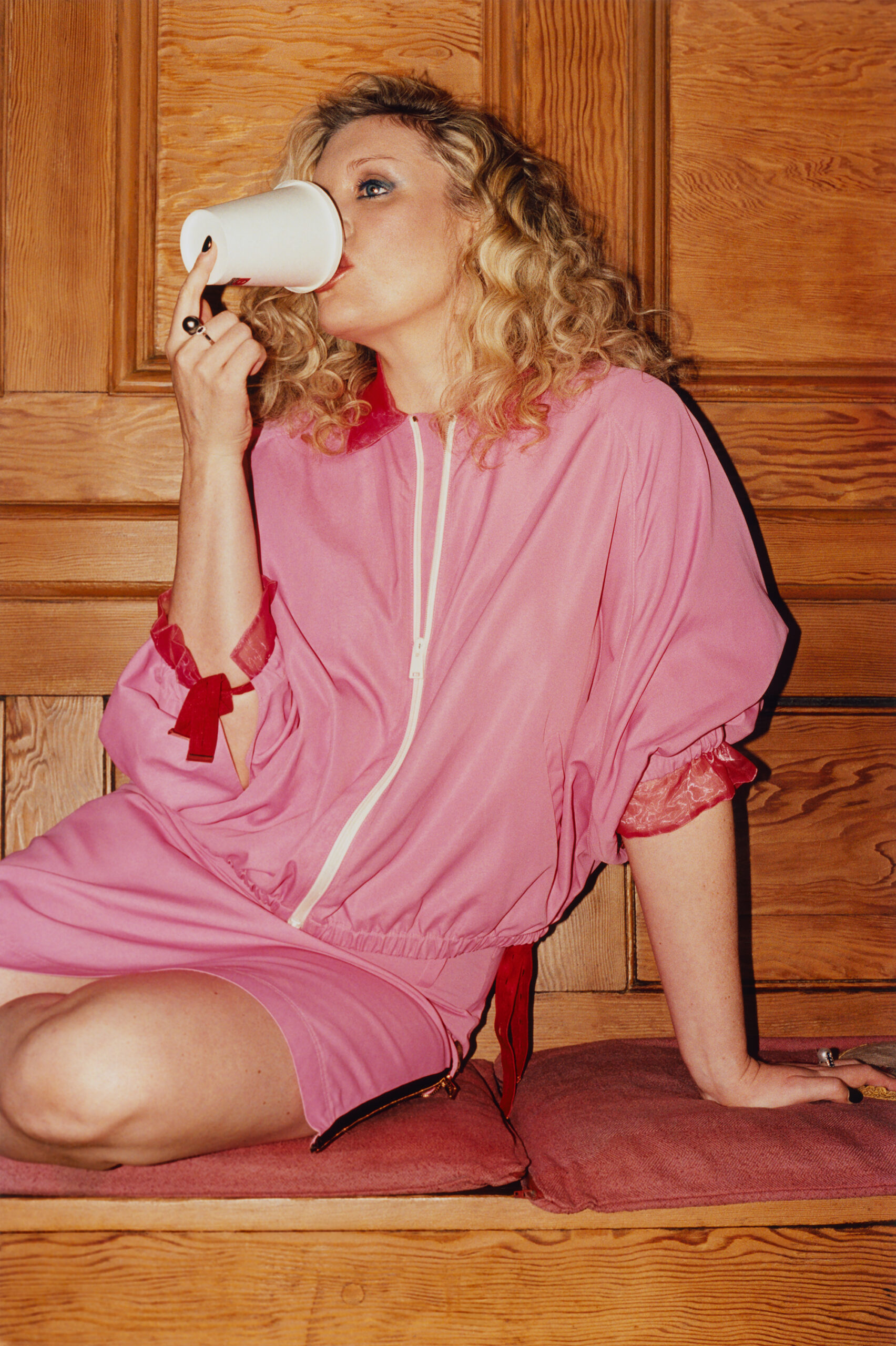
Jacket and Skirt Fendi, Earrings and Rings Yoko London
FENNELL: The greatest joy of my life is that I’ve been able to get to the stage where I’m able to get the people I really, really want. Every single person in this movie had the essence of the person they’re playing or the ability to summon that essence.
LUHRMANN: To access it.
FENNELL: And translate it. There’s this brilliant piece of literary criticism from 50 years ago that says Nelly Dean is the real villain of Wuthering Heights, which is interesting. That thing of female relationships, that thing of loving someone and hating them, extends to every single person in this, right?
LUHRMANN: I totally agree.
FENNELL: Something’s only truly narratively engaging if you like and dislike characters in equal measure. The problem, and the joy, of Wuthering Heights is that Cathy and Heathcliff are the two least likable characters ever written.
LUHRMANN: But their love is volcanic, and that keeps you compelled. You understand that they’re driven by something beyond themselves.
FENNELL: It’s [Richard] Burton and [Elizabeth] Taylor.
LUHRMANN: And Katharine Hepburn and Spencer Tracy. They would play the worst of friends, the best of friends, a comic duo. But Burton and Taylor actually lived it.
FENNELL: Totally lived it. Who’s Afraid of Virginia Woolf? was a real touchpoint for us, actually.
LUHRMANN: Absolutely.
FENNELL: So was The Night Porter.
LUHRMANN: Virginia Woolf is a really good one, because it’s a co-dependency where they’re tearing each other apart, but they can’t live without each other. You say that “They’re souls—” I can’t give away dialogue, I suppose.
FENNELL: Well, you can, because it’s all Brontë. The thing that’s really really fun about this is that although I’ve taken some small liberties for dramaturgical reasons, I’ve been really faithful to Brontë’s dialogue. Even the scenes later in the movie that are a little more transgressive, almost all of that dialogue is Brontë.
LUHRMANN: Yeah. I hope this doesn’t sound self-serving, but when I did Romeo + Juliet, and Craig [Pearce] and I were working on the text, every word was written by Shakespeare. We just cut and movedsome of it around. In Wuthering Heights, you don’t think about Brontë, you just think they speak like us—that they are us, you know?
FENNELL: Yeah. The thing about an adaptation is you need to coexist with it and let it be the beautiful thing that it is. Nobody loves Emily Brontë more than I do. I’m a creepy obsessive. But I also know you can’t do a fully faithful adaptation of this, because it would be too long and simply wouldn’t work as a movie.
LUHRMANN: Right.
FENNELL: The thing I’ll never, ever forget was the moment in Romeo + Juliet where he says, “Hand me my long sword,” and there’s just a closeup of the gun with a long sword on it. I was like, “Oh, my god.” Suddenly all the windows of possibility fly open when you see somebody make clever, witty, but not self-conscious decisions. That’s what I love so much about your work. There’s so much wit, there’s so much awareness. There’s an acknowledgement of the world of movies and the world of pop that’s really important.
LUHRMANN: We tell giant lies to tell giant truths, you know?
FENNELL: Yes.
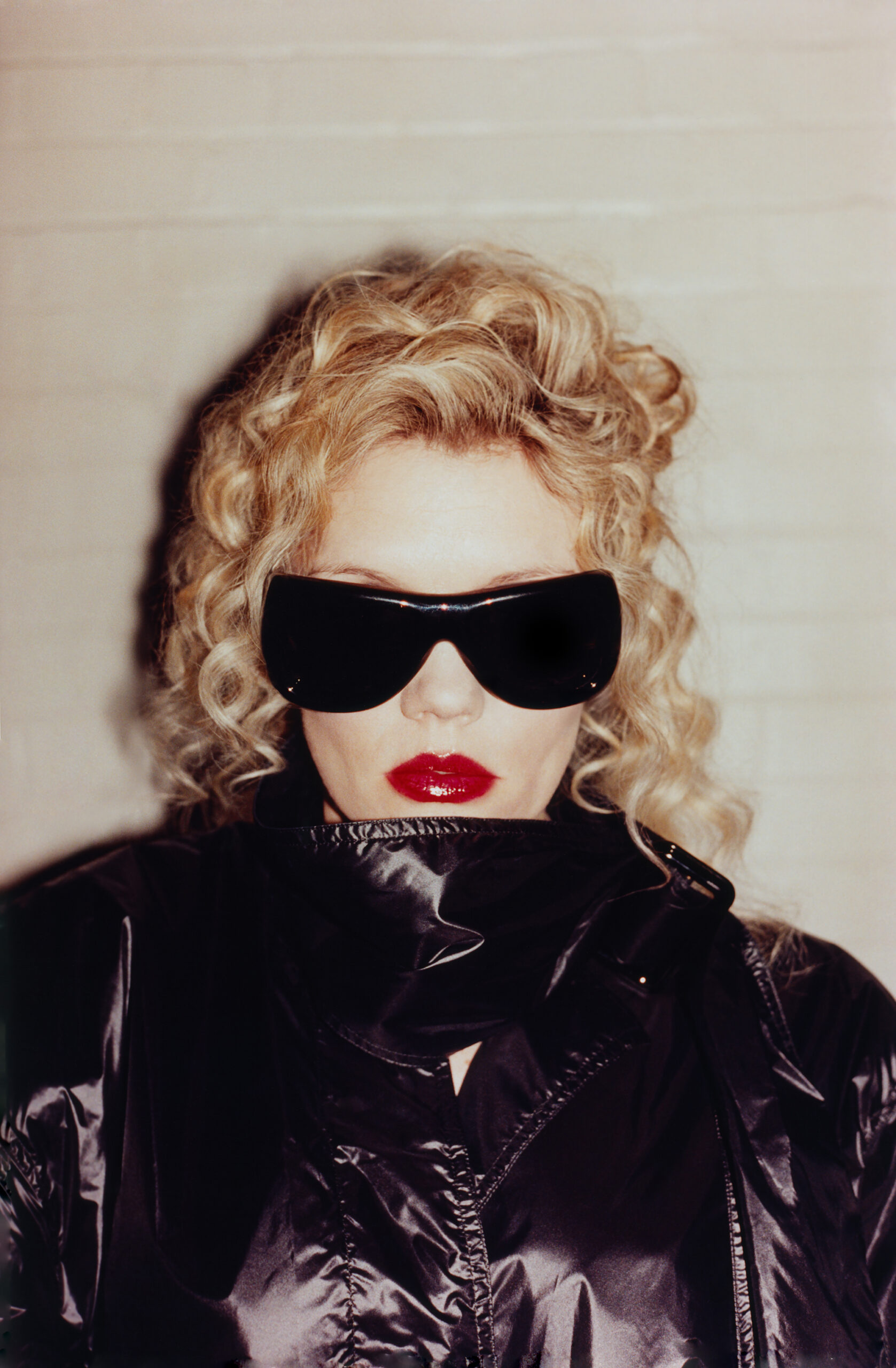
Coat and Sunglasses Saint Laurent by Anthony Vaccarello
LUHRMANN: It’s a different way of telling a great fiction, of trying to make it seem as if you’re looking through a keyhole. Cinema needs to be theatrical. It needs to be event-like enough that it compels you to go out and participate as a group. It comes from all those choices you’re making. You’re translating it so that we’re immediately going on the ride with you. It’s participatory cinema.
FENNELL: Thank you.
LUHRMANN: I feel like you and I are good dinner party guests because we can talk forever about this stuff. We live in the same universe and we care about the same things, which is the audience participating in cinema. You’re not going to the theater to kick back, eat your popcorn, and have one eye open and sit there like, “Oh yeah, I get this.” You’ve got to be on that horse with Heathcliff. You’ve got to be with Margot when you say, “Yeah, that’s right. Give it to him, girl.”
FENNELL: My husband gave me a book of your old interviews for Christmas.
LUHRMANN: Gosh, really?
FENNELL: It’s the most inspiring book I’ve ever read. I’ve already read it twice. One of the things you said, and this is years ago, was about how Shakespeare had to hold the attention of an audience of 2,000 drunk people. You were like, “I want people to go to the cinema and I want them to clap and I want them to scream.”
LUHRMANN: Or throw stuff at the screen.
FENNELL: Or argue. That’s exactly how I feel. We tested Promising Young Woman once, and towards the end there was an argument between two audience members. Somebody was shouting at the screen, “I hate this! This is disgusting! What the fuck is this?” Somebody else said, “Well, if you don’t like it, get out. Don’t ruin it for the rest of us.”
LUHRMANN: Wow, I love that. The one thing you can be sure about is that those two audience members will still be talking about it to other people a week later. That’s the purpose. You create energy.
FENNELL: An emotional connection is crucial, but so is a physical one. I find that to be the real power you have as a filmmaker over any other medium, besides perhaps opera. What a joy to make people cry, to make people laugh, to make people horny, to make their bodies feel something.
LUHRMANN: The word I like is to exalt them.
FENNELL: Yes.
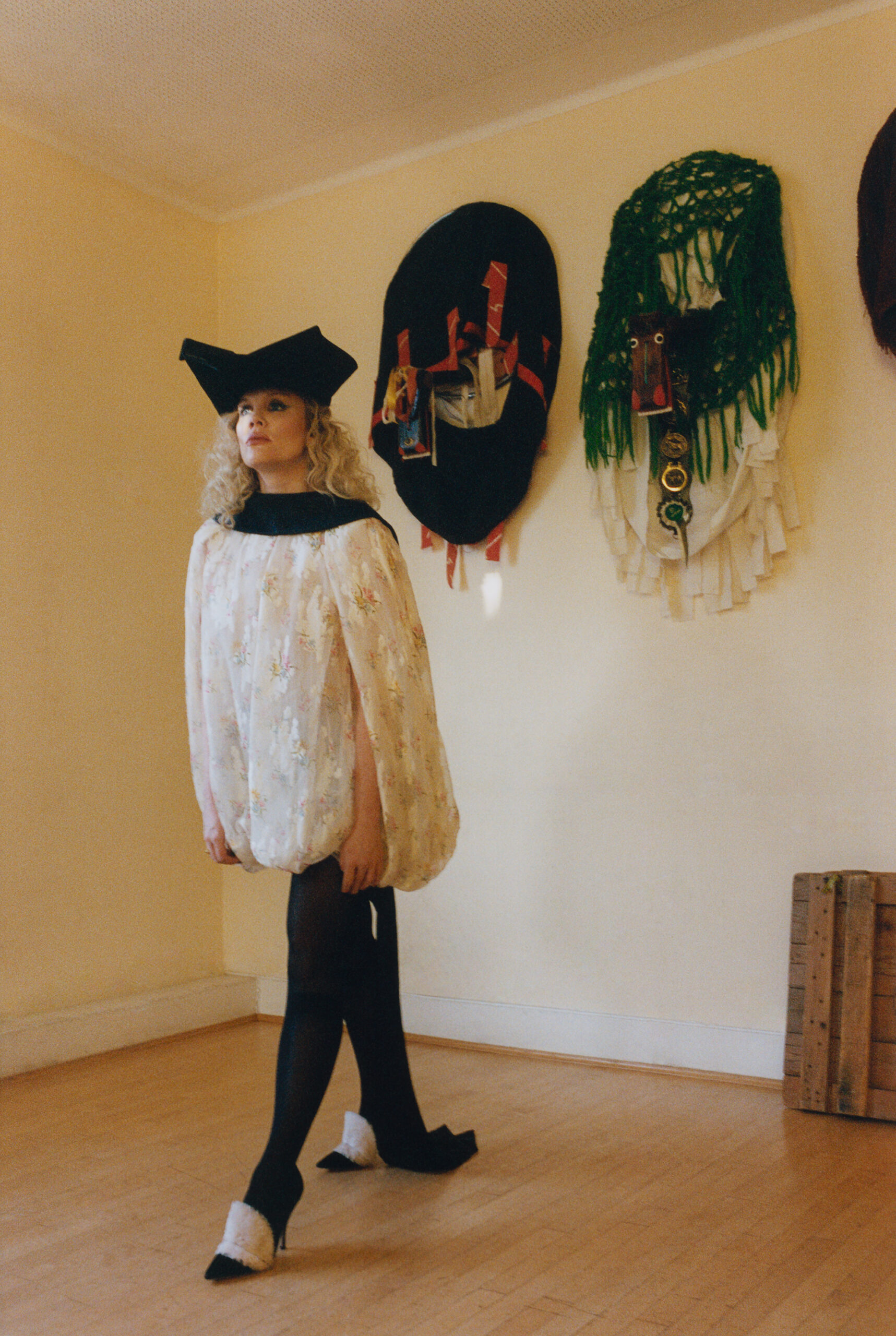
Dress, Hat, and Shoes Dior, Ring Theo Fennell, Tights Calzedonia
LUHRMANN: We’re both romantics, you and I. I used to rail against it, but now I realize I’m a hopeless romantic in the Byron-esque sense. But romanticism just means that the life we create, the stories we tell, are greater and more intense and more than they can possibly be. That leaves you in a state of exaltation that can be sexual, intellectual, emotional. That’s why it’s great in this lost, spinning, dark world, to slap down your money and say, “Let’s escape into that dark theater with a bunch of other people and be exalted.”
FENNELL: All I want to do is make one person’s favorite film of all time. If you can do that, that’s enough. Romantics are such a mixed bag of people, but it’s just expressing what happens when you fall in love and everything inside your body is electric. Every cell is alive. That’s all any of this is—making that feeling real. This is something you do so exceptionally: creating an emotional resonance. What is the shape of a building that makes you feel something? What are the textures? What is the food like? How can it all just have a Lynchian subconscious resonance? Because that’s what you need.
LUHRMANN: It’s having your own language. It’s back to what you said earlier about the gap between the poetry. I really admire storytellers who can go out and make something that doesn’t have a language.
FENNELL: I agree. Some of my favorite films of all time are ones with very minimal interference, but you can only do what you do.
LUHRMANN: Exactly. In the end, what you have to offer is what you tell and the way you tell it. Early on I’d get a bit self-conscious. I’d say, “I don’t want to be boxed in.” But it isn’t being boxed in. You’re freeing yourself by being honest to yourself. Anyway, thank you, Doctor Emerald, for this free therapy session.
FENNELL: [Laughs] It’s like lifting up your jumper to the world and being like, “What do you think?” No matter what level you’re at, no matter how many things you’ve made, it’s extremely exposing.
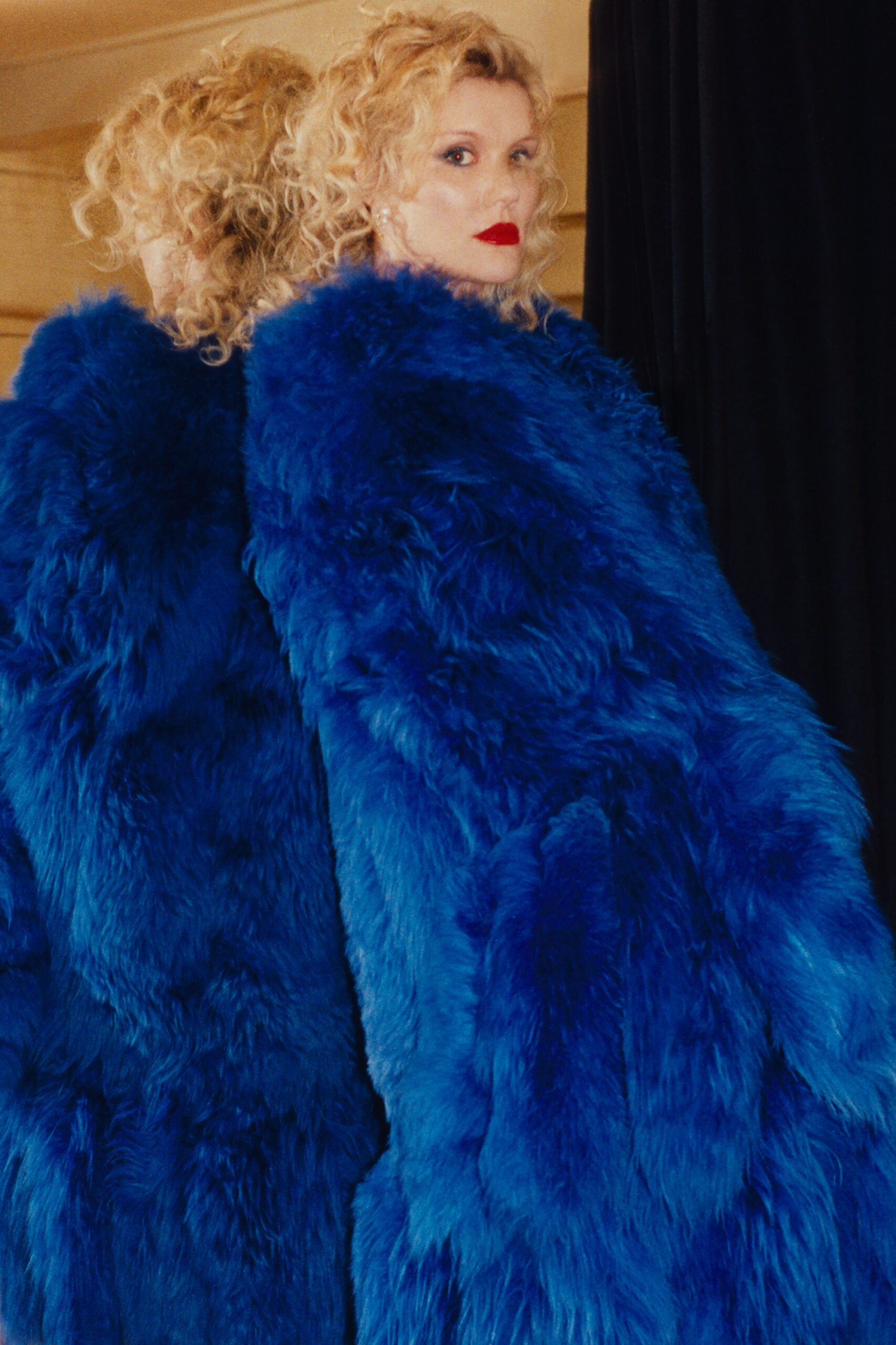
Coat Gucci, Earrings Tasaki
LUHRMANN: Some of the greats I met when I was young would say, “It only gets harder.” By the way, nobody goes to the cinema to see you keep your jumper down.
FENNELL: [Laughs] You are absolutely right! Actors are so brave because they get so much of that exposure, but we’re measured in a similar way. Coming to terms with whatever the response is, is difficult. This is now the third time I’m saying, “Whatever happens, I love this film.” I deeply love it and I’m connected to it and I know that if I watched this as a teenage girl, or even now, it would change my life.
LUHRMANN: Yeah. Are you out running around doing the tours and all that stuff ?
FENNELL: After doing a gorgeous photoshoot for Interview and talking to you, I’m like, “I’m just going to sit back.” [Laughs] Saltburn came out during the actor’s strike, so I was shilling my wares alone, which was quite tough because I was at the center of it, which I really don’t want to be. And so with this one, because we’ve got Margot and Jacob and Hong and everyone, they’ll be doing most of it.
LUHRMANN: That’s great.
FENNELL: It’s incredible. I’m obviously supporting everyone as best as I can, but I’m trying to step back a little. Partly because I feel like, does it really matter what I think? The movie should speak for itself.
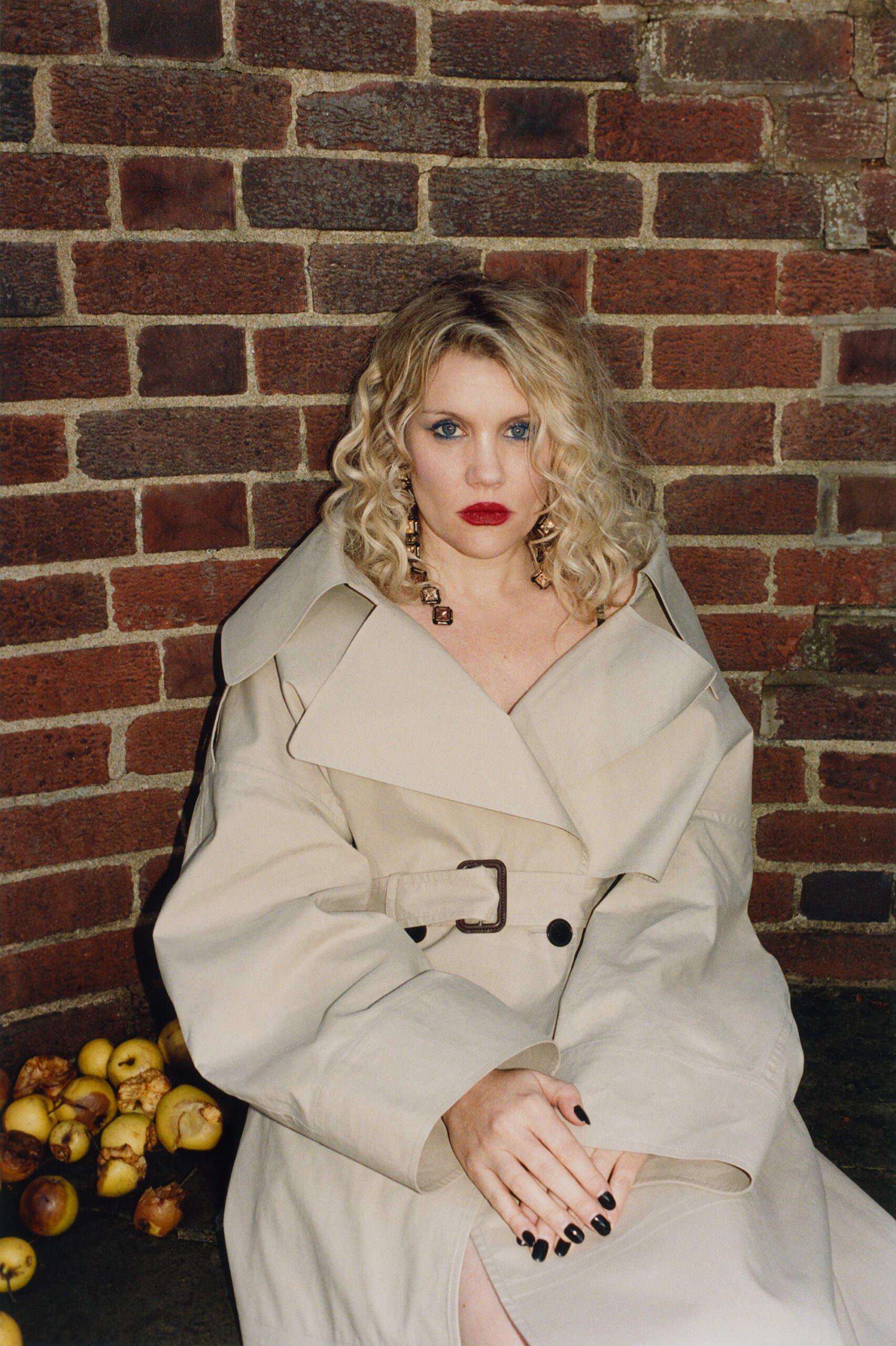
Coat and Earrings Givenchy by Sarah Burton
LUHRMANN: Look, you’re going to create real noise out there and I mean that in the best possible way. You may want to step back, but there are going to be a lot of people wanting to engage with you on this. It’s going to cause a wonderful wave of excitement and energy, but managing that—I’m talking like old Uncle Baz giving advice, which I hate doing.
FENNELL: [Laughs] I love it. I need your advice. Honestly, if this whole thing has meant that I got the opportunity to speak to you—you really are my hero, it’s been just a great joy.
LUHRMANN: Well, I’m loving talking to you. I’d say we’ll have to pick this up over dinner at some point.
FENNELL: Yes, please. I also desperately need to ask you about Joan of Arc. I cannot wait for that. Anyway, thank you so much.
LUHRMANN: Listen, dinner, you and me. I’ll tell you all about Jehanne d’Arc. I promise.
———
Hair: Alex Brownsell using Dyson at Streeters
Makeup: Georgina Graham using MAC Cosmetics at The Wall Group
Photography Assistant: Max Lancaster
Fashion Assistants: Frankie Martin and Aliyah Finkel
Hair Assistant: Ronke Abonde-Adigun
Production Director: Alexandra Weiss
Photography Producer: Georgia Ford
On-set Production: Andre Augusto
Post-production: Notion Retouching
Location: Cecil Sharp House