


DISTRICT 56
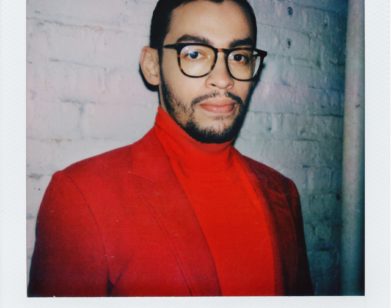
Meet Eon Tyrell Huntley, the Bergdorf Associate Running for State Assembly


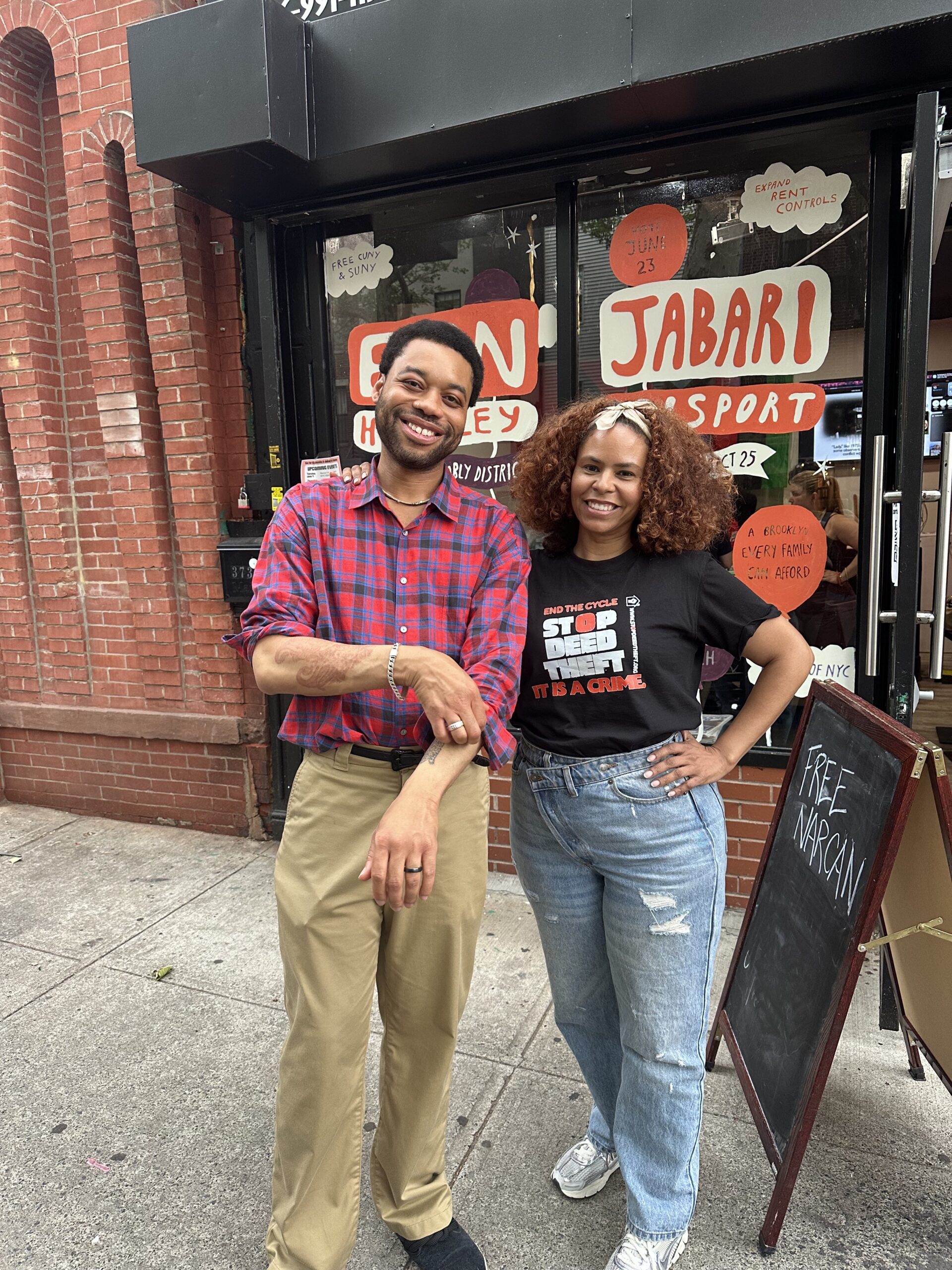
Photos courtesy of Eon Tyrell Huntley.
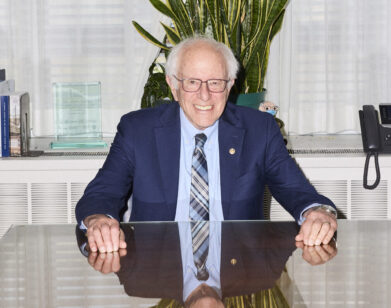
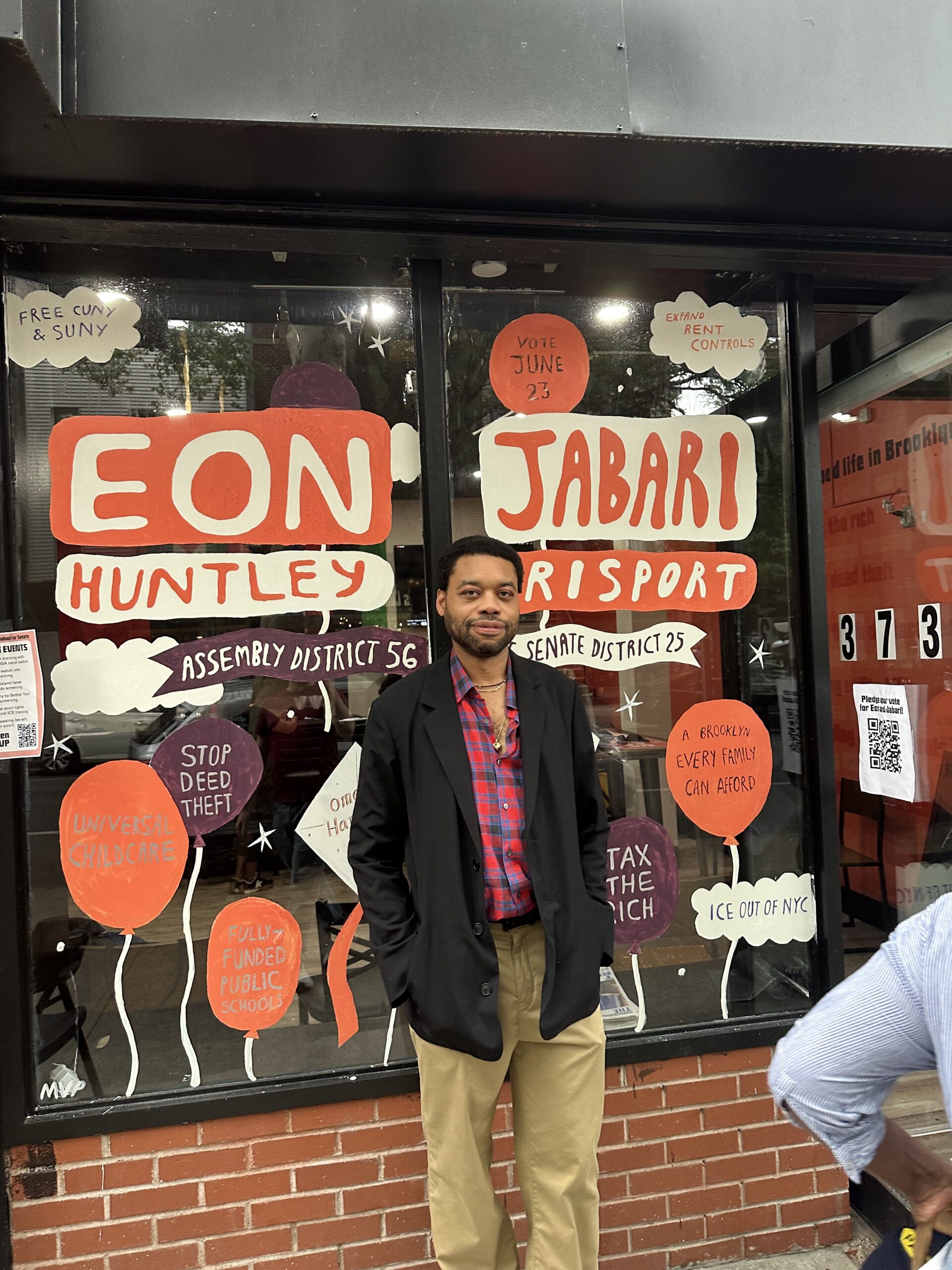
Meet Eon Tyrell Huntley. He’s DSA, twice over: an active member of the Democratic Socialists of America and a Department Store Associate at Bergdorf Goodman working the women’s floor at The Row. Call it progressive chic. He’s also a fashion designer with a decade of experience, a union organizer, PTA president, and now candidate for Brooklyn’s 56th Assembly District. The working class progressive turned representative is a more common story than you might think; AOC was once a bartender, Emily Gallagher a community organizer, Chi-Osse a nightlife promoter. Huntley just might be the first one who can also tell you which pieces from the new Row collection are worth the investment. His platform, which includes a $30/hr minimum wage, tighter AI regulations, and protecting NYCHA from privatization, has earned him splashy endorsements from Bernie Sanders, State Senator Jabari Brisport, and Gallagher herself, who also happens to be the person who nudged him toward running in the first place. I called the aspiring Assemblyman last week to talk policy, styling advice, and what he loves most about Bed-Stuy. You can check out more about his platform here, and find your local polling site here. Early voting starts tomorrow, June 12th!
FRIDAY 12 PM MAY 5, 2026 BROOKLYN
———
EMILY SANDSTROM: What’s your deli order?
EON HUNTLEY: Bacon, egg, and cheese with salt, pepper, ketchup, and hot sauce. That’s breakfast. Lunch and dinner is chicken and lamb over rice with hot sauce and white sauce.
SANDSTROM: How do you see AI impacting New Yorkers right now?
HUNTLEY: There’s an increasing capitalist and billionaire class that wants to build data centers in urban areas, and they’re destroying our environment. It comes with no promise of jobs, just more wealth for them. A moratorium has been proposed—and I’m grateful—but we also need to be thinking long term.
SANDSTROM: Are you concerned about the threat of rising unemployment?
HUNTLEY: 100%. And also about AI in schools. My wife has been a public school teacher for 20 years. My children attend New York City public schools, and I attended them. I’m very grateful for the education I got. Human connection is something you can’t get from AI. I graduated high school in 2002 and I still carry with me those things I learned then. My day job is a retail worker at Bergdorf Goodman. If you’re a good salesperson, you’re really assessing what your client wants, but also the knowledge that you have from your own aesthetic. Perhaps you could program an aesthetic, but you can’t generate the human emotion that happens in a really positive transaction. Some of my best clients are also my friends.
SANDSTROM: Which part of Bergdorf do you work in?
HUNTLEY: I work in the women’s store with a brand called The Row.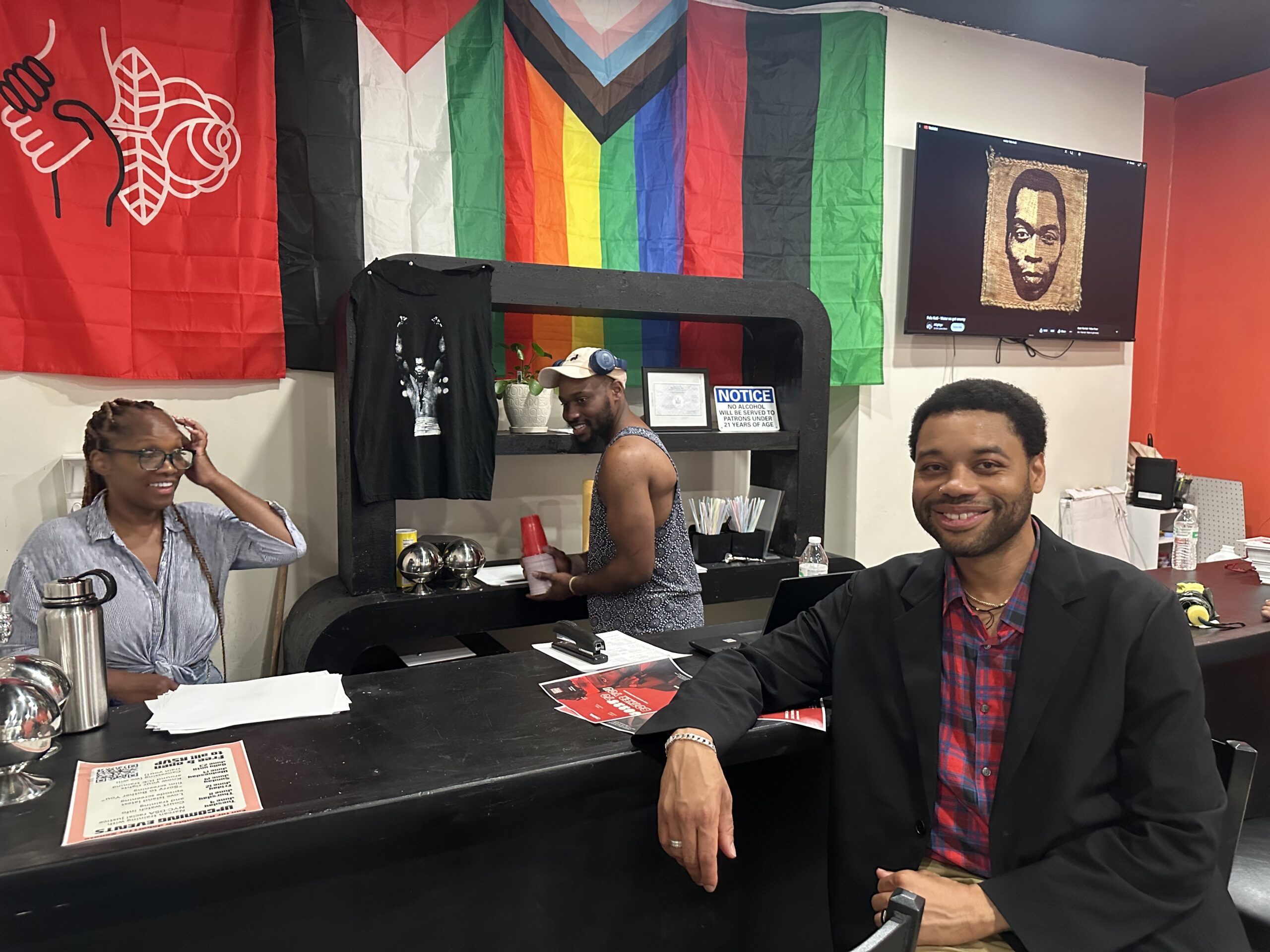
SANDSTROM: Glamorous. What is the average The Row customer at Bergdorf like?
HUNTLEY: It ranges. I would say they’re confident women who really have an appreciation of aesthetics and quality. They’re really dressing for themselves and not for others. I consider myself as one of The Row girlies. My personal aesthetic is very much about minimalism and quality. I’m inspired by other brands that have existed, especially in a New York space, like Calvin Klein, Donna Karan, Geoffrey Beene. And Mr. Armani as well, rest in peace. And Margiela, bringing a little bit of a twist.
SANDSTROM: Can you tell me about your springboard into your political career?
HUNTLEY: When I stopped being a designer, it was due to the inconsistency. I had a child and another on the way, and I needed something more stable. I took on a job at Barneys not because I wanted to be a salesperson, but because I needed to provide for my family. I was also surprised to learn that Barneys was a union shop, represented by Workers United Local 340, the same union that Starbucks workers have organized under. I very much come from the typical Black working class story, raised in a very pro-labor household. So when I saw the opportunity to not just be a dues-paying member, but to actually fight for our members, I was grateful. Eventually, I became an active PTA parent and then president. With my friend Nicole Lawson, who was vice president, we co-founded a mutual aid food distribution program in partnership with Food Bank for New York City. They were looking for mobile pantry sites to complement their stationary ones during COVID, and we helped provide that for the community. It was my foray into community organizing, and it got me in touch with Emily Gallagher, the current assemblyperson. I’ve been a DSA member since 2018, inspired by AOC. I actually went to one of her early campaign meetings while I was in the middle of negotiating my contract.
SANDSTROM: Nice.
HUNTLEY: Her identity resonated with me deeply, as a working class person in the service industry who had also organized and taken the step of challenging the political establishment. Then, I met Emily. She saw the work I was doing in my community, understood the real life struggles of someone trying to raise a family, and told me I should run for office.

SANDSTROM: Okay, that’s super interesting.
HUNTLEY: There are people like AOC and Bernie Sanders, Emily Gallagher, my friend and my State Senator Jabari Brisport, all of whom have been inspiring and supportive.
SANDSTROM: What is your plan to uplift small businesses in a city that’s changing so quickly?
HUNTLEY: Fighting against displacement is central to my campaign. That means fighting for people who have called this place home their entire lives, but it also means fighting for businesses and homeowners increasingly threatened by predatory developers and realtors who are creating unaffordable housing and looking to displace Black homeowners for whom this neighborhood represents both community and generational wealth. Many of those same homeowners are also pillars of the community as small business owners. I’m proud to support Gallagher’s bill on commercial rent stabilization, which would create the same rent guidelines that exist for apartments and cap rent raises. I think about my neighbor Myriam, who owns Brown Butter Creamery on Tompkins. She’s at the mercy of her new landlord with no guarantees that they won’t raise the rent to a point where she can’t stay. That’s the reality small business owners are living with, just as renters are.
SANDSTROM: What keeps you inspired?
HUNTLEY: Those that came before me. A lot of my struggles, paying off student loans, not being able to afford a house, having to choose between rent and daycare, I internalized as personal failings. Then I discovered socialism, became a DSA member, and encountered people like Bernie Sanders. I didn’t think his politics would resonate across the country, but they did. And at that moment, I realized I wasn’t alone in thinking the status quo wasn’t enough and that people deserve more. The good life, not just in Brooklyn but across this country. I’m also inspired by Huey P. Newton, founder of the Black Panther Party, particularly in his assessment that while racism is a real problem inseparable from the material conditions of Black people in America, racism is also a tool of capitalism. The only way to seriously address racial inequality is to also address the crushing force of capitalism that seeks to exploit us, divide us, and maintain a hierarchy that keeps those at the top there and keeps the rest of us fighting for scraps. That’s very much shaped how I’ve organized within my community and how I plan to organize as an assemblyperson.
SANDSTROM: Can you give me your best style advice?
HUNTLEY: When in doubt, keep it simple. Also, invest in classics the best you can. Quality over quantity. When you do that you’re really building a timeless wardrobe. I’m still wearing pieces that I have owned from when I was in my early 20s and they still stand the test of time.
SANDSTROM: What makes District 56 so special?
HUNTLEY: Bed-Stuy is what mostly comprises the district, and it’s the most beautiful and inspiring neighborhood. When you say Bed-Stuy, even if people haven’t been here, they picture this iconic tree line, brownstone blocks, Spike Lee movies, block parties, Biggie Smalls, Jay-Z. You walk around Bed-Stuy and there’s so many fly people. There are so many creative people here, and that inspires me. But they’re also struggling, trying to make a life in a city that’s become unaffordable. They’re struggling to make a life because of how unaffordable life has become. I want to make sure that beauty is preserved, and that people can actually grow here, create here, and add to this rich history.
SANDSTROM: What’s a film that has influenced your worldview?
HUNTLEY: This may be controversial, but Fight Club. It’s an anti-capitalist movie that also has great aesthetics, but it has been co-opted by incels who have totally missed the message. I’ve also read the book. Chuck Palahniuk is a queer writer and it’s a really great, anti-capitalist cultural critique. Another movie that came out more recently is Judas and the Black Messiah. It shows the history of Fred Hampton and his rise in Chicago as a leader in the Black Panther Party. Seeing someone so young who has such a clear assessment about the solidarity that it takes to beat capitalism—that you’re not going to beat capitalism with Black capitalism, you’re going to beat it with socialism. That’s how I’ve tried to organize this united front of the working class against those who seek to stop us. It’s incredible to see how someone so young could bring the full power of the state against them.
SANDSTROM: Thank you so much for taking the time today.
HUNTLEY: Thank you.