


LIT
Allie Rowbottom’s Lovers XXX Is a Deep Dive on Hollywood’s Dirtiest Decade


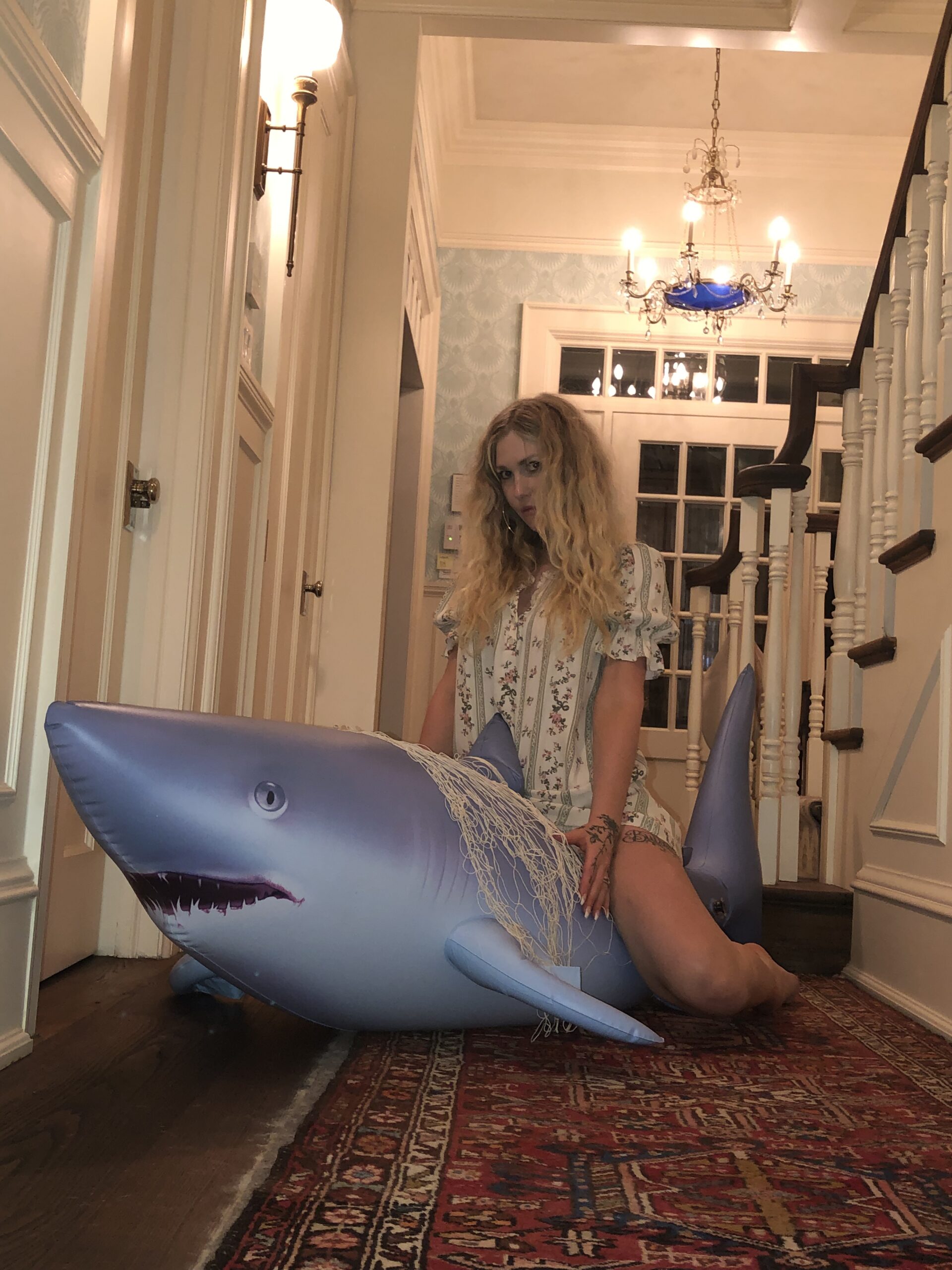
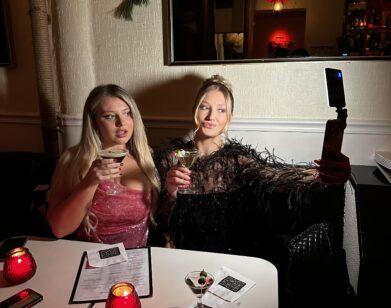
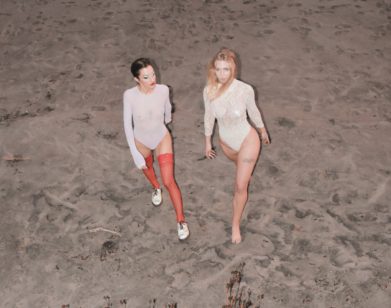
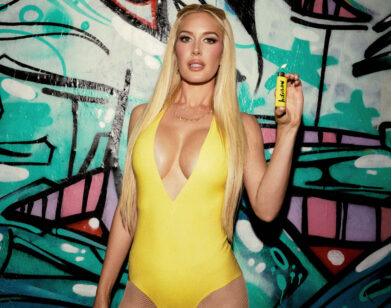
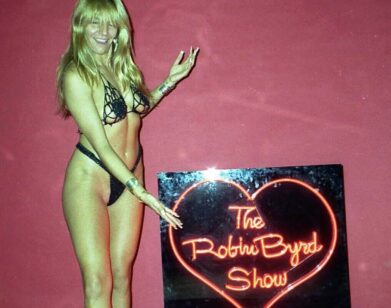
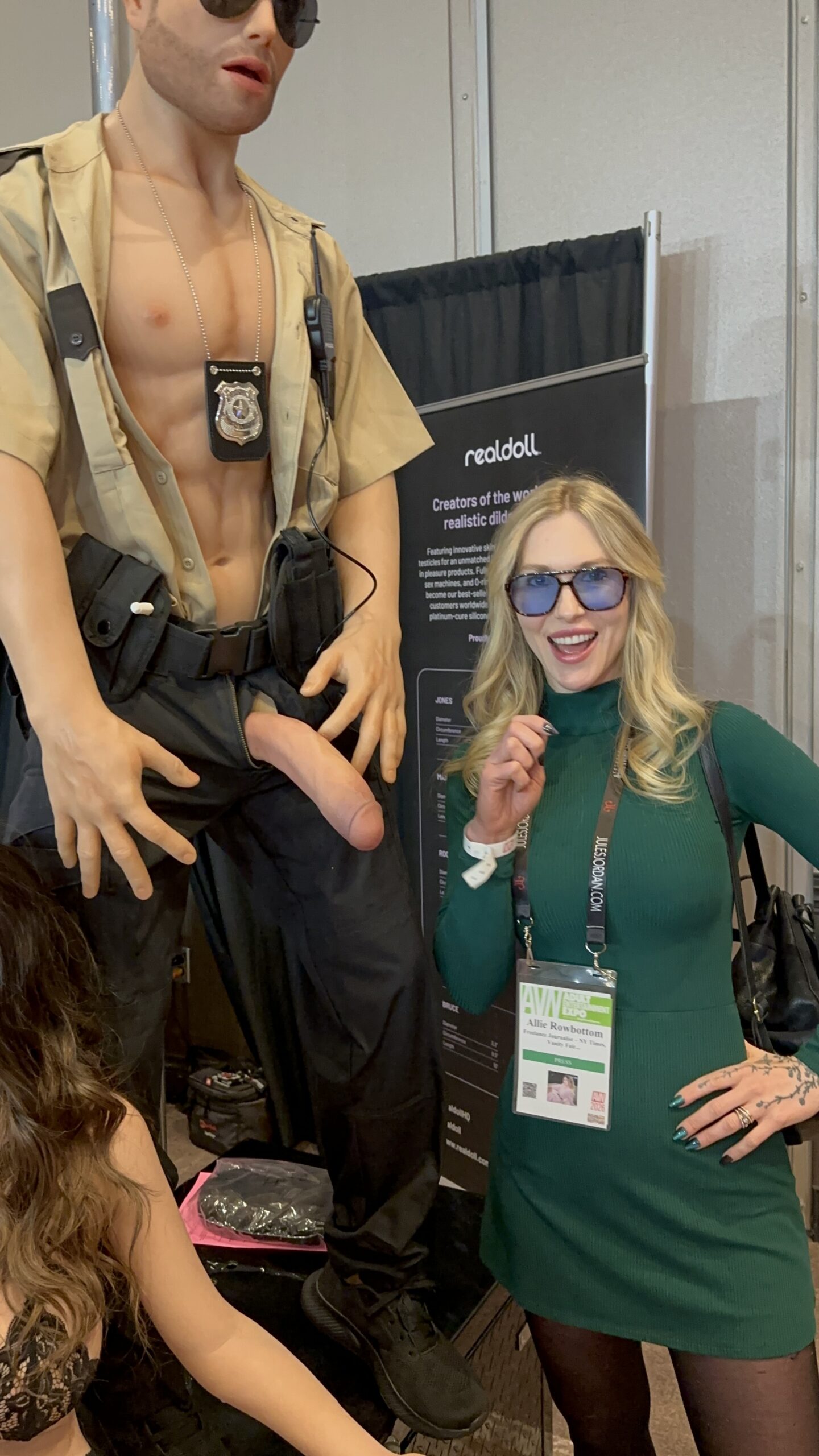
Photos courtesy of Allie Rowbottom.
Beaches meets Boogie Nights in Allie Rowbottom‘s latest novel, Lovers XXX, a porno chic romp through 1980s Los Angeles with a turbulent sapphic romance at its core. In true Paul Thomas Anderson fashion, the novel is likewise a body high, both seductive and full-throttled. In the first 20 pages, Jude, a teen runaway with perfect tits, trades holding up liquor stores and shooting up in motel rooms for the potential haven of a job working in a seedy strip club with her best friend Winnie, a beautiful, dead-eyed pole dancer with literary aspirations. In search of video vixen stardom (and future book deals), the girls embrace the illicit pleasures of this Golden Era of porn—shag carpeted bungalows, well-documented cumshots, and endless bumps of coke in the back of a speeding white Mustang. It’s the stuff of Lana Del Rey songs, or these days, the third season of Euphoria. While Rowbottom’s debut Aesthetica explored a more contemporary LA archetype (a washed up influencer seeking rebirth), she remains interested in worlds in which women take performance to the extreme. Jude and Winnie are enmeshed in a familiar genre of female friendship, oscillating between love, lust, and competition, while in search of validation from the dubious men who control their lives. Just ahead of her book launch, which will fittingly take place at The Box, we got on Zoom with Rowbottom to discuss the podcasts, playlists, and pornstar memoirs behind her second novel.
———
TUESDAY 2PM, MAY 12, 2026 NYC
———
JULIETTE JEFFERS: You look beautiful. Where are you?
ALLIE ROWBOTTOM: I’m not in bed, but I am on a bed. I feel like if Lena Dunham can do an entire book tour from bed, I can do a Zoom interview from bed.
JEFFERS: A hundred percent. I want to start off by discussing the setting of Lovers XXX. Also, I could not put it down.
ROWBOTTOM: I love to hear that. I kind of had that writing experience with it. I always get obsessed when I’m working on a longform project, but this one was particularly transportive.
JEFFERS: You feel immediately immersed in this sleazy LA of the 80s and the Golden Age of the porn world. What was your research process like? What brought you into that world while you were writing this book?
ROWBOTTOM: Well, I had originally conceived of this book as a 60s-era singer-songwriter novel. In early adolescence, I got really into listening to Joni Mitchell, and then in my twenties I discovered Judee Sill, who never got that level of fame by any stretch, but had a wild background. She had a heroin habit and would rob liquor stores. I thought there was a really interesting dichotomy between the two. One of them makes it, one of them doesn’t, but they’re both super talented. But then I started that, and I got bored. I wasn’t interested in the time period, and I’m not that musical. But simultaneously, as I was trying to write that version of the book, I started listening to Lili Anolik‘s podcast, Once Upon a Time…in the Valley, the Traci Lords story. That coincided with a move that my husband and I made to Malibu, which is right over the hill from the Valley. So I was driving over there a lot and it just started to click. Also, there isn’t another novel that I can think of that’s set in this time and place. The same thing goes for Aesthetica. I’m drawn to subjects other people haven’t covered yet, and there’s a lot of energy to being the first. There are pros and cons to that for sure. So I started listening to similar podcasts. There’s one called The Rialto Report by Ashley West. That one was an incredible resource. It was surprising and exciting to me that a lot of the women who were performing during this time period were very adamant that it had been a positive, affirming, empowering experience for them. I really wanted to get into that and learn more about them. Obviously, there are a lot of people who didn’t have those positive experiences. There’s also a great book called The Other Hollywood by Legs McNeil that is an oral history from that time period.
JEFFERS: This book is part erotic thriller, almost like an LA noir. You have a little bit of Boogie Nights, Paul Thomas Anderson, a little bit of Showgirls. But all of those movies don’t provide interiority for the women who are actually at the center of these stories. And speaking of Showgirls, the core of the book is this codependent, competitive, sapphic female friendship. It felt so incredibly relatable for women everywhere. I was wondering what led you to use that friendship as a driving force in the plot?
ROWBOTTOM: Well, I obviously did watch a lot of porn to write this book, but also film. With the friendship, I knew I wanted to write a romance. Part of it was strategic. I was looking around at books that I felt like people were really loving and catching onto. And this was even before the big Roman-tasy boom that we’ve seen recently. I was like, “Okay, people seem to really want romance,” and I do too. Originally, I thought the relationship between Jude and Laird would be the central romance, and then as I was writing it, I was like, “No, no, that can’t be,” for a couple of reasons. The primary one being that the book is set in this world of mostly heterosexual porn. For the core relationship to transcend that world and ultimately comment on it, it could never be a heterosexual relationship. It always was going to have to complicate and get into that sort of murky gray area. The most important relationships in my life, except for one, have been with women. My mother is no longer alive, but when she was, her female friendships were the most important relationships in her life. Those were the people who stayed by her through her death. She had a very intense bond with her best friend, whose apartment I’m in right now. I had a lot to draw from, both in her life and my life. I think a lot of women arrive at this toward the end of their lives and feel sad about it. Men come and go, but it’s the female friendships that mark time and mark our lives.
JEFFERS: Winnie and Jude both have these mommy issues and feel abandoned by their own mothers, so they’re trying to find that love with each other. There was a lot of depth there and it felt incredibly universal, even beyond terrain as perilous as the porn industry.
ROWBOTTOM: Thank you. I mean, with fiction, I’m drawn to these extreme worlds like influencer-dom, fame, plastic surgery, and porn. But in order to make the book work, I think it’s these common experiences that open the door and allow readers to empathize with characters that they might otherwise just pass off as objects—bimbos, influencers, whatever it is. I’m just always interested in the commonalities I can pull on to allow readers to expand their ideas of what it means to be a woman in these situations.
JEFFERS: Definitely. I think the main characters are good foils for each other because Jude kind of lives in her body, and Winnie lives in her head. They’re living in these slightly parallel realities of womanhood trying to understand each other. But speaking of being drawn to worlds that aren’t typically portrayed in literary fiction, the second half of this book acts as a kind of meta-commentary on that, and on the literary world in general. Winnie writes a book about female friendship that is essentially a flop. She wishes she could write the book that she’s in, and then eventually starts doing just that.
ROWBOTTOM: It just made sense to me that Winnie is a writer and maybe, on a selfish level, I wanted a place to put in some of my own feelings about my experience of the publishing industry. I think the challenges she experienced are certainly not unique to her. I also needed something for her to want. Jude has this sexual appetite, and she’s predisposed to the work. I think there definitely are performers like that, people who are just really talented and take to that work. Then there are the performers who get into the business who don’t have that aptitude, and those are the people who tend to struggle more. The thing that drove Jude was closer to the surface. And for Winnie, in the second half, I also felt like she had to experience failure.
JEFFERS: In the foreword, you talk about how you immediately connected with these women of the 80s porn world and their quest for freedom and autonomy.
ROWBOTTOM: Yeah. Also, regarding that meta-commentary, it felt important to preempt some of the stuffy, prudish responses that I anticipated from the industry writ large. I think it’s bizarre, but for an industry ostensibly led by well-educated liberal people, there still is this kind of buttoned-up mentality like, “Oh, we can’t write about something like porn,” which pretty much every person has a relationship to, even if they don’t watch it. It’s so omnipresent. It’s this hidden mechanism of our culture, but we don’t talk about it. So to me, obviously, it’s a perfect topic for literary fiction to engage with. Yet, I assumed there would be some pearl-clutching from certain people. I wanted to bake that in.
JEFFERS: It’s very self-aware. Even though this book is set in the past, it feels incredibly relevant to 2026. Everyone is talking about Euphoria, which has fully taken on these 70s, 80s LA aesthetics, and every character on the show is a sex worker, or aspires to manage sex workers. Then obviously, we have the rise of OnlyFans, which you also mention in the foreword of the book. The timing of the book is perfect, in a way.
ROWBOTTOM: The one constant is that technology comes and changes things, and porn is often at the forefront of technology. Aesthetica was interested in tech in some ways too. If we want to understand the present and where we’re going, it makes sense to look at where we’ve been. The book is initially set in a moment of change, where VHS is about to blow everything up.
JEFFERS: Yeah, they’re video vixens. I do think there’s also something very pleasurable about being immersed in this LA of the past. Obviously, there are very, very dark moments in the book, but it does, in many ways, feel less dark than the present somehow.
ROWBOTTOM: Well, there’s an innocence to that time period.
JEFFERS: Right, and characters start out very innocent.
ROWBOTTOM: I recently went to the AVN Awards for Playboy. When I was there, a main topic of conversation was this nostalgia amongst performers and industry people for that time period. There’s this idea that things were better then or that porn was more art-forward, that there were scripts, etc. The book doesn’t even really cover OnlyFans, which happened so quickly. Winnie’s section is set in 2015. OnlyFans is just about to come around and change things. Once OnlyFans comes, the performers are empowered to make way more money and be in charge. But that’s only been happening for a couple of years, and now AI is going to completely change everything. It’s all happening so quickly.
JEFFERS: I think that’s really true. In the book, Cherry has this dream of starting a woman-owned porn production company, which feels very connected to what OnlyFans stars are aspiring to do now.
ROWBOTTOM: Totally.
JEFFERS: I do think the texture of this book really does capture the thing that we’re all nostalgic for, which is this time when people were just like doing cocaine and driving around. Porn was kind of corny, but beautiful, not that these women didn’t have really traumatizing experiences.
ROWBOTTOM: Also, after Aesthetica I was like, there’s some excitement to writing a book where nobody has an iPhone.
JEFFERS: And it’s a time when people could go missing. The first half of the book is Jude trying to find Winnie, and then Winnie’s trying to find Jude. People slip in and out of this world.
ROWBOTTOM: Yeah.
JEFFERS: Not to give away too much because there are a lot of plot twists, but the second half of this book is really about Winnie and Jude’s legacies, and the legacy of a porn star from that time. There’s a real loneliness to both their lives, especially Winnie’s. How did you arrive at that ending?
ROWBOTTOM: I didn’t want it to be an overwhelmingly happy ending, but I wanted there to be a little hope. It’s kind of like the doors left ajar. It’s not fully closed. There is a tragedy to the ending, in just the passage of time. Both of the women in that second section of the book are older than I am, but I feel it coming. I feel that sort of wistfulness that comes with age. It’s just so sad. Sometimes it’s almost like I could just cry thinking about how quickly time goes and how limited it is. I never felt that way when I was younger.
JEFFERS: I love the epigraph, which connects directly to the end of the book. Also, that T.S. Eliot poem is featured on…which Lana Del Rey album? Honeymoon. Did you have a playlist you listened to while you were writing?
ROWBOTTOM: I am always listening to a lot of Lana when I’m in California. I do have a playlist that I made. It’s very 80s coded. It feels so epic.
JEFFERS: What’s on there?
ROWBOTTOM: A lot of corny stuff. There’s Don Henley on it and stuff like that. It’s so driving down PCH after a coke binge. The Bruce Springsteen song “Secret Garden” is so this book to me. Pat Benatar is on there, some Blondie probably. I’ll send it to you.
JEFFERS: I can imagine it playing at the strip club where the girls work.