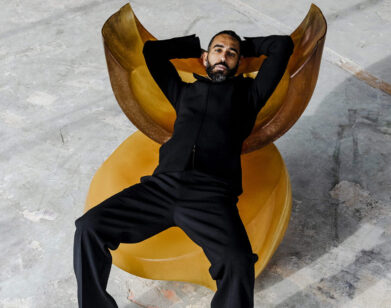



Gus Van Sant
By Armistead Maupin
Photographed by Clint Spaulding/PatrickMcMullan & Hedi Slimane
November 22, 2008


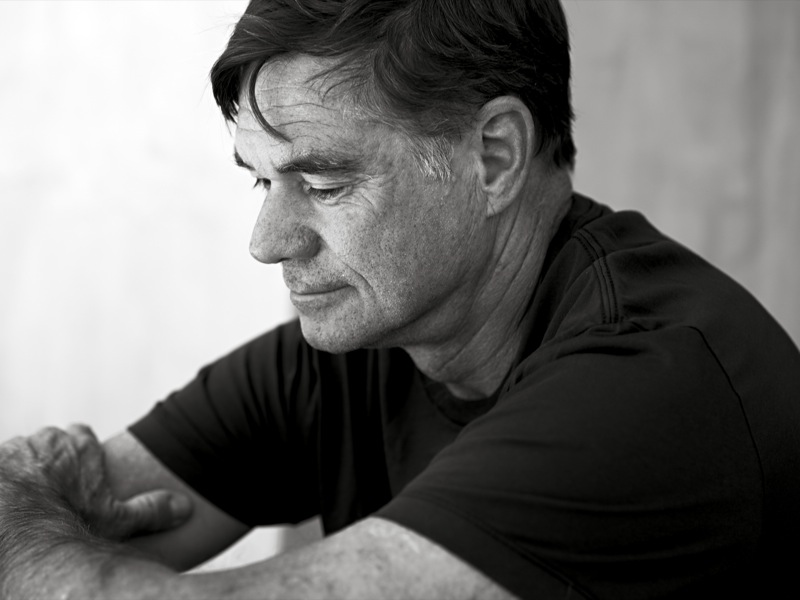
Gus Van Sant’s new film, Milk, tells the real-life story of Harvey Milk (played in the film by Sean Penn), who became the first openly gay person to be elected to a public office in the United States when he took his post on the San Francisco board of city supervisors in January 1977. Milk was a transplanted New Yorker who, at the age of 40, traded in his job as a Wall Street analyst for a gig working as a stage manager on the first Broadway production of Hair, and later moved to San Francisco where he and his partner opened a camera shop in the Castro district-then the flash point of the gay-rights movement in America. But Milk’s political awakening with regards to his sexuality in many ways mirrored what the country itself was going through at the time, in the wake of free love and before AIDS. It was a moment when singer Anita Bryant’s infamous state-to-state crusade to have laws repealed that prohibited discrimination on the basis of sexual orientation had inadvertently begun to crack open the proverbial closet door by inspiring an army of men and women to come forward and speak out against her. Though Milk had relationships with men in New York, he had shielded his personal life from his family and co-workers. But living in San Francisco, surrounded by people who were often much younger than he was-many of whom with stories much like his own-he very easily fell into the role of advocate, lobbying on behalf of the gay community both freely and loudly.
When Milk assumed his seat on the board of supervisors, it seemed a logical, even inevitable, next step in the sexual revolution of the decade. But his assassination just 10 months into his term, by former city supervisor Dan White-an early supporter of Milk’s from an Irish Catholic, working-class neighborhood adjacent to the Castro, who shot Milk in his City Hall office minutes after shooting and killing Mayor George Moscone-only brought into even more stark relief the harsh, at times tragic, realities of America’s continuing struggle with sex and sexuality.
For the 56-year-old Van Sant, Milk was a project nearly two decades in the making-one that went through multiple scripts and iterations. Writer Armistead Maupin, who, of course, lived through the Milk years in San Francisco, having so memorably captured them in his Tales of the City novels, recently spoke to the director who was at home in Portland, Oregon.
ARMISTEAD MAUPIN: Watching Milk was a very eerie experience for me because I’ve never been to a film before where I knew maybe six or eight of the major characters in real life. There must have been huge pressure on you with this project from the beginning, at least in part because it also belonged to somebody else for 16 years. The idea of making a film based on Randy Shilts’s book, The Mayor of Castro Street, was floating around Hollywood for a long time. You were even at one point considered as a director for that project, and then, when [Dustin] Lance Black came up with the script for Milk-I guess in 2007-you had a whole other direction to run in, in terms of getting the thing made. If you hadn’t succeeded, I suppose there would have been a serious shit storm.
GUS VAN SANT: I think I first heard about the film project based on Randy’s book through Rob Epstein [who won an Oscar for his 1984 documentary The Times of Harvey Milk]. I might have been aware of the book, but I hadn’t read it. At that time, there was talk that Oliver Stone was going to direct the film, but he sort of declared that he wasn’t going to make another assassination project after JFK [1991]. When I first talked to the people who were involved with the film at the time, they mentioned that you had been contacted by Stephen Frears about making it, and that you had advised him against it. This was about 17 years ago. I think what I heard was that you had advised him against doing it because you didn’t think he could ever show what actually went on in the Castro in the ’70s.
SEAN [PENN] READ [THE SCRIPT], AND THEN WHEN WE HAD
OUR FIRST BIG MEETING WITH HIM, HE SAID, ‘YOU KNOW,
WE NEED A REALLY BIG SEX SCENE RIGHT UP FRONT.’ Gus Van Sant
AM: Well, no, that’s not entirely true, but I did advise him against directing the particular script that he had. He never made an offer to me to write a script for him-if he had, I might have seriously thought about it. But what he showed me was extraordinarily cardboard and politically correct and uninteresting. It felt like a television biopic. He felt the same way about it, and, at that point, I guess he decided not to do it.
GVS: Oh, too bad you didn’t write a version.
AM: I don’t think I could have done any better than Lance Black did. It’s astonishing to think that someone of his age could understand the permutations of San Francisco in the ’70s, but he did. How did he come to you exactly?
GVS: Well, it had been a long time since I had thought of doing a story about Harvey. At one point, I’d thought of doing it in a sort of fictional fashion, where the character wasn’t named Harvey Milk and where we’d shoot it in Portland, Oregon, and make it about a guy who owned a camera shop-just to get away from the biopic element where you had to show the real guy, which was sort of frightening. The biopic also wasn’t a form that I necessarily believed in, because you can never really get it right, you know? It’s also a form that’s very popular-the straight-ahead biopic. So people were always sort of stirring the idea of what to do if they were to make a film about Harvey Milk. And then one day a number of years ago, Cleve Jones [one of Milk’s associates] told me that there were these two guys-he called them angels-who knocked on his door and announced to him that they were going to make a musical about Cleve’s life. One of them was Lance. Now, I had actually met Lance before at Bobby Bukowski’s house-Bobby Bukowski is a cinematographer who I knew through River Phoenix. Sometime around 2001, during a dinner one night at Bobby’s house, I had met Lance, who was introduced to me as a young, blond-haired film student who was working in commercials. Then, last year, Cleve called me again very enthusiastically and said that Lance had written a story. It wasn’t the musical any longer-it was a story about Harvey, and they wanted to come up to Portland from San Francisco to show it to me. I was going to L.A., so we met there, and that was where I first saw the script for Milk. It was sort of like what we have as our final script, and its focus was on the politics of the time. The personal parts of the story were always kind of filtered through the politics, which I’d never seen done before, really. But I was completely engrossed. Then, I thought, “Well, this is all politics. It’s going to be really tricky to make it work because the audience usually starts to tune out when there are too many political ideas.” Yet the script didn’t really make you do that. So we went ahead and had faith.
AM: How did you get the script to Sean Penn?
GVS: After I read Lance’s script, we sort of conspired about who our favorite person to play Harvey would be, and we thought of Sean. These days, you can look up your actors on YouTube as you’re thinking about them, and we found a lot of YouTube instances of Sean speaking in front of different groups of people. He is always so secure when he’s speaking in public, which was one of the things that Harvey was really good at, and Sean, of course, is an amazing actor, so we thought we’d be well-served if he’d agree to do the film. So we just called him up. It was a very short phone call, as calls can sometimes be with Sean, and I said, “You know, we want to offer you this role playing Harvey Milk.” And he just said, “I’m interested,” which was pretty much positive, and then the next step was for him to read the screenplay.
AM: One of the things that struck me when I saw the film was how you caught that kind of gritty street thing that you did in Drugstore Cowboy [1989].
GVS: Well, that’s what I’m always trying for, but I never know whether it actually happens. There are all kinds of ways that people present their films, but that’s kind of a good feeling, if you can make it seem like the characters are really there.
AM: Especially since you had such a responsibility to a number of living people who remember the characters and the events that are shown in the film. I guess Bryan Singer was attached to one of the other Milk projects in development, right?
GVS: Yeah.
AM: I read somewhere that he wanted Kevin Spacey to play Harvey Milk and, at that point, I decided that he might not be the right director at all if he couldn’t see the irony in that. [Van Sant laughs] But I think that was back when Bryan himself wasn’t out of the closet. What was it like while you were filming? You were working out on Treasure Island [in the San Francisco Bay] part of the time, right?
GVS: We had a couple of sets out there. One of them was Harvey’s apartment in New York City. There’s a sex scene that takes place in that apartment, so we wanted to make it kind of rarefied in a sense. Treasure Island was a strange, very cold place. Was it a naval base at one point?
AM: I processed out of the Navy there in 1970.
GVS: You did?
AM: Yeah. My first glimpse of San Francisco was from Treasure Island.
GVS: That’s so interesting. I didn’t put it together while we were filming, but it makes a lot of sense. There was no heat, so it was kind of like working in a cave. But most of the rest of the film was shot on location.
AM: Well, with Harvey’s camera store, it must have been a true rarity to be filming on the exact spot where something happened. You re-converted a rather stylish home-furnishing shop into his funky, old digs.
GVS: Yeah, we worked from a lot of pictures. There were scenes that took place at the camera shop during all these different periods of time, so we had the early-’70s look and then the more developed, mid-’70s look. Tom Randall and Gilbert Baker are a couple of the folks who helped us bring it back to its original state.
AM: I was extremely struck by your depiction of Dan White [the city supervisor who assassinated Milk in 1978]. Josh Brolin’s performance was so sensitive-there are many times when you actually feel sorry for the guy, where you can see in his eyes some sort of envy for Harvey’s sense of direction and his leadership abilities and his certainty about who he was. All of that is there in the performance, and it makes it truly into a Greek tragedy when the assassination occurs.
GVS: Oh, that’s great.
AM: But another thing that struck me, I guess because of my advancing years, is the way you reflected the fact that Harvey was basically a middle-aged guy who landed in San Francisco and who had been quite conservative up to a certain point. He and I were both [Barry] Goldwater Republicans back in ’64. We were both naval officers, and we both found a way out with the help of a theatrical troupe. In Harvey’s case, it was the cast of Hair in New York City. But it was fascinating to see this guy, who might have felt that the more interesting parts of his life were over, finding himself with younger men in this new city leading a revolution.
GVS: I think Harvey always, at least in my understanding of the story, led a pretty gay life, but it was closeted in the face of his parents and in the face of his work-you know, there are all the stories of Fire Island in the early ’60s and going out with Joe Campbell, who was one of the early Warhol Superstars. Harvey was conservative, but he was like a New York City conservative-he had a nightlife and a gay life. I think there are also stories of Harvey being rounded up in Central Park in the ’50s. There was even a scene in one version of the script where Harvey, at a young age, had sex in the balcony at the opera in New York. So it’s interesting that he always had a pretty well acknowledged gay life, yet technically he was in the closet. And it worried him that his boyfriends belonged to organizations that were leafleting people in his building. He felt that was too much. But then I also think that he got kind of swept up in the ’60s when he burned his BankAmericard and made that switch from conservative Wall Street analyst to becoming a theater stage director for Tom O’Horgan when they made Hair. He even grew his own hair long. I think that was a transformative period for him. Then, when he got to San Francisco and got to be with a lot of other guys who had sort of gone through that, the whole idea was to be yourself and not be in the closet or conceal parts of your life-to be up front.
AM: He also had the good sense to know how to play the game politically. He got himself that little polyester suit that he could troop around in and look like a politician. He shaved his beard and made himself presentable in an effort to deliver a rather radical political agenda for the times. I think that early conservatism is something he maybe punished himself for a little bit, and it made him that much more adamant about people declaring themselves. His entire message was about coming out of the closet.
GVS: There was one little aspect I thought we missed in our movie. We didn’t really get to comment on it, but there was a guy who told me that when Harvey shaved off his beard and put on a suit, the hippies really got on him for that. His friends who worked at his camera shop-some of them stopped working there -because they felt like he was selling out.
AM: But even though Harvey was learning how to play the game, he never, ever, compromised himself politically, which was tremendously satisfying to those of us who were coming out at the time. Anita Bryant was the impetus for me to come out-when she declared her anti-gay campaign, the next day in the San Francisco Chronicle I had my gay character hold forth on it. I think she may have launched Harvey’s career and the entire modern gay movement.
GVS: She galvanized the movement.
AM: Did Brokeback Mountain [2005] help you a great deal in terms of getting this film green-lit? It must have, simply in terms of Hollywood’s way of looking at things.
GVS: Yeah, I’m sure it did. It’s hard to say, because Brokeback Mountain made money and was a critical success, and that always speaks to Hollywood. I was actually surprised to find that there weren’t many gay projects in the works in Hollywood when we started our movie. I was always under the impression that there were a lot of them out there because of Brokeback Mountain, but I guess not. It definitely helped that our distributor, Focus Features, is the same studio that did Brokeback Mountain. I’m sure that they were encouraged by their own success with that film.
AM: So what for you was the biggest challenge in making Milk?
GVS: I was always trying to get Lance to write a scene where the characters were just kind of talking about something other than politics, which he was averse to doing.
AM: Well, our lives were politics back then.
GVS: But that was something that I was personally worried about, that the characters didn’t just kind of lay back and talk about anything else. But it’s interesting how that was one of my concerns-whether there was enough quote-unquote downtime. We didn’t have a lot of scenes in bars-or any actually. There was one celebration we filmed which isn’t in the final movie, so we never really see that side of the Castro, and I was always kind of afraid that would be a bad thing.
I just think the responsibility of making this movie-of representing an entire generation, an entire new class of gay men that existed in the ’70s-was scary.
AM: Well, the way you showed the class division between gay men was very astute. I thought that the way you showed David Goodstein [then-publisher and owner of The Advocate] and his support for the Democratic candidate Rick Stokes, who was running against Harvey Milk . . . Most people don’t know that Harvey ran against a gay man for city supervisor and that there was this sense of the good, respectable, suit-and-tie gay man and then the hippies in the streets who Harvey represented. Whose brilliant idea was it to cast Howard Rosenman [an executive producer of the Emmy-nominated documentary The Celluloid Closet, 1995] as David Goodstein?
GVS: That was my idea. I was always looking for somebody who looked a little bit like David Goodstein, at least in the photographs that I’d seen.
AM: Well, here’s a loaded question: How was it working with Sean Penn?
GVS: Great. I think we were pretty well matched. We didn’t know each other that well beforehand. Sean has a lot of stuff that he does to get ready by himself. He puts a lot of work into things on his own, and I think that’s good in terms of allowing the actor to kind of bring what they’ve devised to the role . . . I was about to say something that I probably shouldn’t say.
AM: Well, you could . . .
GVS: We talked about sex scenes because originally Lance had written a very elaborate one between Harvey and Scott [Smith, Milk’s longtime partner] into the script. And then, as we sent the script out to different financiers and actors, we were afraid that the sex scene would put people off. But you kind of have to start big, you know, because otherwise-
AM: There’s nowhere to come down from.
GVS: Yeah. You have to get people to jump in the water early. So there was this sex scene, but we took it out because we didn’t want people to freak out and not read the rest of the script. So we sent the script to everybody without the sex scene. Sean read it, and then when we had our first big meeting with him, he said, “You know, we need a really big sex scene right up front.” And we said, “Oh, we’ve got it!”