


Ang Lee


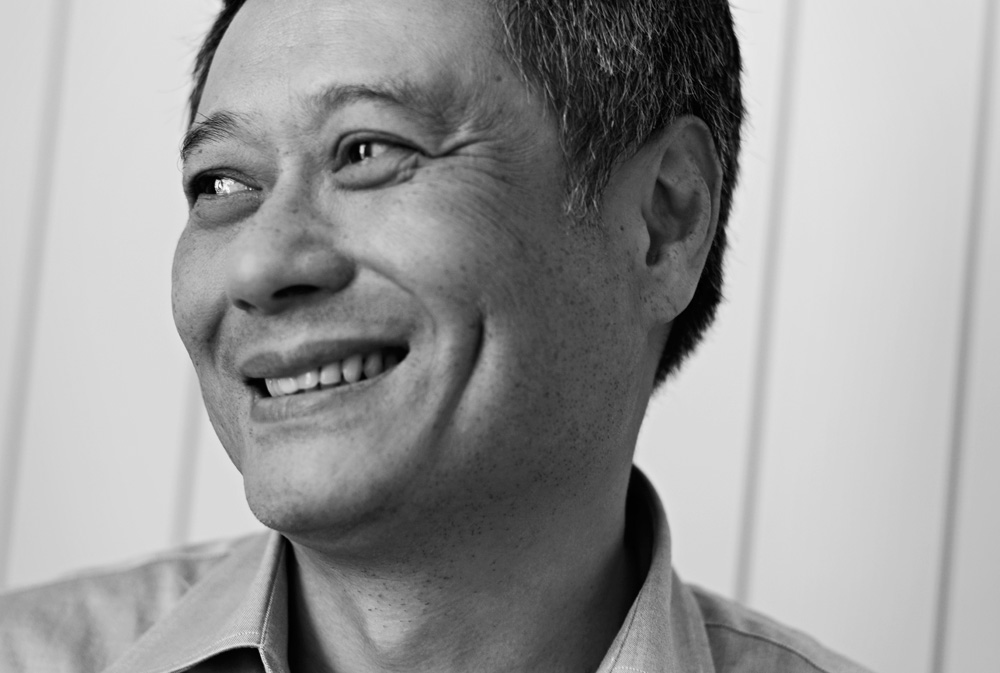
Taking Woodstock is not a movie about music. Director Ang Lee is very clear on that. There is no vintage footage of Janis Joplin, Jefferson Airplane, or Jimi Hendrix playing to a sea of mindzonked hippies. What Lee’s latest film offers instead is an exuberant psychedelic comedy about a young man who, in trying to save his parents’ upstate New York motel, ends up hitting on a scheme that results in a threeday music festival so iconic that even those of us born years after 1969 still feel ashamed to have missed. Taking Woodstock, which stars Demetri Martin as the entrepreneurial son and a ragtag ensemble cast that includes Emile Hirsch as a shellshocked Vietnam veteran and Liev Schrieber as a guntoting drag queen, might seem like rather light fare for the Taiwanese director known for intense dramas like The Ice Storm (1997) and Brokeback Mountain (2005). But Lee proves as agile in a muddy pasture as he is on dangerous suburban ice or homoerotic western horseback. What’s really impressive is that a man who seems haunted by his own Chinese family traditions has been able to capture the nightmares and dreams of American culture like no director since Robert Altman. Schrieber talks to the master filmmaker about how and why he has been able to produce such haunting movies—and why Woodstock means a lot more to the world than simply a rather vivid acid flashback.
Watch Taking Woodstock trailer:
LIEV SCHREIBER: I heard Cannes went well.
ANG LEE: Yes, people around the world seem to be enjoying the film. Except some Americans feel they should see the actual stage. We use the title Taking Woodstock, so they think they’re going to see Janis Joplin and all that. They expect a documentary. So we really have to work to tell people that this is not a concert movie.
SCHREIBER: My friends who were at Cannes saw the film, and they said it was very well received.
LEE: There was applause after your first scene. The jokes come so fast, I figured the audience couldn’t catch all of them. But when you say your last line, they get a chance to applaud and laugh. That was the highlight of the film.
SCHREIBER: There’s really nothing as amusing as a hopelessly unattractive, 225-pound drag queen, is there? [both laugh] Velma was a Korean War vet, and I’ve been thinking about a conversation you and I had, I think during the second week of filming, about the significance of Korea and its relationship to Woodstock as an American event. With all of the saberrattling that’s been going on in North Korea recently, I remembered having that conversation with you about the political and cultural significance of the Korean War, which really is an undercovered war.
LEE: To me, there are two things. When I grew up, in Taiwan, the Korean War was seen as a good war, where America protected Asia. It was sort of an extension of World War II. And it was, of course, the peak of the Cold War. People in Taiwan were generally proAmerican. The Korean War made Japan. And then the Vietnam War made Taiwan. There is some truth to that. So when this hippie thing started to come up, I remember admiring the Americans. They were far out. The music was brilliant. It was pretty cool. On the other hand, you feel this insecurity—like any conservative view—that if America decided to go the other way, what would happen to us? Where is the protection, the foundation? So there is some of that tension in the film. And it’s great because your character was also a bridge between the members of that antiestablishment generation, and those parents who were World War II heroes. You’re in the middle of it, like a big brother. And so was the character Billy, who is a Vietnam veteran. He is an angel to everybody. I needed good actors who could be functional.
SCHREIBER: [laughs] And I thought you hired me because of my legs! I didn’t think it had anything to do with acting.
LEE: It was that, too.
SCHREIBER: One of my fondest memories of filming is when you readjusted my prosthesis so that it sat properly in my ladies’ underwear. [both laugh] Don’t think I’ll ever forget that one! People say to me, “You ever work with Ang Lee?” Oh, yes, I’ve worked with Ang Lee.
LEE: Meticulous. About some things.
SCHREIBER: It’s really remarkable how eclectic your films are. But there are some common themes and one of them—even in Taking Woodstock—is the theme of family dramas. In particular the relationships between fathers and sons. Does that hold a particular significance for you?
LEE: I think so. The way I grew up, women didn’t matter as much, as you might guess. It was all about the father. My father was the center of the family, and everyone tried to please him. After doing about three movies about fathers and sons, I realized that there is a family tree in the Chinese tradition represented by this patriarch character. Everyone, even the women, work to preserve that social structure.
SCHREIBER: You had told me around 2004, after Hulk, that you were considering getting out of film, retiring.
LEE: Yeah, I was tired. I was beat and spent, basically. And my father never encouraged me. Even when I got the Oscar, he never encouraged me. So even though I had gotten an Oscar and had made some movies, now it was time to do something for real.
SCHREIBER: [both laugh] Yeah.
LEE: And he was right, I had just had enough, physically and mentally and perhaps spiritually. And he said, “You’re only 49. Are you gonna teach, finally?” But I said, “No, I’m not gonna give it up.” That was huge.
SCHREIBER: Teaching was a really respectable profession for him, right? He was a principal?
LEE: Yeah. “Get a degree and teach in universities, and be respectable.” He actually had higher hopes for me than that, but I never fulfilled them, I just wanted to make movies. Anyway, I said I wanted to retire and he said, “Are you gonna teach?” I said no. He said, “What are you gonna do, are you gonna set an example for your kids? Put on a helmet and keep on going, go make a movie.” That’s when I decided to make Brokeback Mountain. Two weeks after he said that, he passed away. He was in good health, but while he was sleeping, he passed away.
SCHREIBER: Do you think he finally came to terms with the notion that what you’re doing is actually a wonderful kind of teaching?
LEE: I couldn’t tell [laughs] A Chinese father is a mystery. I couldn’t tell.
SCHREIBER: For me, that’s what’s so remarkable about your career as a filmmaker. It’s so closely observed in terms of family history and this idea of tradition and culture. But there is also this idea of choice. The choice of generosity and compassion. The choice that shows characters and the world in a complex but human light. I think for me that is really the gift of your films.
LEE: Well, thank you. Really, you’ve always asked me very difficult questions.
SCHREIBER: Really? Well the truth was, I wasn’t there to act. I was there to watch. You know, they said to me, “Ang would maybe like to meet with you about this Taking Woodstock movie,” and I said, “Jesus, this Ang Lee guy, I don’t get him. You can never predict what he’s gonna do next. Now he’s doing comedy.” But I went in and I thought, You know, this is gonna be the one opportunity I get to watch this guy work. And I think the things that have defined my career as an actor and as an artist and, in some respects, as a filmmaker have been the opportunities I’ve had to watch great people work. You did this film right after Lust, Caution [2007]. That’s a big departure.
LEE: Yes, I needed levity.
SCHREIBER: That film was so emotionally intense. I thought, Wow, these films are really night and day.
LEE: Well there is night and day in life. [laughs] As artists, we like night more than day sometimes.
SCHREIBER: Someone asked me a month ago how I pick my roles. I was so tired, and when I get tired, I get honest. [laughs] I said that I think I’m reactionary in my choices. In other words, I’ll do one kind of thing, and then as a reaction to that project, I’ll do something else.
LEE: That’s exactly what it is. I tend to feel that we’re slaves to these roles. They play us, we don’t play them. They choose us. And sometimes I am so tired of being enslaved by those obsessions. It’s hard to talk about . . .
SCREIBER: You know I talked to Naomi [Watts] and she told me about Heath [Ledger]’s experience working with you. And other actors I’ve talked to also say, “Ang doesn’t say much.” So I was completely prepared for you to be this very stoic, silent director.
LEE: Was I stoic?
SCHREIBER: I didn’t think so at all! First of all, I found you remarkably goofy. [both laugh] That could have been all the prosthesis adjusting and all that, but I thought that you were very clear about what you were after emotionally. This is a dangerous thing to say, but I feel a need to say it: It’s not very often that directors feel safe relinquishing control. More often than not, directors don’t fully understand everything that’s involved in creating a character. They shouldn’t necessarily be blamed for that. There’s so much on their plate that they are not really in touch with the process of the actor, so they just expect the actor to deliver. But I found in watching you, even from the perspective of miseenscène, that you approached scenes emotionally. Would you say that that’s true?
LEE: I think so. There is more than one way to make movies. To me it has to be led by emotion. That’s the only thing I could trust when making a movie. Emotions serve characters’ purposes. That is their motivation. Or at least it’s my safety net. The times you just don’t know what to do, every day people are asking you hundreds of questions: what should we do about this? The that? If we can’t do this, what about that? You have to have something centered around you, and to me, that’s always emotion. I’m an emotional person; maybe I rely on it. Maybe I’m melodramatic, I don’t know. SCHREIBER: [both laugh] All of the above. As an actor, emotional truth is the safety net. You wanna give a great performance, but at the end of the day, when you get lost, you fall back on the emotional currency.
LEE: At times I can’t help going for visual comfort. Sometimes a picture fills up your head, and you try to move the actors around to make that visual statement. But it’s tricky if an actor like you asks a difficult question. That would make me work too hard to answer. [laughs]
SCHREIBER: But I found that even with visual statements like that scene that we shot at the lake, with all of the skinnydippers, even that you approached emotionally. I watched you set up that shot that basically moved from us to the naked swimmers. You kept trying to pick up the wind in the trees. It felt heroic. So whatever questions I had about playing it were sort of being answered by the environment.
LEE: You can see how you fit into the visual because you’re talented and experienced. Most actors can’t see that. They are challenged by their feelings. It’s very hard. Sometimes you have to use all of your authority just to say, “Trust me.”
SCHREIBER: What was it like working with someone like Demitri [Martin] who didn’t have a tremendous amount of acting experience and really put himself in your hands for this role?
LEE: There really isn’t an answer for that except to say that it is like religion. Once you commit to it, you see life in movie theaters. You choose a certain path that you think is the way to make the movie you want. You go on that adventure. Once you commit, you just have to have faith.
SCHREIBER: That’s it.
LEE: You have to find the movie somehow with him, or on him, or from him, or on top of him . . . whatever. In the process I think he became quite a good actor.
SCHREIBER: It’s amazing, the parallels between faith and theater. It’s funny because when you read a script as an actor, sometimes you think, Oh, that’s not gonna work. But the truth of the matter is, if you believe in anything strongly enough, it all works! It’s all relevant! [laughs]
LEE: Well, to be honest with you, sometimes good acting is an obstacle to the truth. Like when you said that when you’re tired, you tend to be honest. The better you are, the harder it is for me to break you down, to make you honest. Because you know how to act, but sometimes you forget to react. New actors don’t have that problem. They have a problem with sophistication, of delivering dramatic layers. And they can be tense. Faith helps relieve the tension. My main objective was to intensely relax him, so to speak.
SCHREIBER: That’s why we were doing all that tai chi in the first couple of weeks. [both laugh]
LEE: Anything I could think of . . . You’re called an actor for a good reason. It’s the action, it’s not the result that we’re after. It’s just enjoying the action for no purpose, which is a very hard thing to do. And I think that was what was great about the bands playing at the original Woodstock. The stage was hastily put together, the logistics were horrible, and it was dirty. Musicians complained. But the heart of just being there, that’s what made Woodstock so precious.
SCHREIBER: Being available to something, opening your heart to something.
LEE: Yeah, you wanna be there and get together with everybody and share the experience, just act without knowing the result.
SCHREIBER: It is amazing that it happened on such a grand scale in this country.
LEE: I don’t know that it would happen again. [laughs]
SCHREIBER: What do you think about Obama?
LEE: I hope it works out. These days, people are inspired not without skepticism and there’s not the same type of innocence as there was back in 1969. It’s different. I think people are more sober now.
SCHREIBER: It’s true. But I have to say that, at least for me, and perhaps for my generation, it’s the first time, honestly, I think that I’ve felt sincerely patriotic in a long time.
LEE: My son skipped the first day of the second semester to go to the inauguration. He called us: “I’m there!” [both laugh] “How did you get there?” “Oh it’s a long story.” He said his friend talked him into it. His friend said, “It’s like going to Woodstock.” You have to participate in a historical moment.
SCHREIBER: You have to be in the moment.
LEE: Whether you see the stage or not, you have to be there. As a parent, and as a citizen of the world, I just hope this Obama thing works. If we screw up again, what’s gonna happen to the world? Like, please make this thing work!
Liev Schreiber is a Tony awardwinning actorwho lives in New York.