


Yoko Ono is Back in Plastic
By
October 26, 2009


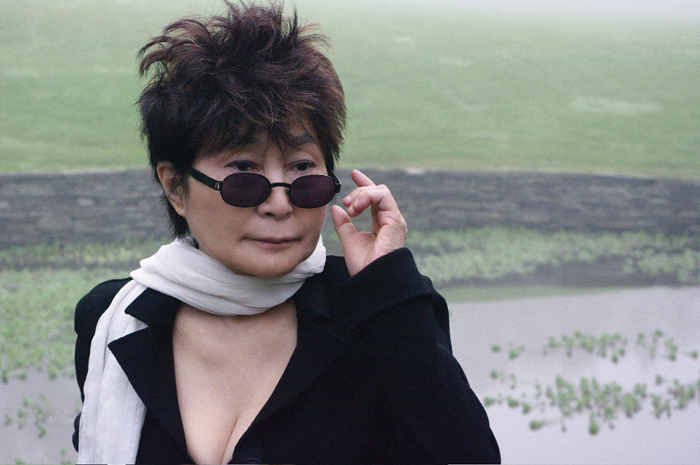
Over green tea, biscuits and strawberries at Reykjavik’s Nordica Hotel, Yoko Ono took time out from promoting her Peace Tower project–the annual light sculpture that shoots up high into the Icelandic night each fall, between the dates of John Lennon’s birthday (October 9) and the anniversary of his death (December 8)–to talk up her latest album, Between My Head And The Sky. Backed by a band directed by son Sean and featuring the best and brightest of Japanese avant-pop, the album sees 76-year-old Ono returning to the Plastic Ono Band, and sliding yet again ahead of the art-electro pack, for whom she remains the questioned godmother.
ARSALAN MOHAMMAD: The new album, Between My Head And The Sky, has a very eclectic mix of styles and sounds you cover.
YOKO ONO: When you look at my past albums, I’m always doing many different styles because I have so much love for each musical form. And it just comes natural to me. All those theme albums–with this, I didn’t say… OK, it’s a feminist album so we’re not going to do this or that. But here, my body–my being–is there. So. I don’t have to do anything. It just comes in, you know, it’s just fun.
MOHAMMAD: I really like the opener, “Waiting For The D-Train.” It’s classic Yoko–shrieky, demented.
ONO: [LAUGHS] Aah, so glad you liked it! And you know, there was a debate about it. If you put “Waiting For The D Train” first, then people might think that, “Oh, this is just a screaming album” and they may not listen to it. But I thought, so if there’s somebody like that, then I don’t care, you know. [LAUGHS]
MOHAMMAD: You worked with your son, Sean, who rounded up the band and acted as musical director. How did that come about?
ONO: I had gone to Japan to do a show with him. He had called me and said, “You want to come here for this show?” I said “For one show I’m going to go to Japan?” But then…well you know, it’s Sean, he’s my son, and, well, what am I being so tough about? So I went there, all the way, just for one night. And he said “Oh, you know, some of my friends are going to back you, don’t worry.” I didn’t trust him, but then I thought, “If it’s really bad, it’s fun too.”
I got on the stage and I was doing my thing and I was thinking, “Who are these people? The band is so good.” And it was like, the first time I looked at the band, and it turned out they’re very, very hip people, very famous people in Japan. I had forgotten that Sean is not five years old anymore and his friends probably would be rather established people, you know. So when Sean said, “Mommy, let’s just make your album now,” I said, “OK, invite those people please.” So we invited them to New York and we did a great session.
MOHAMMAD: Why did you resurrect the Plastic Ono Band name for this project?
ONO: When John passed away I went numb. I blocked my mind towards this idea of the Plastic Ono Band because it was so… it was such a deep thing for both of us. I wanted to forget it and move on. When Sean said, “Mommy, we should do this as a Plastic Ono Band record” I said “Why? Why?” I got really upset. Then I asked ymself why I was so upset. It was John and me and now it’s Sean and me—so of course it’s all right to do it, Sean’s his son!
MOHAMMAD: How did you find working with Sean? Was it strange, your son directing you?
ONO: He was very good. You see, the thing is, [growing up] was hard for him. So I said, “Why don’t you be an archaeologist or something?” Maybe it could have been easier for him then. But he never thought of that, he was brought up in a musical environment and music is in his head. He surprised me once when he played a song called “Magic.” He was so good at the piano. I asked, “Where did you get that?!” All the instruments, he can do. Like in [Sean Lennon’s 2006 solo album] Friendly Fire, he said he’s going to do all of it himself. I said “Please, don’t do that because, I know you can do it, but people are going to think you’re arrogant.” We always had to tone him down!
Between My Head And The Sky is out now on Chimera.